
Best luggage sets for family 2026 usually come down to one thing: whether the set fits how your household actually travels, not how a product page imagines it.
If your last trip felt like a juggling act, a mismatched mix of bags, a busted wheel, or not enough space for kids’ stuff, you’re not alone. Families put more stress on luggage than solo travelers, more hands pulling, more curb drops, more last-minute packing, more “can I sit on it” moments.
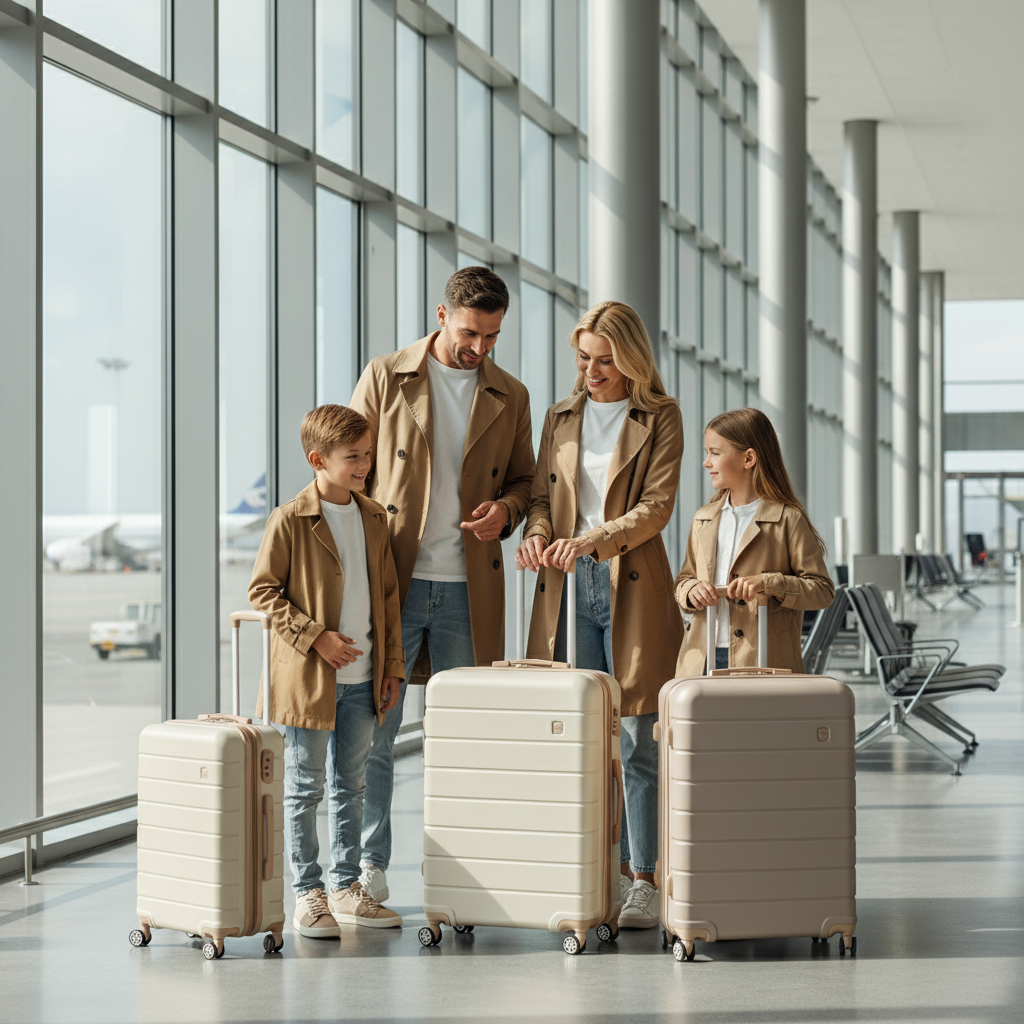
This guide breaks down what matters in 2026 sets, how to choose sizes without overbuying, and which features tend to pay off in real trips. You’ll also get a quick checklist, a comparison table, and a few practical packing and buying tips.
What “best” means for a family luggage set in 2026
There isn’t one “best” set for every family, because the right choice changes with trip length, kid ages, and whether you fly, drive, or do a mix. Still, the same pressure points show up again and again.
- Durability where families break bags: wheels, telescoping handle, corner guards, and zipper tracks.
- Easy rolling when hands are full: stable spinner wheels, not wobbly ones that fight you in airports.
- Smart sizing: carry-on plus 24–26 inch checked bags often works better than multiple giant suitcases.
- Organization that reduces “where is it” stress: split compartments, compression panels, wet pockets, and quick-access sections.
- Reasonable weight: lighter bags leave more room for actual items, especially with airline weight limits.
Key takeaway: a family set wins when it reduces friction, the kind you feel at curbside drop-off and in hotel hallways, not when it just looks coordinated.
Hard-side vs soft-side: what families should pick (most of the time)
Both can be great. The “right” choice usually depends on how rough your trips are and how much you value flexibility.
Hard-side luggage tends to fit families who fly more
- Pros: better protection for fragile items, easier to wipe clean, often feels more structured when overpacked.
- Watch-outs: can scuff, some shells crack after repeated impacts, and cheap zippers can fail even if the shell looks fine.
Soft-side luggage tends to fit families who drive more
- Pros: exterior pockets for snacks and documents, more forgiving when you cram in odd shapes, easier to fit in trunks.
- Watch-outs: fabric can stain, corners wear faster, and overstuffing can stress seams and zippers.
In 2026, more sets mix rigid frames with fabric panels, so you’re not always choosing extremes. If you’re unsure, hard-side often feels simpler for families because cleaning is easier and shapes stay consistent for stacking.
Size strategy that avoids the classic family mistake: buying too big
Many households think “family” means “largest suitcases available.” Realistically, bigger can turn into heavier, harder to roll, and more likely to trigger overweight fees.
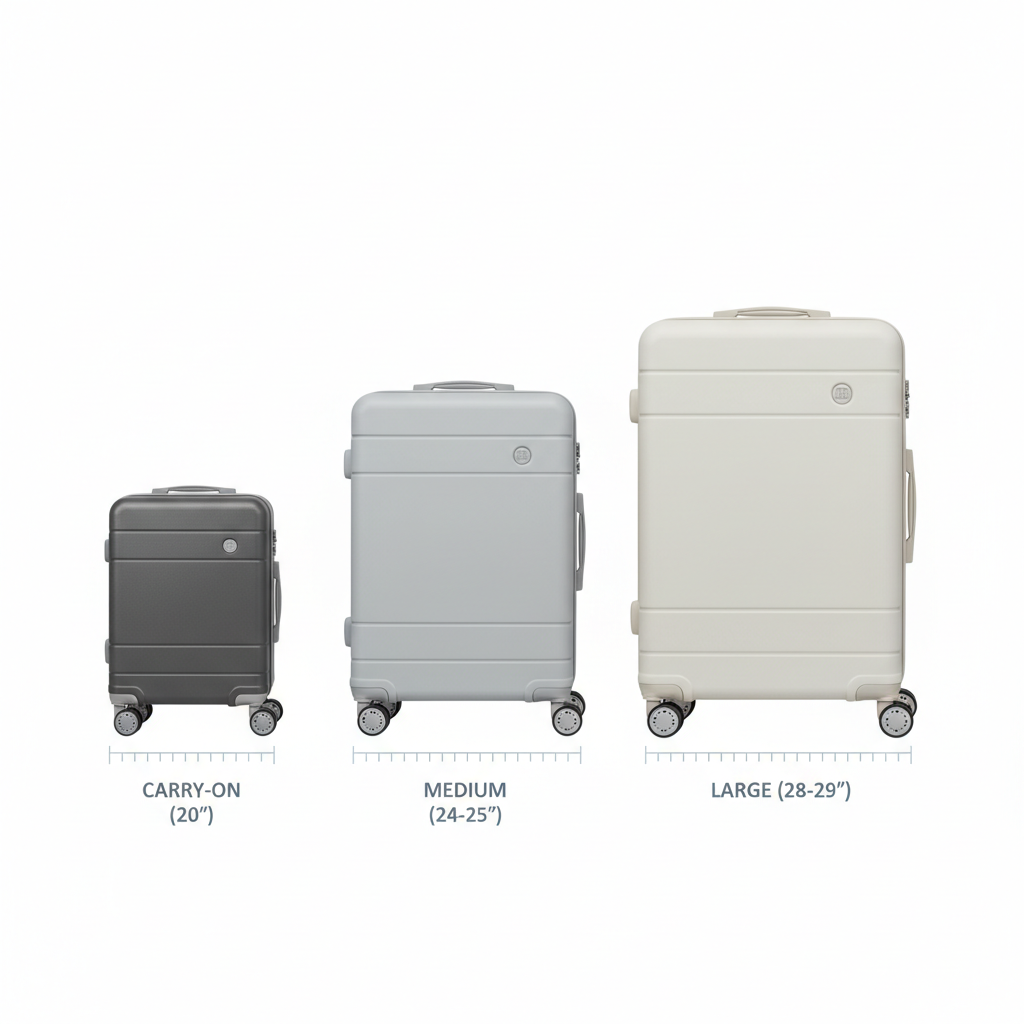
Here’s a sizing approach that works in a lot of real family travel patterns, especially in the U.S. where flights, road trips, and mixed itineraries are common.
- Weekend trip (2–3 nights): 1–2 carry-ons + 1 medium checked bag for a family of four, depending on laundry and activities.
- One week: 2 carry-ons + 2 medium checked bags often beats one massive bag.
- Two weeks or winter travel: medium bags plus one large only if you truly need bulk, like ski clothing.
Quick truth: medium checked bags are frequently the “family sweet spot” because they balance capacity and manageability.
Comparison table: what to look for in the best luggage sets for family 2026
Use this as a buying lens. It won’t pick a brand for you, but it helps you compare sets fast without getting lost in marketing terms.
| Feature | What “good” looks like | Why it matters for families |
|---|---|---|
| Wheels | 4 stable spinners, smooth roll, minimal wobble | Keeps bags controllable when a child is pulling one |
| Handle | Sturdy telescoping handle, low flex, multiple heights | Different adult heights, plus teens, can roll comfortably |
| Zippers | Self-repairing or robust coil zippers, clean stitching | Overpacking stress shows up here first |
| Interior layout | Split compartments, compression panel, small item pockets | Less unpacking chaos in hotel rooms |
| Weight | Reasonable for size, not “ultralight at any cost” | Lighter helps with airline limits, but flimsy breaks |
| Warranty & support | Clear coverage, accessible repair or parts process | Family travel is rough, support matters more than you think |
According to the U.S. Department of Transportation (DOT), airlines must compensate passengers for lost, damaged, or delayed baggage within certain conditions, which is helpful, but it’s still a headache you’d rather avoid. Picking stronger wheels and zippers is the simplest prevention move.
Self-check: which family luggage set type fits your travel style?
If you answer these quickly, you’ll usually know whether you need a “budget starter set,” a “durability-first set,” or a “lightweight organizer set.”
- Trip frequency: 0–2 flights a year, or 6+ flights a year?
- Who pulls luggage: adults only, or kids and teens too?
- Typical baggage plan: mostly carry-on, or checked every trip?
- Mess risk: sports gear, beach trips, theme parks, spills?
- Car trunk constraints: do you routinely play “tetris” with luggage?
- Storage at home: can you nest bags, or do you need slimmer storage?
Rule of thumb: if kids pull bags, prioritize wheel stability and handle sturdiness over fancy interiors.
Practical buying and packing steps (this is where families save money)
It’s tempting to buy a set because it’s “complete.” The better move is to buy the set that matches your trip math, then fill gaps intentionally.
Step-by-step: choosing the right set
- Start with the core: one carry-on per adult plus one medium checked bag per two people is a decent baseline for many trips.
- Confirm airline fit: check carry-on dimensions against the airlines you use most, since limits vary.
- Inspect the stress points: grab the handle and gently twist, spin the wheels, look at zipper stitching and corner protection.
- Decide on one “mess bag”: a soft duffel or a laundry bag for shoes, wet items, or sports gear keeps the rest cleaner.
- Plan for growth: a set that includes a slightly smaller spinner can become the “kid suitcase” in a year or two.
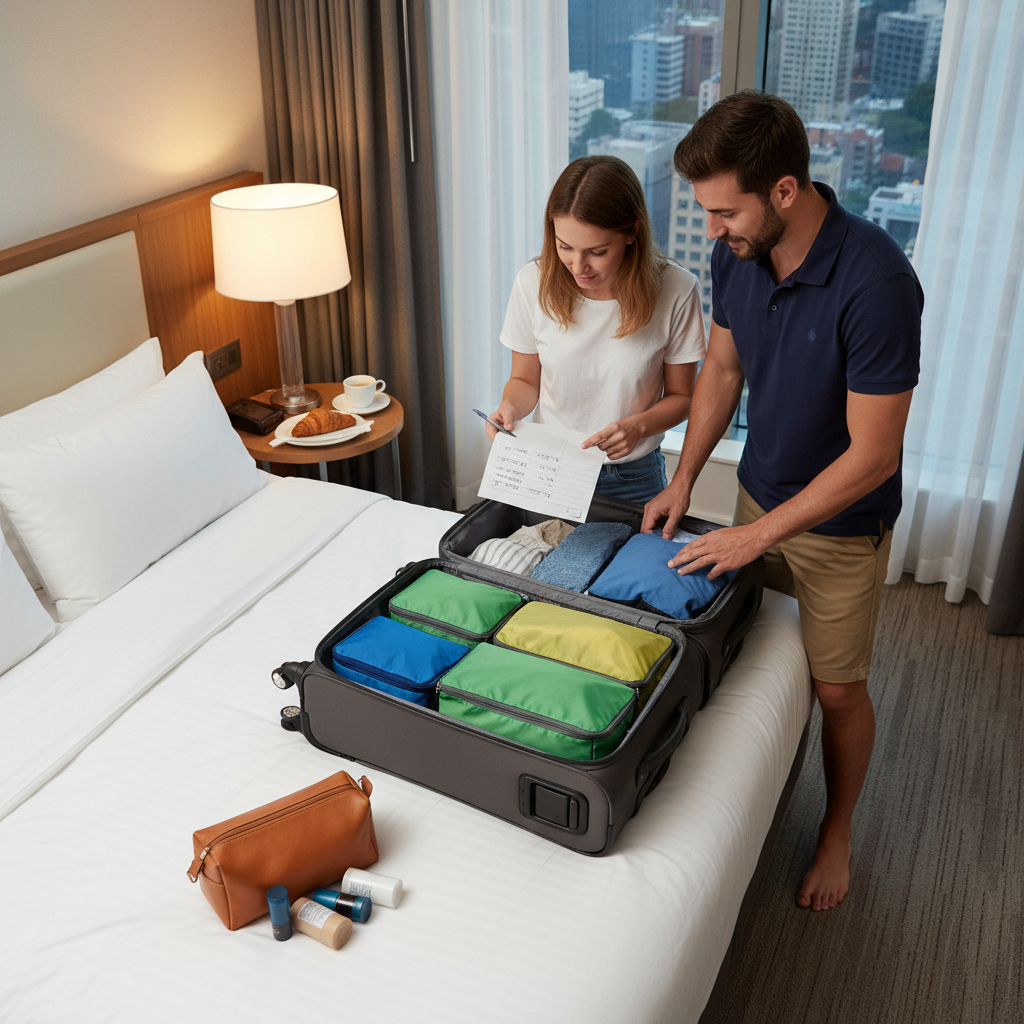
Pack like a family without opening every bag at midnight
- Assign zones: one side “clothes,” one side “shared items” like sunscreen and chargers.
- Use cubes by person: each child gets a cube color, fewer arguments and less digging.
- Keep one rapid-access pouch: meds, wipes, snacks, a pen, and a spare shirt for the smallest kid.
For safety-sensitive items like medications or medical devices, it’s usually smarter to keep them in a personal item or carry-on, and if you have specific medical needs, consider asking a healthcare professional how to travel with them appropriately.
Common mistakes families make when shopping luggage sets
These are the habits that create regret later, even when the set looks great out of the box.
- Buying a 5–6 piece set and using only two bags: extra pieces often become closet clutter.
- Overvaluing expanders: expansion is convenient, but it can push you into overweight territory fast.
- Ignoring wheel quality: one bad wheel can ruin a connection sprint.
- Choosing lightest over sturdy: ultralight can be fine, but many family trips punish flimsy frames.
- Skipping return-window testing: rolling on your living room floor tells you almost nothing, try sidewalks and parking lots carefully.
If you’re comparing the best luggage sets for family 2026 across brands, try to judge them the same way you’d judge a stroller: the hardware matters more than the brochure language.
Conclusion: a simple way to pick your set this year
The best luggage sets for family 2026 usually aren’t the most expensive or the biggest, they’re the ones with stable wheels, sensible sizes, and an interior layout that prevents your trip from turning into a constant scavenger hunt.
If you want an easy next step, pick your typical trip length, choose a carry-on and medium-bag combo that fits your airline habits, then sanity-check wheels, handle flex, and zipper build before you hit “buy.”