
Sun protective clothing travel sounds simple until you land somewhere brutally hot and realize your “light layers” still feel sticky, bulky, or weirdly see-through in the sun. The good news is you don’t need a suitcase full of long sleeves to get solid coverage.
What usually works is a small, repeatable system: a couple of UPF staples, smart fabrics that breathe, and a plan for when you’ll actually wear each piece. That combination keeps you comfortable, reduces sunburn risk, and cuts down the temptation to buy random cover-ups mid-trip.
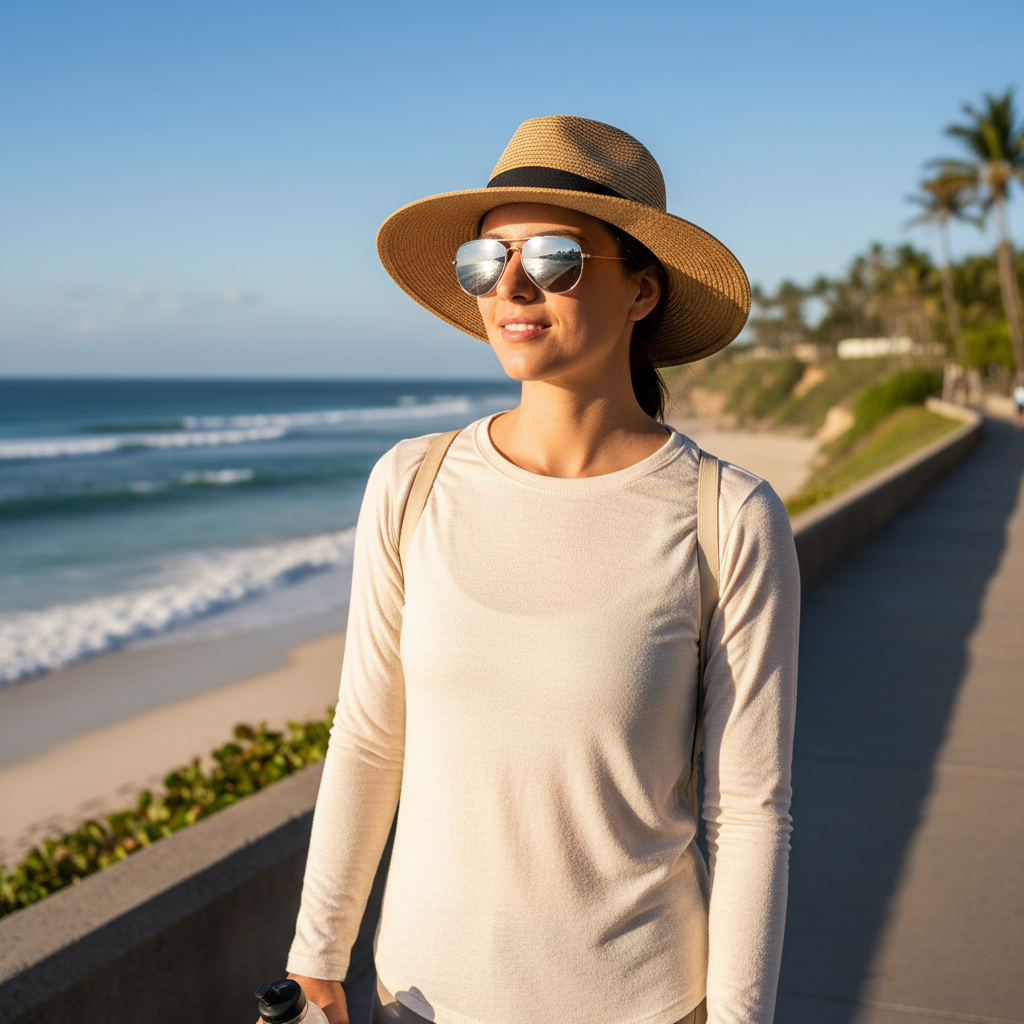
One common misconception is that “UPF equals heavy.” In many cases, it’s the opposite: purpose-built sun fabrics can feel cooler than cotton because they wick sweat and don’t cling as much. Another misconception is relying on sunscreen alone, which can work, but it’s easy to miss spots, sweat it off, or forget to reapply at the worst time.
Why hot-day travel makes sun protection harder
Heat changes your tolerance for everything: tighter collars, dark colors, stiff waistbands, even the backpack strap rubbing your shoulder. On top of that, vacations tend to stack exposure time, think walking tours, beach days, outdoor dining, theme parks, and “just one more photo” in direct sun.
- Long exposure windows: you’re outside for hours, not minutes.
- High reflectivity: water, sand, and light concrete bounce UV upward.
- Sweat + friction: sunscreen can migrate, and irritated skin burns faster in many cases.
- Limited laundry: you re-wear pieces more, so fabric comfort matters.
According to the Centers for Disease Control and Prevention (CDC), protective clothing is a key part of sun safety alongside shade and sunscreen, which is why building your outfit plan around clothing often feels more reliable on long days.
Quick self-check: what kind of sun traveler are you?
If you pick the wrong strategy, you either overpack or end up roasting in “protective” gear you hate. This checklist helps you choose the right baseline.
- You burn easily (fair skin, freckles, or a history of bad burns): lean heavier on coverage and UPF.
- You hate feeling layered: prioritize ultra-breathable weaves, venting, and looser fits.
- You sweat a lot: quick-dry and odor control matter more than “soft hand feel.”
- You’ll be on the water: plan for reflection, wind, and salt, and pack a rash guard.
- You’re mostly in cities: lightweight overshirts, sun sleeves, and packable hats can be enough.
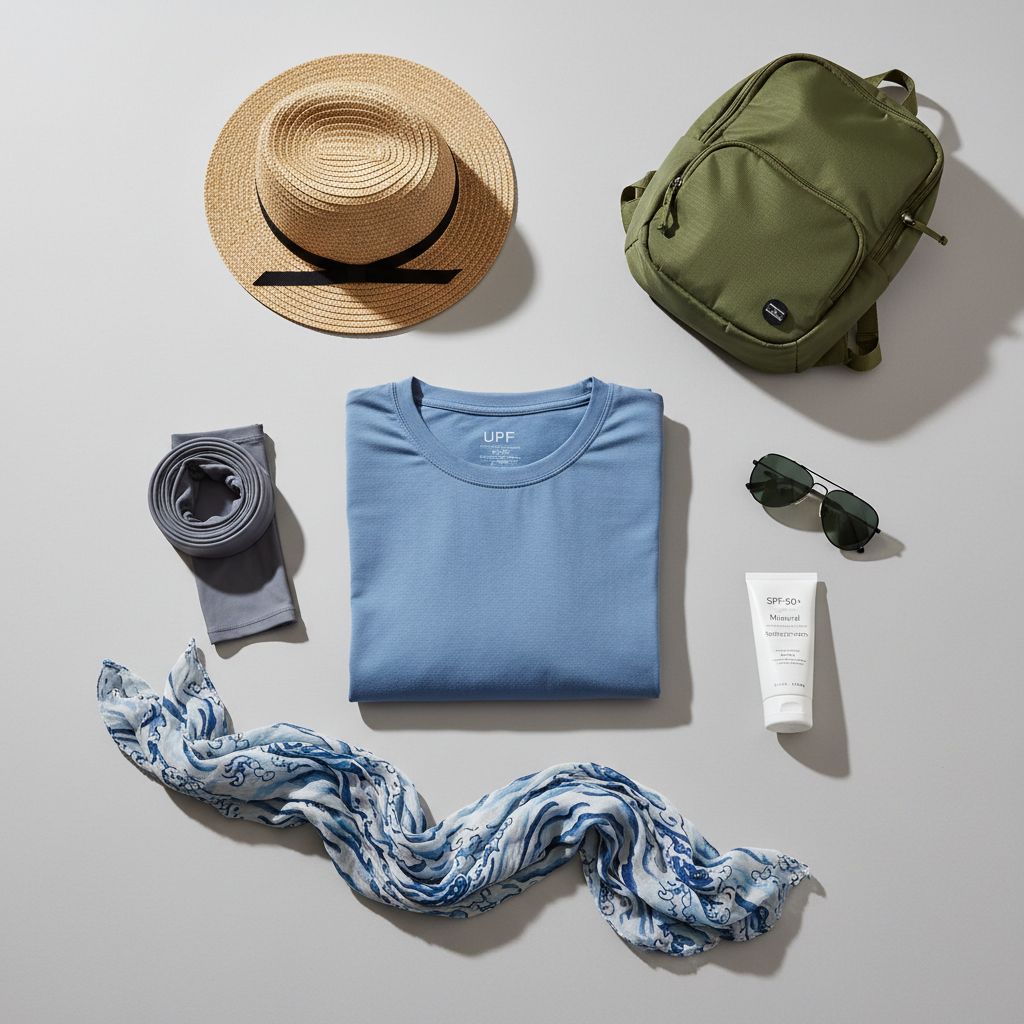
If you checked multiple boxes, that’s normal. In practice, most people need a “base kit” plus one or two trip-specific add-ons.
What to look for in sun-protective clothing (without getting lost in jargon)
Here’s the practical breakdown that tends to matter on hot trips, beyond the marketing labels.
UPF rating and coverage
UPF measures how much UV radiation a fabric allows through. Many reputable brands list UPF 30–50+. Coverage still matters: a UPF shirt does nothing for your neck if the collar sits low and you skip a hat.
Breathability: fabric, weave, and vents
In hot climates, comfort often comes from a combination of a looser cut, a breathable knit or woven structure, and venting in high-sweat zones. If a garment traps heat, you’ll stop wearing it, and then the “sun protection” becomes theoretical.
Fit: looser can feel cooler
A slightly relaxed fit lets air circulate and reduces cling. For many travelers, this is the difference between wearing a sun shirt all day and ripping it off at lunch.
Color and transparency
Darker colors can feel warmer in direct sun, but some very light fabrics can turn semi-sheer when stretched. If modesty matters for your destination or comfort, test under daylight before you pack.
Care realities
For sun protective clothing travel, pick items that survive hotel sinks and quick hang-drying. If it needs babying, you’ll resent it by day three.
A practical packing formula (3–2–1) for hot days
This is a simple framework that keeps options high and bulk low. Adjust up if your trip is long with limited laundry.
- 3 sun-ready tops: a UPF long-sleeve, a short-sleeve or polo-style, and a swim rash guard or airy button-up
- 2 bottoms: one lightweight pant (or skirt) and one short suitable for long walks
- 1 “coverage multiplier”: a packable hat, a light scarf/buff, or sun sleeves
Then add two non-negotiables: sunglasses (ideally polarized) and sunscreen for exposed skin. According to the American Academy of Dermatology (AAD), sunscreen should be broad-spectrum SPF 30+ and reapplied, which matters more on sweat-heavy days.
Choose the right pieces by scenario (beach, city, hiking, theme parks)
People get stuck because they shop for a vague “hot trip.” It’s easier when you match clothing to the friction points of your itinerary.
Beach and pool days
- Rash guard with comfortable seams, you’ll wear it longer
- Board shorts or swim leggings if you burn on thighs easily
- Cover-up that dries fast, not a heavy cotton tunic
City walking and outdoor dining
- UPF overshirt or airy button-up you can take on and off
- Light pants with airflow, especially for sun-baked sidewalks
- Packable hat that doesn’t look “hiking-only”
Hiking and national parks
- Vented sun hoodie or technical long-sleeve to manage sweat
- Neck coverage (buff, high collar, or cape-style hat)
- Convertible pants only if you truly use the zip-off function
Theme parks and long queue days
- Loose long-sleeve that won’t feel clingy under a backpack
- Sun sleeves as a quick on-off option
- Cooling towel can help comfort, but it’s not UV protection

No matter the scenario, comfort is the hidden deciding factor. If something chafes, traps heat, or looks too “technical” for where you’re going, you’ll default back to a tank top and regret it later.
Comparison table: common hot-weather sun layers
If you’re deciding what to buy or pack, this quick table helps you see tradeoffs without overthinking it.
| Item | Best for | Pros | Watch-outs |
|---|---|---|---|
| UPF sun shirt (long-sleeve) | All-day walking, general travel | Reliable coverage, easy layering | Some fits run tight; test heat comfort |
| Sun hoodie | Hiking, windy coasts | Neck/ear coverage, good with hats | Hood can feel warm if fabric is dense |
| Button-up overshirt | City, restaurants, mixed use | Venting, style flexibility | Not always UPF-rated; check opacity |
| Rash guard | Water sports, pool days | Stays put, handles salt/chlorine better | Can feel tight; choose comfortable seams |
| Sun sleeves | Quick coverage, driving, parks | Lightweight, easy to remove | Can slide down; fit matters |
Real-world tips that make hot-day sun gear easier to wear
This is the “in practice” part that people tend to skip, then wonder why their kit doesn’t work.
- Use a hat + collar combo: it’s often more comfortable than constantly reapplying sunscreen on your neck.
- Plan a midday reset: shade lunch, quick rinse, dry shirt swap, your mood changes fast.
- Keep one piece dry: a dry long-sleeve in your daypack can feel like a luxury when you’re sweaty.
- Don’t ignore hands: lightweight sun gloves or frequent sunscreen help if you’re outdoors for hours.
- Practice once before the trip: wear the outfit on a hot errand day, you’ll catch itchiness early.
For sun protective clothing travel, small comfort upgrades tend to deliver bigger results than buying “one perfect shirt.”
Common mistakes (and what to do instead)
- Mistake: Buying a UPF top that fits like compression.
Instead: Size for airflow unless you specifically want a tight rash guard for swimming. - Mistake: Assuming any white tee is “safe.”
Instead: Choose fabrics that stay opaque in bright sun, or look for a listed UPF rating. - Mistake: Overpacking layers “just in case.”
Instead: Pack a repeatable combo and do a simple sink-wash cycle. - Mistake: Forgetting scalp, ears, and the tops of feet.
Instead: Hat coverage plus targeted sunscreen, especially in sandals.
According to the U.S. Food and Drug Administration (FDA), no sunscreen is waterproof, which is another reason clothing can feel like the more dependable backbone on sweaty travel days.
When to seek professional advice
If you have a history of severe sunburns, photosensitivity from medications, prior skin cancer, or a rash that appears after sun exposure, it’s reasonable to discuss travel sun protection with a dermatologist or other qualified clinician. This is even more relevant for kids and for anyone traveling to high-UV destinations or higher elevations, where UV exposure can be stronger.
Key takeaways for hot-day sun travel
- Build around clothing first, then use sunscreen for the remaining exposed skin.
- Comfort decides compliance: breathable fabric and a relaxed fit get worn more.
- Pack by scenario (water, city, hiking) so every piece earns its space.
- Test before you fly to avoid chafe, heat traps, and sheer fabric surprises.
Conclusion: a lighter suitcase, a calmer day in the sun
Once you treat sun protection like a travel system instead of a single product, hot days get easier. Start with one dependable UPF top you actually enjoy wearing, add a hat you’ll keep on, and let sunscreen fill the gaps, that’s usually enough to make outdoor plans feel doable again.
If you want a simple next step, lay out your “day uniform” tonight and do a 20-minute walk outside. If anything annoys you at minute ten, it definitely won’t improve in hour four.
FAQ
What is the best outfit for sun protective clothing travel in extreme heat?
A lightweight UPF long-sleeve with good airflow, breathable bottoms, and a packable wide-brim hat is a common baseline. The “best” depends on your sweat level and itinerary, but comfort and coverage usually beat thick fabrics.
Is UPF clothing cooler than cotton in hot weather?
It can be. Many UPF travel pieces use technical fabrics that wick moisture and dry fast, which often feels cooler than a damp cotton tee. Still, some UPF garments are denser, so trying one wear test helps.
Do I still need sunscreen if I wear UPF clothing?
Yes, for exposed areas like face, hands, and any gaps at the neckline. Clothing reduces the surface area you must manage, but most travelers still need consistent sunscreen habits.
How many UPF items should I pack for a one-week trip?
Many people do well with two to three sun-ready tops plus one coverage add-on like sun sleeves or a scarf. If you can rinse and hang-dry, you can pack fewer and repeat.
What should I wear for sun protection at the beach without overheating?
A rash guard or swim shirt, a hat, and a fast-drying cover-up tends to work well. If you burn easily, consider longer swim bottoms or swim leggings, especially with high reflection off sand and water.
Does color matter for sun-protective travel clothing?
Color can affect perceived warmth and opacity. Darker shades may feel hotter, but extremely light, thin fabrics can become see-through or less protective when stretched. Balance comfort with coverage and test in daylight.
How do I know if a shirt is truly sun-protective if it has no UPF label?
You can do a basic opacity check in bright light, but you can’t reliably confirm UV performance without a rating. If sun sensitivity is a concern, choosing labeled UPF apparel is usually the safer bet.
If you’re planning a hot-weather itinerary and want a more streamlined packing list for sun protective clothing travel that matches your destinations, share where you’re going and what activities fill most days, and I can help you narrow it to a realistic capsule without overbuying.