
Best travel clothesline portable choices in 2026 come down to one thing, where you actually dry clothes: a cramped hotel bathroom, an RV awning, or a windy campsite. Buy the wrong style and you end up with sagging lines, slipping clips, and shirts that never quite dry.
This guide narrows the field without pretending there is one perfect option for everyone. You’ll see what matters (tension, grip, pack size, and where it can anchor), a quick self-check to pick the right type, and a few practical setups that save time on the road.
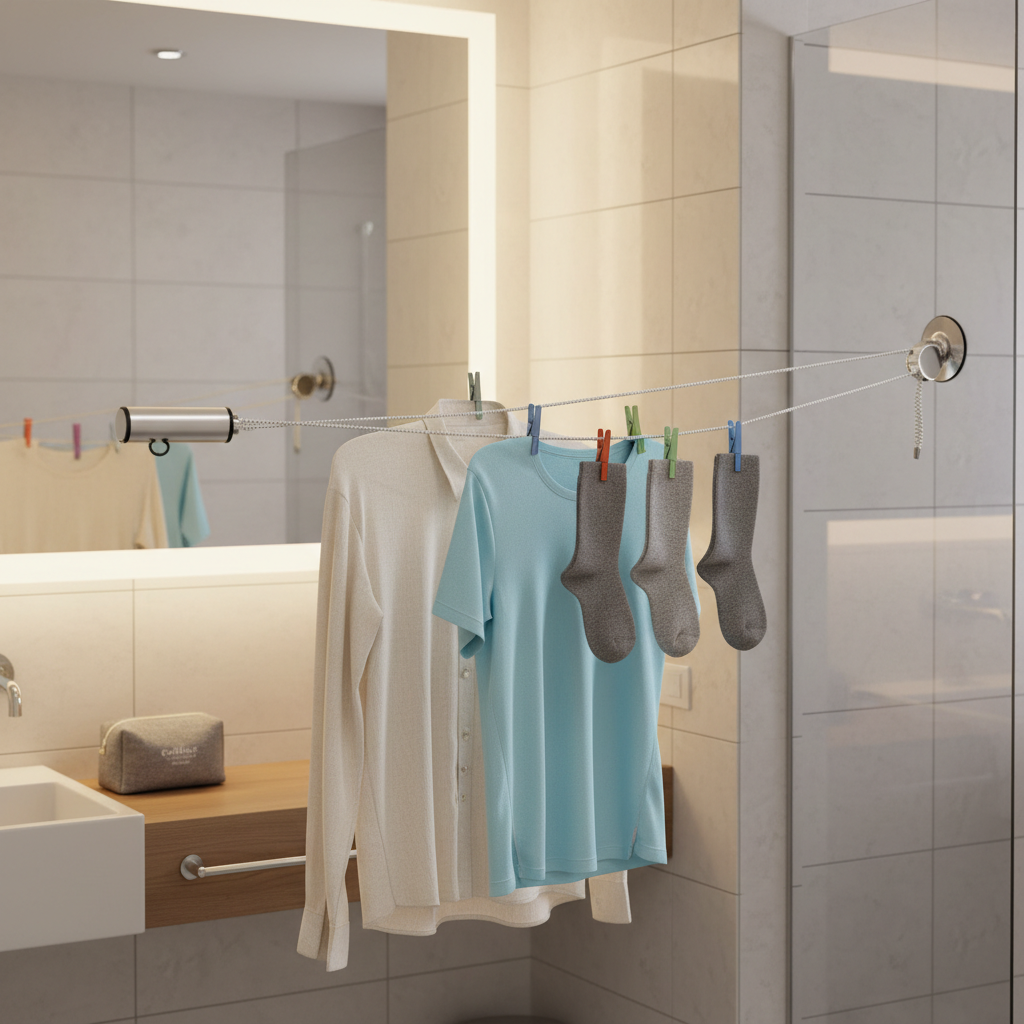
One small reality check before we get into products, some hotels and cruise lines restrict hanging laundry on balconies or sprinklers. According to CDC guidance on injury prevention in travel settings, keeping walkways clear and avoiding trip hazards matters, so whatever line you use, set it high and tight, never across a doorway.
What makes a travel clothesline “best” in real trips
Most portable lines look similar online, but they behave very differently when you hang heavier fabrics or when the air is humid. These are the criteria that tend to matter in day-to-day use.
- Anchoring options: suction cups work on clean tile or glass, but struggle on textured surfaces. Hook-to-hook lines need something solid to clip to.
- Tension control: a line that stays taut dries clothes faster and keeps items from pooling together.
- Grip without clothespins: braided or beaded lines can hold garments by twisting them between strands, helpful when you want fewer loose parts.
- Length you can actually use: longer is not always better, too much slack in small rooms becomes a droop problem.
- Packability: a small pouch is nice, but the real win is “deploys in 60 seconds” when you arrive tired.
Key takeaway: choose the line based on your most common anchor points, not the photos on the product page.
Quick comparison table: top portable travel clothesline types
You can buy by brand, but in practice you’re buying a design. Use this table to match the design to your trip style.
| Type | Best for | Pros | Trade-offs |
|---|---|---|---|
| Braided / twisted (no pins) | Hotels, bathrooms, quick overnights | Fast, holds items without clips, light | Limited capacity for heavy jeans, needs good tension |
| Suction cup clothesline | Tile/glass showers, cruise cabins | No need for hooks, clean setup | Surface-dependent, can pop off if overloaded |
| Paracord-style with hooks | Camping, RV, balconies where allowed | Strong, flexible lengths, multi-use cord | Usually needs clothespins, knots take time |
| Retractable micro-line | Minimalist packing, emergency drying | Tiny, neat storage | Shorter span, lower capacity, can tangle |
Self-check: which portable line fits your travel style?
If you’re torn between options, answer these quickly. The goal is to avoid buying a clever gadget that only works in one very specific room.
- You mostly stay in hotels: favor braided/twisted lines or suction cup models, because bathrooms are predictable anchor zones.
- You travel with kids or do sports trips: prioritize capacity and tension, you’ll hang more items, more often.
- You camp or RV often: a paracord-style line plus sturdy pins handles wind and heavier fabrics better.
- You only need “backup”: retractable micro-lines are fine, just set expectations on how much they can hold.
- You hate extra accessories: choose a no-pin design, fewer small parts to lose in a shared bathroom.
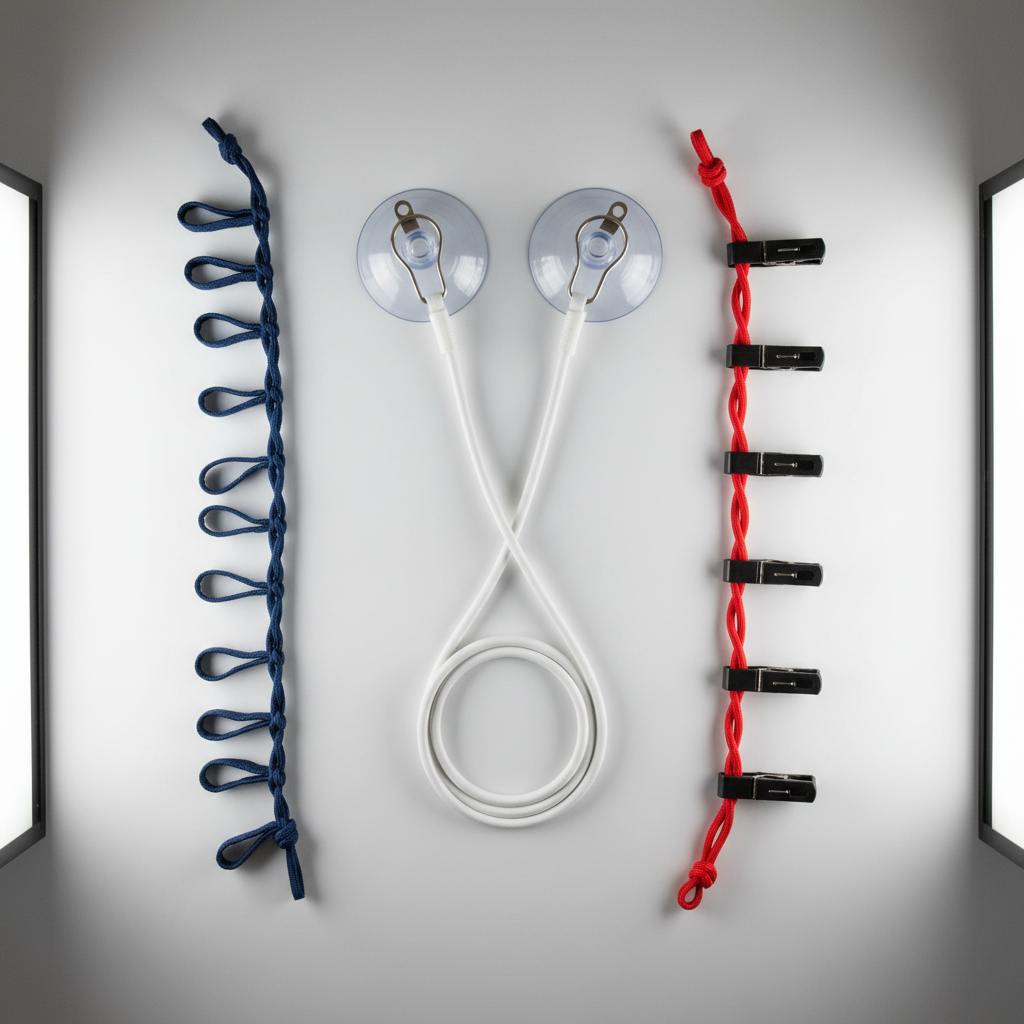
One more honest filter, if your “laundry” is mostly quick-dry tees and underwear, almost any best travel clothesline portable candidate works. If you’re hanging cotton hoodies, denim, or beach towels, you need stronger anchors and you should plan for longer dry times.
Best portable travel clothesline picks (by scenario)
Instead of ranking 15 near-identical products, these picks map to the scenarios that drive satisfaction, or frustration.
1) Best for hotel bathrooms: braided no-pin clothesline
This is the “set it and forget it” option. You stretch it across a shower area or between towel bars, then twist garments into the braid so they don’t slide together.
- Why it wins: no clothespins, quick setup, works for small loads.
- Watch-outs: don’t overload it, and avoid rubbing the braid against sharp metal edges that can fray it over time.
2) Best for smooth surfaces: suction cup clothesline with locking cups
If you’re often in newer hotels with glass shower walls, suction can be very convenient. “Locking” levers usually hold better than simple push-on cups.
- Why it wins: no hooks needed, clean and reversible install.
- Watch-outs: clean and dry the surface first, soap film is the silent failure mode.
3) Best for camping/RV: paracord-style line + sturdy pins
Outdoors, wind and distance make stronger cord worth the bulk. A paracord line can also serve as utility cord in a pinch, though you shouldn’t rely on it for safety-critical uses.
- Why it wins: higher capacity, flexible anchoring, better in wind.
- Watch-outs: bring pins or carabiners, and use knots you can untie easily.
4) Best ultra-light backup: retractable travel clothesline
If your priority is “always have something” in a carry-on, retractable models pack tiny and keep things tidy.
- Why it wins: compact, quick to stow, no tangles when designed well.
- Watch-outs: short spans mean clothes touch more, so drying can slow down.
How to set it up so clothes dry faster (not just “hang there”)
A portable line is only half the story, airflow and spacing do the rest. According to EPA guidance on indoor air quality and moisture, controlling dampness helps reduce mold growth risk, so avoid leaving wet laundry in a closed, unventilated room for long periods.
- Wring smarter: roll garments in a towel and press, it removes more water than hand-wringing alone in many cases.
- Leave gaps: space items so fabric edges don’t overlap, especially thicker seams.
- Use the fan/AC: moving air matters more than heat, point airflow across the line if possible.
- Hang by heaviest edge: waistbands and thicker hems drip longer, position them lower so they don’t soak lighter fabric.
- Rotate once: flip items after an hour or two in humid climates, it helps stubborn spots.
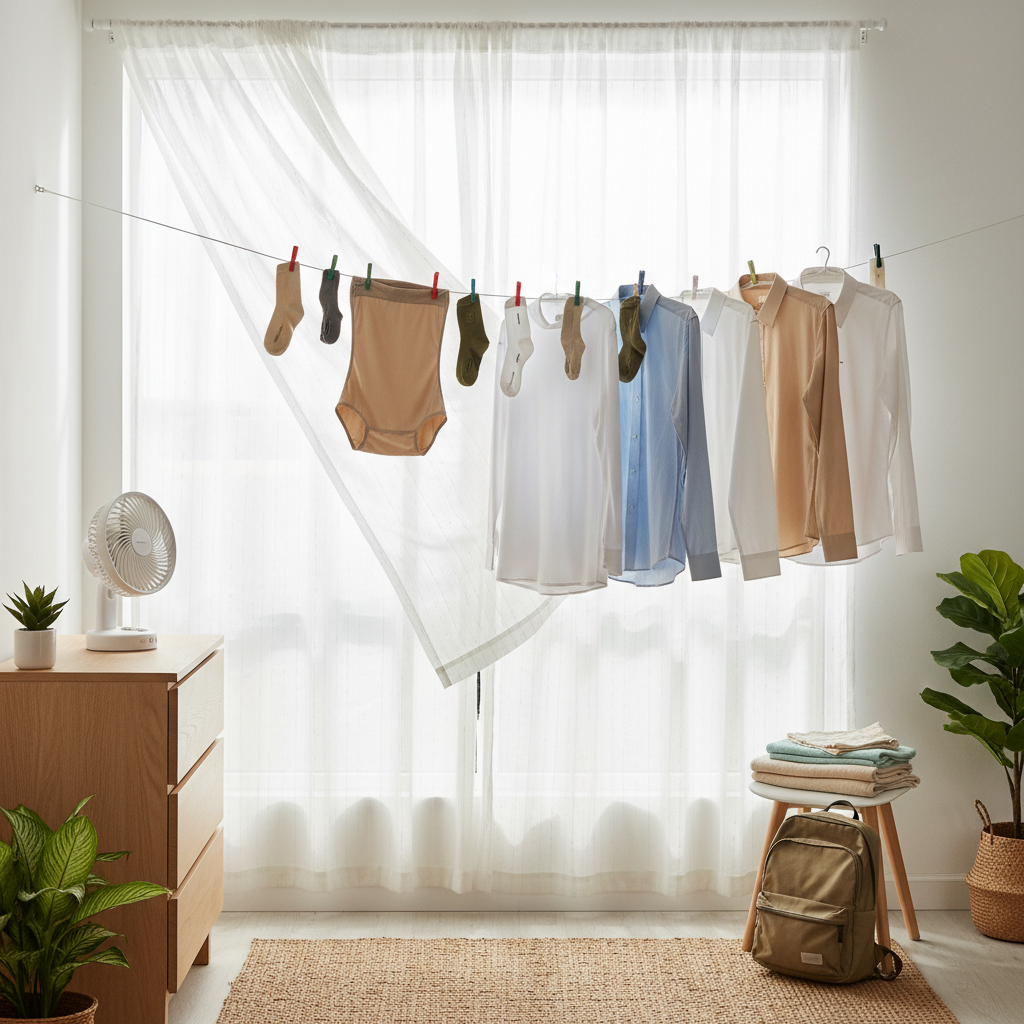
If you’re dealing with odor-prone athletic wear, drying fast is part of the solution, but washing thoroughly matters too. If skin irritation or unusual rashes happen during travel, that becomes a health question, and it’s reasonable to consult a clinician.
Common mistakes (and how to avoid them)
- Relying on suction cups on textured tile: if the surface is matte or bumpy, plan on hooks or a different anchor.
- Overloading “no-pin” lines: they’re great for small items, but heavy wet denim can pull everything into a clump.
- Stringing across walkways: you’ll forget it at night and trip, set the line high and out of traffic.
- Ignoring local rules: some properties restrict balcony drying, check signage or house rules to avoid complaints.
- Using weak clips outdoors: wind will win, choose stronger pins or small carabiners for camping.
Also, don’t underestimate simple friction. If your best travel clothesline portable pick slides on a towel bar, wrap the contact point with a small cloth or rubber band to increase grip, just make sure it won’t damage finishes.
When it’s worth getting more help or changing approach
If you travel constantly for work and laundry is a weekly pain point, a line helps, but it may not be the best “system.” In these cases, consider a local wash-and-fold service, hotel laundry, or quick-dry travel clothing that’s designed to air-dry overnight.
For safety concerns, such as needing to anchor a line near electrical fixtures, sprinklers, or heaters, it’s better to relocate the setup. If you’re unsure about a rental property rule or cruise policy, ask the host or staff, it saves hassle.
Conclusion: the best choice is the one that matches your anchors
The best travel clothesline portable option for 2026 is rarely the fanciest one, it’s the one that fits your most common room surfaces and your typical laundry load. Hotels usually favor braided or suction designs, camping and RV trips lean paracord with better clips.
If you want a simple next step, pick one design that matches where you stay most, and do a dry run at home. If it takes more than two minutes to set up, it probably won’t get used when you’re tired and on the move.