
Campground booking guide is what you want when “everything’s full” keeps ruining your trip plans, or when you’re unsure whether to trust a listing, a cancellation policy, or a first-come-first-served sign.
The good news is that booking campsites in the U.S. gets a lot easier once you know two things: where inventory actually lives, and what timing rules each system uses. Most frustrations come from treating every campground like it works the same way. It doesn’t.
This guide walks through the real-world decisions: picking the right booking channel, timing reservations, reading site details that matter, and building a backup plan so you still camp even when your first choice disappears.
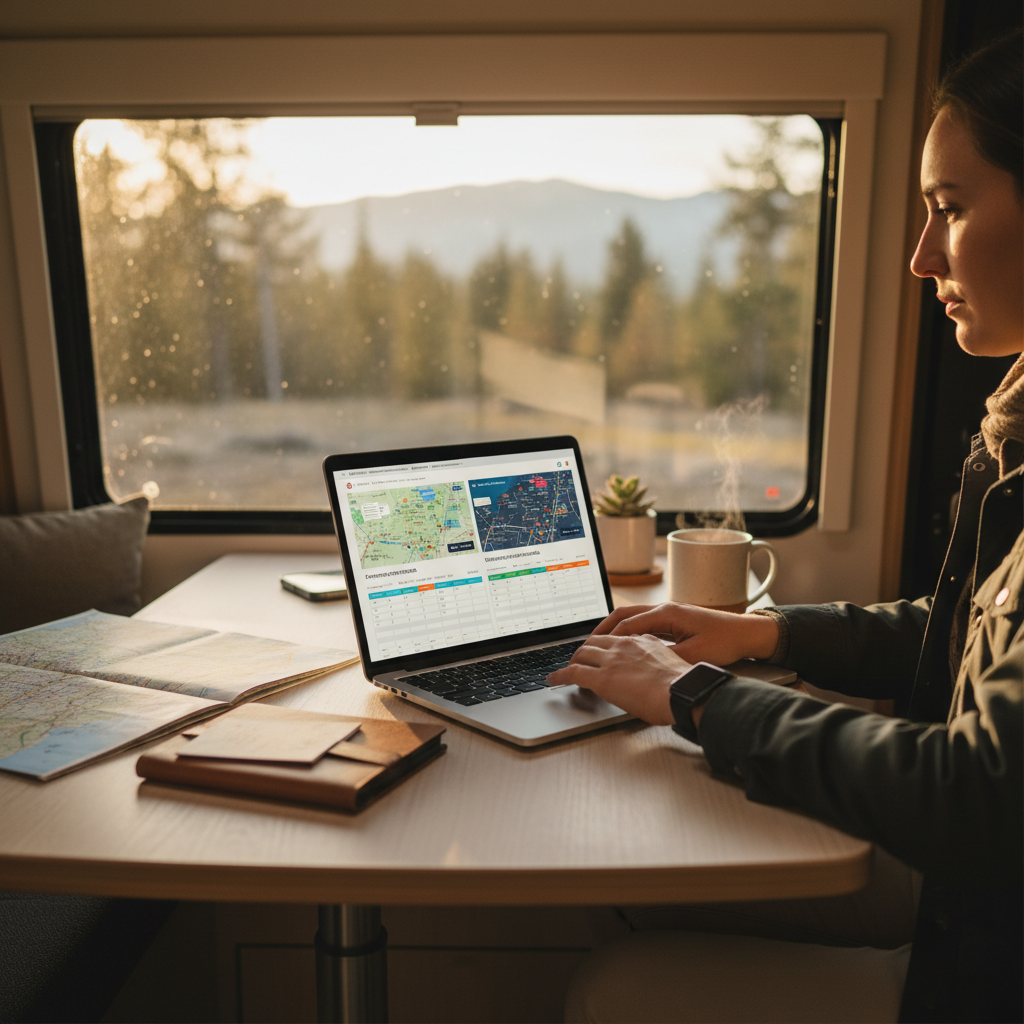
What usually makes campground reservations hard (and how to spot your situation)
Most campers think the challenge is “demand,” but the bigger issue is mismatched expectations. Here are the patterns that show up again and again.
- Release windows vary by system: some parks open dates six months out, others use rolling windows, lotteries, or seasonal drops.
- Inventory is split across platforms: a campground might appear on one site, while nearby alternatives live somewhere else entirely.
- Site details are easy to misread: vehicle length, generator hours, shade, slope, and “walk-in” vs “drive-up” can make a “booked” trip feel unusable.
- Policies differ a lot: cancellation fees, minimum nights, and day-of check-in rules can punish last-minute changes.
According to the National Park Service, many popular parks and campgrounds rely on advance reservations and may sell out quickly during peak seasons, which is why knowing release timing matters as much as where you search.
Quick self-check
- If you camp on weekends in summer within 2–4 hours of a major city, you’ll often need a plan and a backup.
- If you’re traveling midweek or shoulder season, flexibility beats aggressive “sniping.”
- If you’re in an RV, your “available” options shrink fast due to pad length, turning radius, and hookups.
Where to book: the channels that actually cover most U.S. campgrounds
A practical campground booking guide starts with a simple idea: don’t search everywhere, search the right places for the type of campground you want.
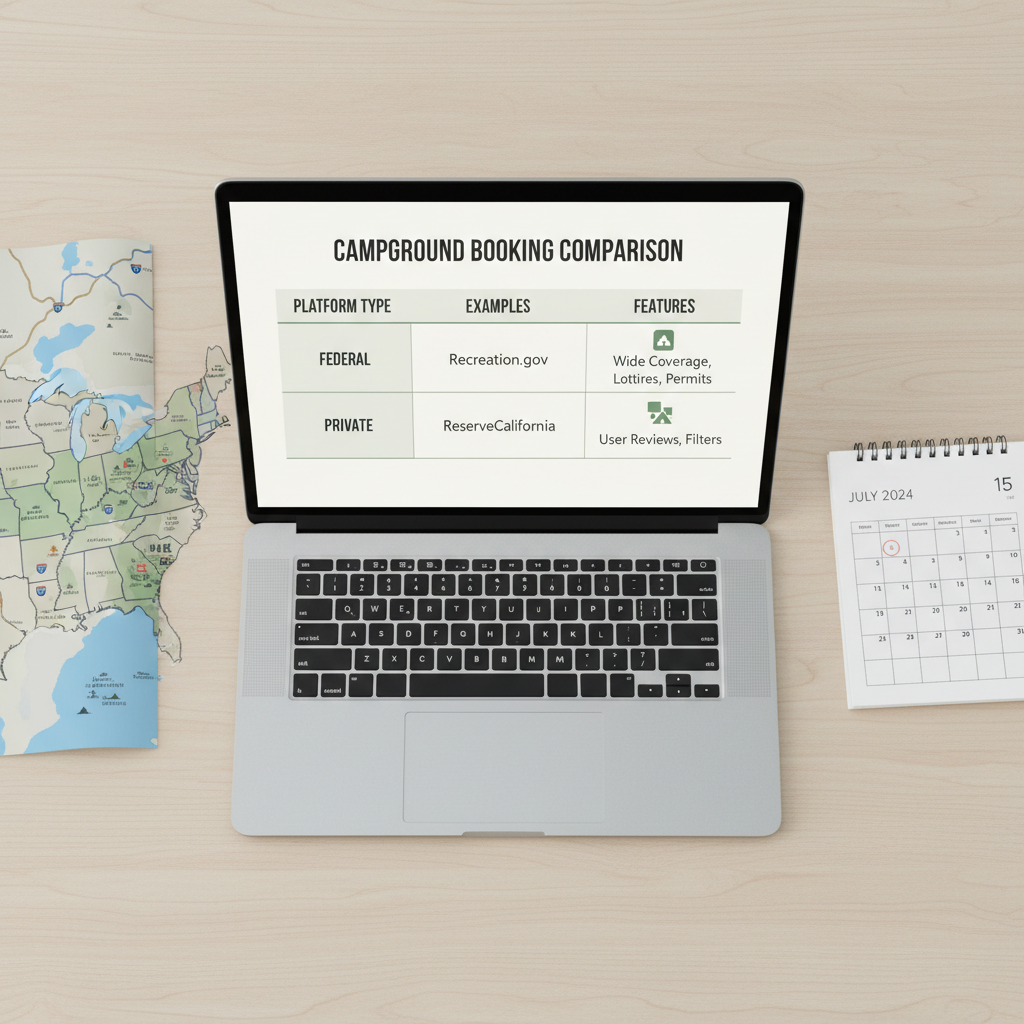
| Campground type | Where bookings often happen | Best for |
|---|---|---|
| National parks / federal recreation | Recreation.gov (plus some park-specific processes) | Iconic destinations, structured reservations |
| State parks | State park reservation sites (varies by state) | Great facilities, close-to-home trips |
| Private campgrounds & RV resorts | Campground websites, KOA, regional networks | Hookups, amenities, predictable rules |
| County/municipal parks | County portals, local systems, sometimes phone | Hidden gems, lower competition |
| Backcountry / permits | Park permit systems (often Recreation.gov or park site) | Dispersed routes, quota-based access |
If you’re juggling multiple regions, it helps to keep a short “platform stack” you always check. One federal source, your target state system, and one private fallback is usually enough.
When to book: timing rules that change everything
Timing is where most people lose. Not because they’re careless, but because they assume “six months out” is universal. In reality, each system has its own logic.
- Rolling window: dates open each day for a future day (example: book exactly X months ahead). You want reminders and a fast checkout flow.
- Fixed release date: an entire season or chunk releases at once. You want the dates, the time, and alternatives pre-picked.
- Lottery: you apply, then results decide. You want a wide range of acceptable dates and backup reservations elsewhere.
- First-come, first-served: no reservations, sometimes with early lines. You want arrival timing, weekday strategy, and a nearby reserveable option.
According to U.S. Forest Service guidance for many recreation areas, availability and reservation policies vary by site and season, so confirming rules on the official page before committing to a long drive is a smart habit.
A simple timing playbook
- Peak weekends: aim for release day/time, and pre-create accounts and saved payment methods.
- Shoulder season: check for cancellations 7–14 days out, and again 48 hours out.
- Last-minute trips: look for “walk-up” sites, county parks, and private campgrounds near public land.
How to read listings like a camper (not like a shopper)
Listings can look complete while still hiding the detail that matters most: whether your setup fits and whether you’ll sleep well. This is where a campground booking guide earns its keep.
Details that commonly cause regrets
- Vehicle length limits: don’t guess, and don’t assume “35 ft max” includes your tow vehicle.
- Surface and slope: gravel pads and uneven sites can be fine, but they change leveling needs.
- Shade and exposure: “partial shade” can still mean sun all afternoon, which matters in hot states.
- Noise: proximity to bathrooms, dumpsters, playgrounds, or road edges can be a deal-breaker.
- Hookups reality: verify amps, water pressure expectations, and dump station access.
If the listing has a site map, use it. If it has photos, assume they show the best angle, then plan for slightly worse. If it has neither, treat it as a “bring flexibility” choice.
Step-by-step: booking a campsite with fewer surprises
This is the practical loop many experienced campers follow, especially for new areas.
- Choose a priority zone: instead of one campground, pick a 20–40 minute radius where you’d still enjoy the trip.
- Define your non-negotiables: drive-up vs walk-in, hookups, pet rules, quiet hours, accessibility needs.
- Pick 3 targets: one “dream” option, one realistic option, one easy fallback.
- Check policies before checkout: cancellation deadlines, minimum nights, entrance fees, and change fees.
- Save proof: confirmation email, site number, check-in instructions, and after-hours contact.
Key takeaway: booking is a decision tree, not a single click. You’ll feel much calmer when your fallback is already chosen.
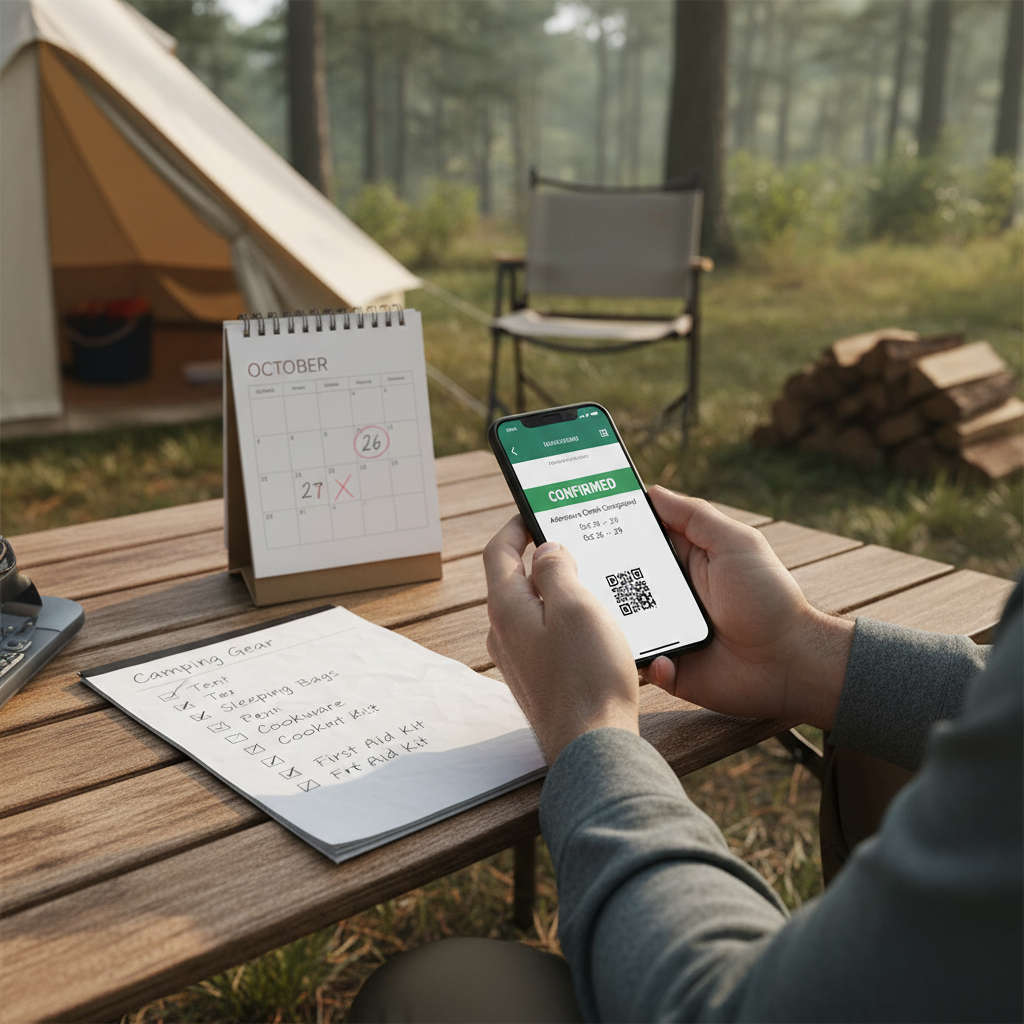
Common mistakes that waste time or money
Some mistakes are obvious after you’ve made them once. If you want to skip that part, watch these.
- Only searching one platform: lots of “sold out” moments are really “wrong website” moments.
- Booking the first available site: availability alone does not mean it fits your rig or your sleep preferences.
- Ignoring minimum-night rules: weekend-only availability can be blocked by a 2–3 night minimum.
- Overpaying for flexibility: sometimes a more expensive refundable rate makes sense, sometimes it’s just money left behind.
- Forgetting arrival constraints: some parks lock gates at night or require check-in during certain hours.
Also, be careful with unofficial “mirrored” listings. If a deal looks odd, go to the official campground operator site and verify the same site number and rules.
Safety and logistics: what to confirm before you roll in
This part isn’t glamorous, but it prevents the worst outcomes. Conditions vary by region and season, and if you have medical concerns or special needs, it’s usually worth checking with a professional or the park directly.
- Fire restrictions: verify current rules, and don’t assume “fire ring” means “campfire allowed.”
- Weather and road access: mountain roads, desert flash-flood zones, and winter closures can change plans quickly.
- Water and sanitation: confirm potable water availability and whether restrooms are seasonal.
- Wildlife practices: food storage rules differ, and enforcement can be strict in some areas.
According to the Centers for Disease Control and Prevention (CDC), outdoor travelers should take steps to prevent tick and mosquito bites, which is a helpful reminder to pack repellent and do checks after hikes.
Conclusion: a calmer way to book, even when sites sell out
A solid campground booking guide doesn’t promise you’ll always get the most popular campsite, it gives you control: better timing, better platform choices, and fewer “surprise” sites that don’t work in real life.
If you want one action to take today, build a short list of two to three booking channels you trust, then set reminders for the release window of your top destination. If you want a second action, pre-pick one fallback campground in the same area, because that single step saves more trips than people expect.
FAQ
What is the best campground booking guide for beginners in the U.S.?
A useful starting point is a guide that explains where federal, state, and private inventory is listed, plus how reservation windows work. Beginners usually struggle more with “where to look” than with the actual checkout process.
How far in advance should I book campgrounds for summer weekends?
Many popular areas require booking as soon as the reservation window opens, especially for Friday and Saturday nights. If you’re flexible on location or can camp midweek, you often have more options without booking as far out.
Why do campgrounds show “available” but won’t let me book one night?
Minimum-night rules commonly block single-night stays, particularly on weekends or holidays. Try shifting dates, adding a night, or checking nearby campgrounds with different policies.
Are first-come, first-served campgrounds reliable?
They can be, but reliability depends on season, day of week, and how early you arrive. Many campers pair a first-come option with a reserveable backup nearby to avoid long drives with no place to sleep.
How do I avoid booking a campsite that won’t fit my RV?
Check maximum vehicle length, pad type, and site geometry, then compare to your full setup length including any towed vehicle when applicable. When details are unclear, calling the campground office often saves money and frustration.
What should I do if my desired campground is sold out?
Look for cancellations, expand your radius, and switch to a different campground type such as county parks or private campgrounds. If your schedule allows, moving the trip to midweek can open up surprising availability.
Is it safe to book through third-party sites?
Sometimes it works fine, but it depends on the operator and the platform. If the listing seems inconsistent, verify details on the official operator page and review cancellation terms carefully before paying.
If you’re planning a trip and want a more “set it and forget it” approach, keep a simple template for your searches: one priority zone, three target campgrounds, and a checklist of fit and policy items, it turns booking from a stressful scramble into a repeatable routine.