
Public bath travel etiquette for onsens is mostly about two things: keeping the bath water clean and making sure you don’t make other guests uncomfortable. If you remember that, the rest stops feeling mysterious and starts feeling doable.
Many Americans hesitate because they worry about “doing it wrong,” being stared at, or accidentally offending someone. Onsens can be quiet, intimate spaces, and the rules are often unspoken, which is exactly why visitors feel pressure.
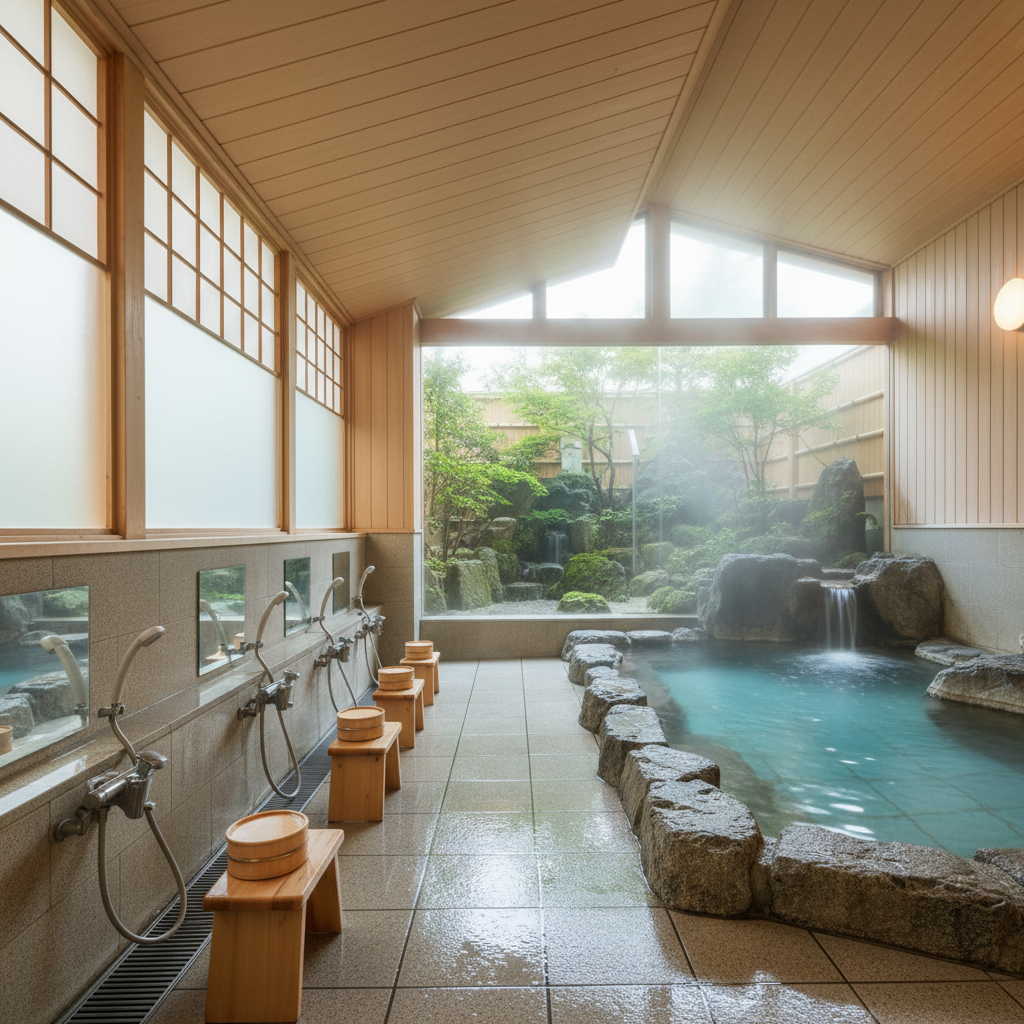
This guide breaks down what matters most, how to self-check what kind of onsen you’re entering, and what to do step by step. I’ll also flag common misreads, like “quick rinse is enough” or “a towel in the water is fine,” because those are the mistakes that usually trigger side-eye.
What an onsen is (and why the etiquette is stricter than a pool)
An onsen is a hot spring bath, typically fed by geothermal water and managed under local rules. In many facilities, you wash first, then soak, and the soaking water stays clean because everyone arrives already scrubbed.
According to Japan National Tourism Organization (JNTO), the basic pattern is to wash your body before entering the bath and to keep towels out of the water. That’s the “spine” of public bath travel etiquette, everything else is a variation.
Also, most onsens are separated by gender, and many use communal bathing with no swimwear. Some locations offer private baths, which changes the social pressure but not the hygiene expectations.
The rules that matter most (the “do these and you’re fine” list)
If you only remember a handful of norms, make them these. They’re the ones most guests assume everyone knows.
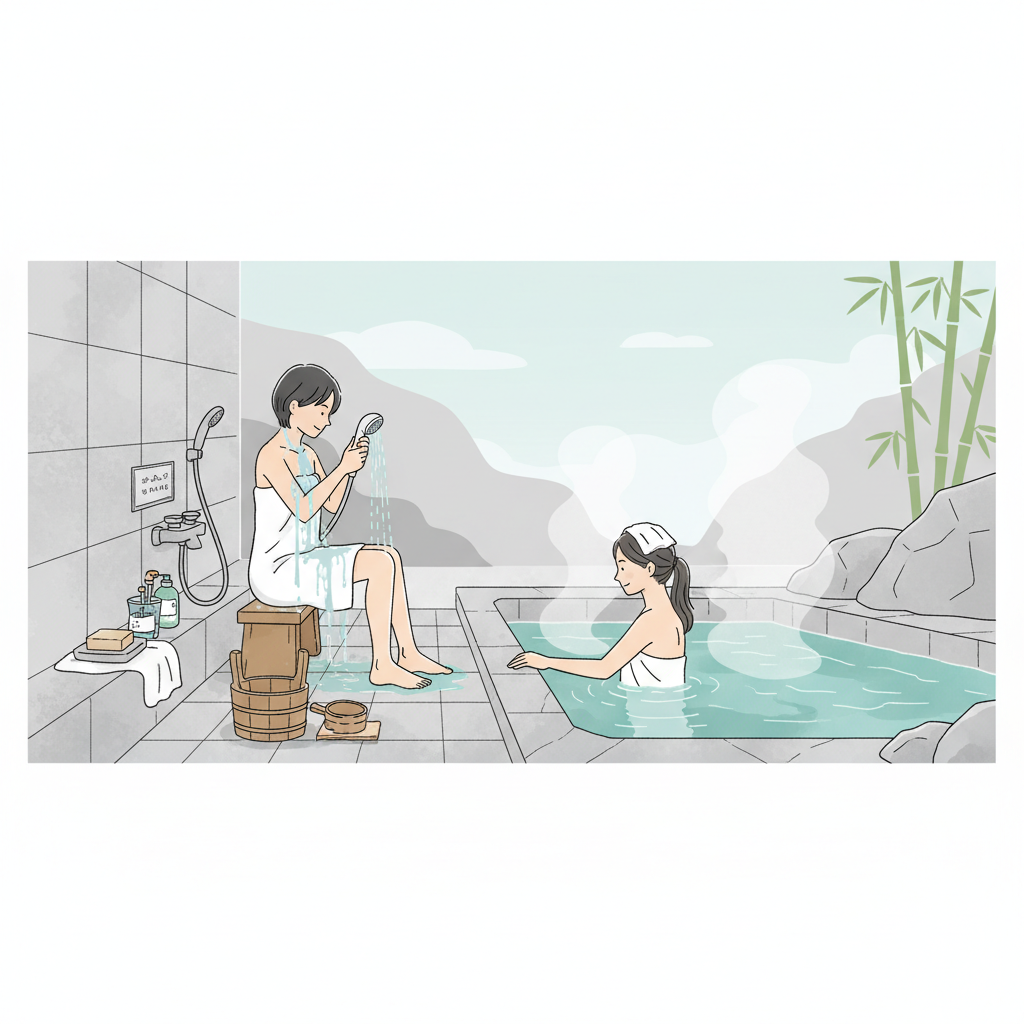
- Wash thoroughly before soaking, using the shower stations, not the pool.
- Keep your small towel out of the bath water; place it on your head or on the side.
- Tie up long hair so it doesn’t touch the water.
- Enter slowly and quietly; splashing reads as disrespectful.
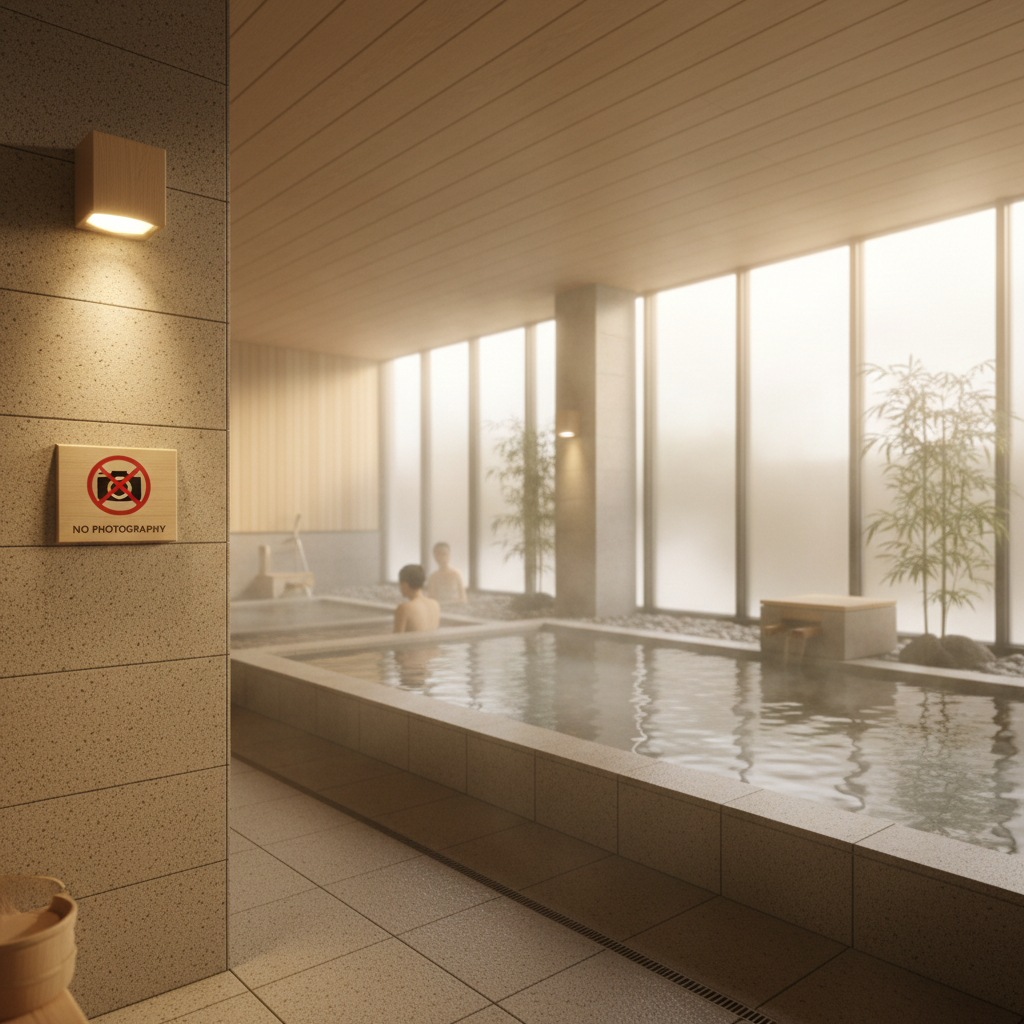
- No phones, no photos in bathing areas, even if you think nobody is in frame.
- Rinse off soap completely at the washing station before you soak.
- Don’t soak if you’re visibly dirty, sweaty, or covered in sand; wash first, always.
Quiet conversation is usually fine, but many onsens lean toward “library voice.” If you’re unsure, match the room, because being slightly too quiet is rarely the wrong move.
Quick self-check: what kind of bathhouse are you walking into?
Not every onsen works the same way. Before you stress about rules, take 60 seconds and identify the setup, because that tells you what’s flexible and what isn’t.
- Ryokan onsen: often calm, traditional, and less forgiving of noisy behavior.
- Day-use onsen / super sento: bigger, more varied amenities, sometimes more tourists, but still strong hygiene norms.
- Private bath (kashikiri): shared facility rules still apply, but you don’t navigate a communal pool.
- Tattoo policy posted?: signage at the entrance usually answers this quickly.
- Indoor vs outdoor (rotenburo): outdoor baths feel relaxed, but the same public bath travel etiquette applies.
If you see a poster with icons near the entrance, treat it like the real rulebook. It’s often more accurate than what any blog “assumes.”
Step-by-step: how to enter, wash, soak, and exit without awkward moments
This is the simple routine most places expect. Once you do it once, it becomes muscle memory.
1) In the changing area
- Remove shoes where indicated, store them in a locker or cubby.
- Undress fully, place clothes in a basket or locker.
- Bring a small towel into the bathing area, leave large towels in the locker area.
2) At the washing station
- Sit on the stool to shower; standing can splash neighbors.
- Wash hair and body with soap, then rinse until there’s no suds.
- Rinse your stool area if the facility provides a rinse bucket, many do.
3) In the bath
- Rinse lightly (no soap) before entering if the bath edge has a rinse station.
- Step in slowly, heat can be intense, especially for first-timers.
- Keep towel out of the water, keep hair secured.
4) Exiting
- Dry off a bit before returning to the changing room so you don’t drip everywhere.
- Hydrate afterward; if you feel dizzy, sit and cool down.
If you have a medical condition, are pregnant, or are unsure about heat exposure, it’s reasonable to ask staff and, in many cases, consult a clinician for personalized advice. Hot water immersion can affect blood pressure.
What to bring (and what not to bring)
Most facilities sell or provide basics, but having a simple kit makes everything smoother.
- Small towel: for modesty while walking and drying off, not for soaking.
- Toiletries: many provide shampoo and body wash, but sensitive-skin travelers often prefer their own.
- Hair tie: more important than people expect.
- Coins: lockers sometimes need them.
Skip jewelry if possible, and avoid bringing valuables into the bathing area. Also, don’t bring your phone, even “just in the locker room” can get misunderstood in some facilities.
Common mistakes Americans make (and how to avoid them)
Most issues come from applying gym or hotel-pool habits to an onsen. The cultural logic is different.
- “I already showered at the hotel.” Still wash again on site, because you’re entering shared water.
- Using the bath as a bathtub by scrubbing in the pool, that’s a hard no in most places.
- Leaving foam behind at the shower station, rinse thoroughly and keep your space tidy.
- Trying to be modest with a swimsuit when it’s not allowed, you’ll stand out more, not less.
- Over-apologizing or acting panicked after a small slip, a calm correction is usually enough.
One more that’s touchy: staring. People may glance because you’re new, but returning a long stare can feel confrontational. Look where you’re going, do your routine, and let the situation normalize.
Tattoos, shaving, and other sensitive topics (practical, not preachy)
Tattoo policies vary by facility. Some ban tattoos, some allow small tattoos covered by a patch, and some are fully tattoo-friendly. In Japan, tattoos can be associated with organized crime in traditional contexts, so even “cute” tattoos may trigger a rule, not a personal judgment.
- If the website mentions tattoos, follow that over social media guesses.
- If you arrive and see “No Tattoos,” ask politely whether covers are acceptable.
- Consider booking a private bath if you want a simpler path.
As for shaving, grooming, or exfoliating, many facilities prefer you keep it minimal and clean up after yourself. If you’re unsure, treat the onsen like a shared spa, not your bathroom at home.
Cheat-sheet table: what’s OK vs not OK
If you like a fast reference, this table captures the typical expectations. Individual onsens can differ, so posted rules win.
| Situation | Usually OK | Usually Not OK |
|---|---|---|
| Before entering the bath | Wash body and hair, rinse fully | Quick rinse only, entering with soap on skin |
| Towel use | Keep towel on head or bath edge | Soaking towel in the hot spring |
| Hair | Tie up long hair | Letting hair trail in the water |
| Noise | Low voice, short conversations | Loud laughter, speaker-like talking |
| Photos | None in bathing areas | Any camera use near baths |
| Health comfort | Short soaks, cool down breaks | Pushing through dizziness or nausea |
Key takeaways (so you don’t overthink it)
- Wash first, soak second, and keep the soaking water clean for everyone.
- When you’re unsure, copy the quietest, most considerate person in the room.
- Posted signs matter more than assumptions, especially for tattoos and rules around towels.
- If heat makes you feel unwell, step out and cool down, and seek medical advice if symptoms persist.
Conclusion: relax, but earn the right to relax
Public bath travel etiquette isn’t about passing a test, it’s about showing basic care for shared space. If you wash properly, keep your towel out of the water, and stay low-key, you’ll blend in fast.
Your next step can be simple: pick one onsen, check tattoo and photo rules on the official site or at the entrance, then follow the routine once without rushing. After that, the “rules” stop being the headline, the soaking does.
FAQ
Do I have to be completely nude in an onsen?
In many traditional onsens, yes, swimwear is not allowed in the communal bath. If that’s a dealbreaker, look for private baths or facilities that explicitly allow bathing suits, since rules vary by location.
How strict is public bath travel etiquette about washing first?
Usually very strict, because it’s the main method for keeping the shared bath clean. Even if you showered earlier, most places expect you to wash on-site right before soaking.
Can I cover myself with the small towel in the water?
Typically no. You can hold it while walking, but once you enter the bath, keep it out of the water, many guests place it on their head or on the edge.
What should I do if I accidentally break a rule?
Correct it calmly and move on. Staff may give a brief reminder, and other guests usually relax once they see you adjusting without drama.
Are tattoos always banned at Japanese onsens?
No, but it’s common enough that you should check ahead. Some facilities allow small tattoos with covering stickers, while others are tattoo-friendly, especially in tourist-heavy areas.
Is it okay to talk with friends in the bath?
Soft conversation is often fine, but many onsens keep the atmosphere quiet. If the room feels silent, match that, it’s the safest read.
How long should I soak in hot water?
Comfort varies a lot. Many people do shorter sessions with breaks, and if you feel lightheaded, it’s smart to exit and cool down; if you have health concerns, asking a clinician is reasonable.
If you want a smoother first onsen experience
If you’re planning your first visit and prefer fewer unknowns, consider choosing a facility that clearly posts rules in English and offers private baths or tattoo guidance, that one choice often removes most of the stress without changing the experience.