
House sitting travel tips can genuinely cut lodging costs to near zero, but only if you treat it like a trust-based exchange, not a last-minute coupon. Most people struggle with the same things: getting accepted for good sits, knowing what’s “normal” to ask, and avoiding awkward surprises once they arrive.
Done right, house sitting feels like borrowing a home while you care for pets and keep the place running, simple, quiet, and very doable. Done casually, it can turn into mismatched expectations, schedule stress, or a sit that doesn’t fit your comfort level.

This guide focuses on what actually moves the needle: how to pick sits that match your travel style, how to look trustworthy fast, what to confirm before you commit, and how to make the stay smooth for both sides.
How house sitting really works (and what “free” usually means)
In most cases, you’re exchanging reliable care for the home and pets in return for accommodation. You typically don’t pay rent, but you may still cover travel costs, daily groceries, local transit, and sometimes utilities depending on the agreement.
There’s also a difference between “free” and “worth it.” A sit can be $0 and still expensive in time, logistics, or stress if the duties don’t match your schedule.
- Common duties: feeding pets, walks, litter boxes, basic plants, bringing in mail, light household checks.
- Less common but possible: medication routines, pool/hot tub care, lawn work, security system procedures.
- Usually not expected: deep cleaning, repairs, heavy yard projects, unpaid pet training.
According to U.S. Customs and Border Protection (CBP), travelers should understand the terms of their stay and be truthful about their activities when entering the U.S. If you house sit internationally, consider checking the destination’s entry rules and, when in doubt, consult an immigration professional.
Why people get rejected: the real reasons (and how to fix them)
Homeowners often choose the sitter who feels lowest-risk, not the sitter who “needs it most.” That sounds harsh, but it’s a safety decision. If you’re not getting replies, it’s usually one of these.
- Your profile reads generic: “I love pets and travel” blends in. Add specifics: routines you can handle, home types you’ve lived in, how you handle issues.
- Weak proof of reliability: no references, no verifications, no clear history of responsibility. Fixable fast, but you must build it.
- Applying too late: many desirable sits shortlist within 24–72 hours.
- Mismatch on pet needs: high-energy dogs, separation anxiety, medication, or strict schedules filter out lots of applicants.
- Logistics feel uncertain: unclear arrival time, remote work schedule conflicts, vague transportation plan.
One of the most practical house sitting travel tips is to treat each application like a mini pitch: reassure first, then add personality. Homeowners want calm competence.
A quick self-check: are you ready for a good sit?
If you’re unsure whether house sitting fits you, run this quick checklist. If you answer “no” to multiple items, start with shorter, simpler sits.
- Can you keep a consistent routine for feeding, walks, and bedtime?
- Are you comfortable staying in someone else’s home and respecting their rules?
- Can you handle minor surprises, like a pet refusing food or a Wi‑Fi hiccup?
- Do you have at least two references (work, landlord, volunteer, pet-related)?
- Can you communicate clearly and promptly, even when you’re busy?

Also be honest about your travel goals. If you’re trying to move cities every 5 days, house sitting might feel restrictive. If you like slow travel, it’s often a great match.
How to find high-quality sits without wasting hours
The listings you see first aren’t always the best, they’re just the newest or most promoted. Your job is to filter fast and only apply where you have a real shot.
What to look for in a strong listing
- Clear pet routine: feeding times, walk length, alone-time limits.
- Detailed home info: neighborhood, parking, heating/AC, any quirks.
- Communication tone: respectful, organized, responsive in comments or updates.
- Realistic duties: responsibilities match the length and type of sit.
Red flags that deserve extra questions
- “Easy, low maintenance” but no schedule details.
- Multiple pets with no mention of routines or behavior.
- Vague location, vague Wi‑Fi, vague everything.
- Requests that sound like unpaid labor beyond pet/home care.
Practical workflow: save searches, turn on alerts, and apply quickly with a tailored message. Many sitters lose great opportunities because they overthink the first message.
The application that wins: a simple structure that feels human
Homeowners skim. Your opening lines should answer their biggest worry: “Can I trust you with my home and my animals?” Then you add warmth.
- Line 1: confirm dates + location + pet names (shows you read it)
- Line 2–3: relevant experience (similar pet, similar routine, similar home)
- Line 4: how you handle reliability (updates, emergencies, backups)
- Line 5: one genuine detail you liked (not flattery, just specific)
- Close: propose a quick call and share your availability
If you want one of the most underrated house sitting travel tips, it’s this: offer a short video call early. A calm 10 minutes often beats a long message thread.
What to confirm before you say yes (use this table)
Awkward surprises usually come from assumptions. Get clarity early, while you still have the option to decline politely.
| Topic | Questions to ask | Why it matters |
|---|---|---|
| Pet routine | Feeding times? Walk frequency? Can pets be left alone, and for how long? | Determines your daily freedom and whether your schedule fits. |
| Health & meds | Any medications, vet conditions, triggers, bite history, anxiety? | Safety and competence, some needs require confident handling. |
| Home rules | Guests? Smoking? Thermostat? Off-limits rooms? Parking? | Prevents friction and protects boundaries for both sides. |
| Work setup | Wi‑Fi speed, router location, cell coverage, quiet workspace? | If you work remotely, this can make or break the sit. |
| Handover plan | Arrival/departure times, key exchange, backup contact, neighbor info? | Reduces day-one chaos, covers emergencies. |
| Costs | Utilities expectations, car use, pet food provided, any reimbursements? | “Free” varies, clear expectations avoid resentment. |
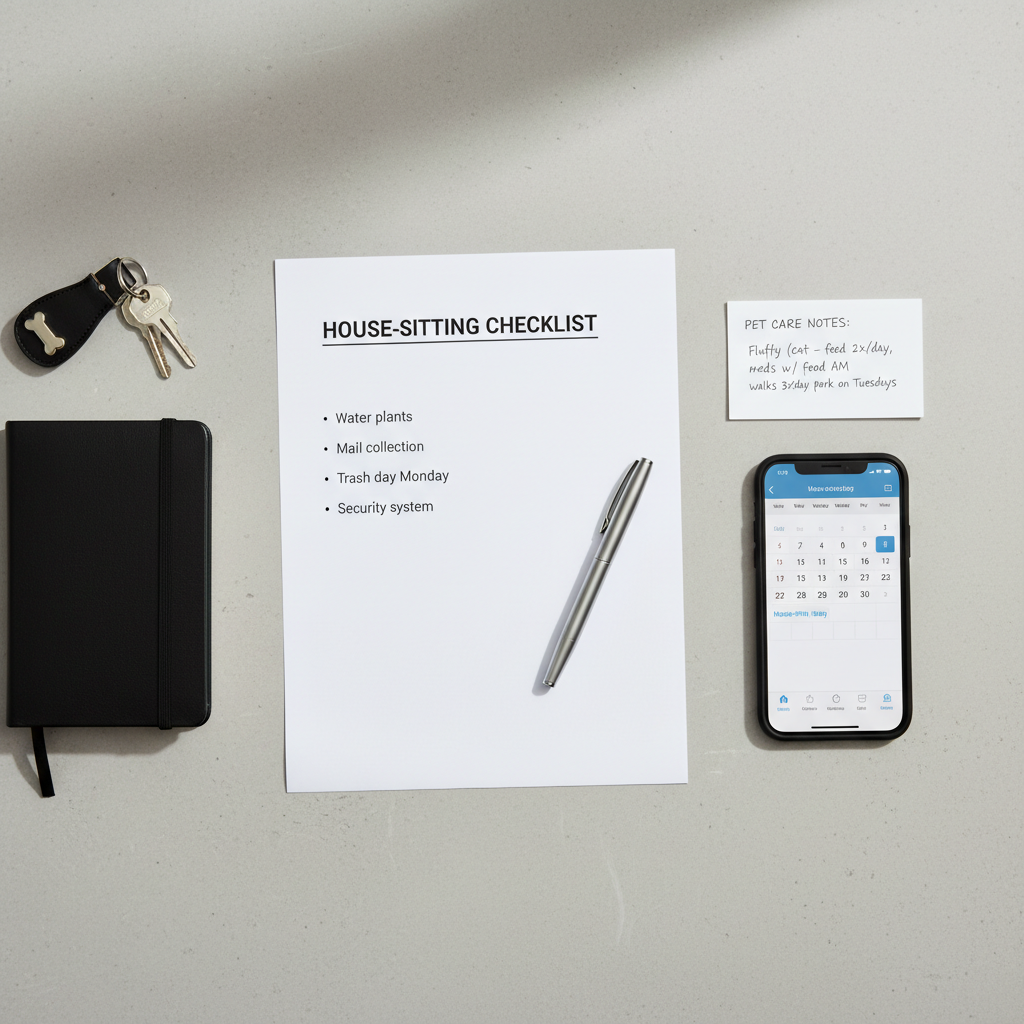
According to the American Veterinary Medical Association (AVMA), consistent routines and careful observation help catch pet issues early. If a pet seems unwell or behavior changes suddenly, contacting the owner and a veterinarian is usually the safest move.
On-the-ground best practices: make the sit smooth and get invited back
Getting accepted is step one, keeping the sit drama-free is what earns great reviews and repeat invites.
Practical habits that homeowners notice
- Day-one photo notes: take quick photos of key instructions, appliance quirks, and pet food labels.
- Update rhythm: agree on a cadence, daily for anxious owners, every 2–3 days for relaxed ones.
- Leave the home “reset”: not a deep clean, just tidy, linens per instructions, trash out, dishes done.
- Respect quiet boundaries: neighbors, parking rules, HOA norms, it matters more than people expect.
If something goes wrong
- Pet health concern: message the owner, document symptoms, ask about vet preference, seek professional care if needed.
- Home issue (leak, power, lock): stop damage if possible, contact owner and emergency contact, keep receipts if you pay out-of-pocket.
- Safety concern: trust your judgment, if you feel unsafe, leave and contact the platform and local authorities when appropriate.
Many house sitting travel tips online skip this, but it’s key: don’t freelance big decisions. Owners usually prefer a quick heads-up over a “fixed it for you” surprise.
Common mistakes that quietly ruin the experience
These aren’t dramatic errors, they’re small choices that create tension over time.
- Overpromising availability: saying “I’m always home” can backfire when you want a day trip.
- Assuming pet behavior stays constant: some pets act differently once owners leave, extra patience helps.
- Not clarifying transportation: a remote sit without a car plan becomes stressful fast.
- Treating the home like a rental: it’s still someone’s personal space, keep it gentle and respectful.
- Ignoring insurance realities: your personal coverage may not apply to a homeowner’s property; ask what coverage exists and consider your own needs.
Key takeaways:
- Apply early and tailor your message to the specific sit.
- Confirm routines and boundaries before committing, especially around alone-time and Wi‑Fi.
- Communicate consistently, calm updates beat long explanations.
When to get extra help or rethink a sit
Some situations deserve more support than a typical sitter can provide, and skipping them is not a failure, it’s judgment.
- Complex medical needs: injections, frequent monitoring, or conditions you’ve never handled, ask for training, written instructions, and vet contacts, or decline.
- Serious behavior issues: bite history, aggression, or severe anxiety, consider professional pet care guidance.
- High-risk environments: extreme weather regions, wildfire zones, hurricane season travel, check local guidance and keep an exit plan.
- Unclear platform support: if there’s no clear dispute process or identity verification, proceed cautiously.
According to Ready.gov (U.S. Department of Homeland Security), having an emergency plan and knowing local alerts can reduce risk during disasters. For longer sits, it’s reasonable to ask owners about evacuation routes and emergency contacts.
Conclusion: travel longer by treating house sitting like a skill
House sitting can be a real path to free accommodation, but it rewards preparation more than luck. If you pick sits that match your routine, apply with clarity, and confirm expectations early, you’ll avoid most of the horror-story moments people worry about.
If you want a simple next step, choose one city you’d love to slow-travel, set alerts, and apply to 5–10 well-matched sits using the same solid message framework, you’ll learn fast what homeowners respond to.
FAQ
- Are house sitting stays really free in the U.S.?
Often the lodging cost is effectively free, but you still cover travel, food, and daily expenses. Some owners may set expectations around utilities or car use, so confirm before accepting. - How do beginners get their first sit without reviews?
Start with shorter sits, be flexible on dates, and bring strong references from employers, landlords, or volunteering. A clear profile photo and a quick video call also help reduce perceived risk. - What should I include in my first message to a homeowner?
Confirm dates, mention the pet’s routine you can handle, explain your reliability habits (updates, emergency readiness), then propose a short call. Keep it specific and calm. - How many hours per day does house sitting take?
It depends on the pets. A low-maintenance cat sit might take 30–60 minutes of active care daily, while dogs with multiple walks can structure your whole day. Always clarify alone-time rules. - Is it okay to leave the home for sightseeing?
Usually yes, within the pet’s alone-time limit and the owner’s expectations. It’s smart to state upfront what a typical day looks like for you, so it doesn’t feel like a surprise later. - What if the Wi‑Fi is bad and I work remotely?
Ask for a speed test screenshot or details before you commit, and identify a backup like a hotspot or nearby coworking spot. If your job is sensitive, consider a sit only with reliable internet confirmed. - What happens if a pet gets sick while I’m sitting?
Contact the owner promptly, share observations, and follow their vet plan. When symptoms seem urgent, seeking veterinary help may be the safest choice, and you can document what happened for clarity.
If you’re trying to stretch your travel budget and want a more predictable way to land great sits, it can help to tighten your profile, build a repeatable application template, and use a pre-sit question list so you stop guessing and start choosing with confidence.