
travel lantern camping battery is one of those searches people make right after a frustrating night: dead phone, dim flashlight, or a “lantern” that barely lights a tent. If you camp even a few weekends a year, the right lantern quickly becomes less about “brightness” and more about comfort, safety, and not burning through batteries.
This guide breaks down what actually matters when you’re shopping or upgrading: battery type, runtime, beam style, charging options, and the small features that feel minor in a product page but matter a lot at 11 p.m. near a trailhead.
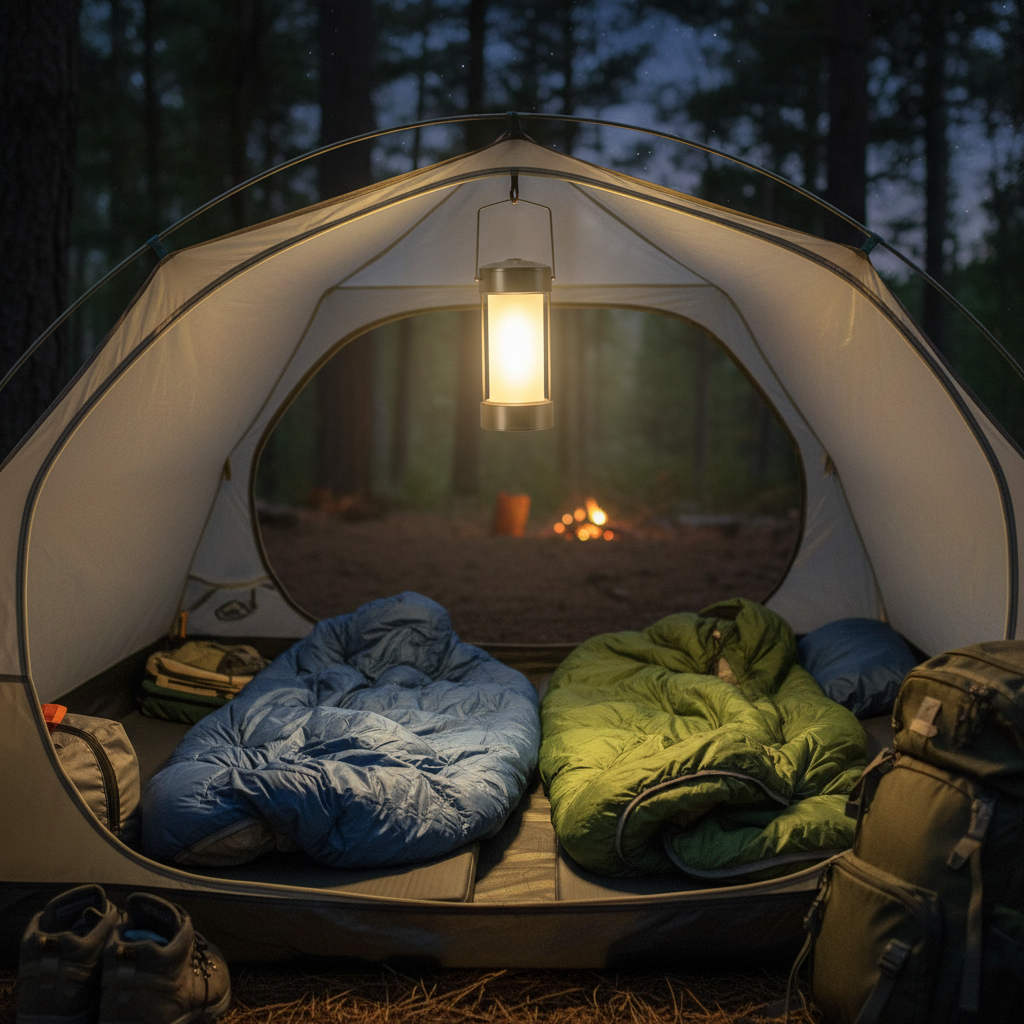
And yes, “battery lantern” can mean a lot of things, disposable AAs, rechargeable lithium, built-in power banks, even hybrid models with solar input. Picking the right one usually comes down to how you camp, not what has the highest lumen number.
What most people really need from a camping travel lantern
For most U.S. campers, the sweet spot is a lantern that can handle three jobs: tent light, camp table light, and quick “walk to the bathroom” light. The problem is that not all lantern beams behave the same way, even if the specs look similar.
- Area lighting for a tent or picnic table: look for diffused light, not a narrow spotlight.
- Low mode that’s truly low: your eyes adjust at night, and a harsh minimum setting feels miserable inside a tent.
- Hands-free placement: hooks, magnets, or a stable base matter more than people admit.
- Predictable runtime: a lantern that fades quickly can be more annoying than a dim but steady one.
If your current light “works” but you still hate using it, it’s usually because the beam is too directional, the controls are fiddly with cold fingers, or the power setup doesn’t match how you pack.
Battery options: what changes in real use
When people compare a travel lantern camping battery option, they often focus on rechargeability and ignore the logistics: what you can replenish on a road trip, what you can swap in a storm, and what you can realistically keep topped up.
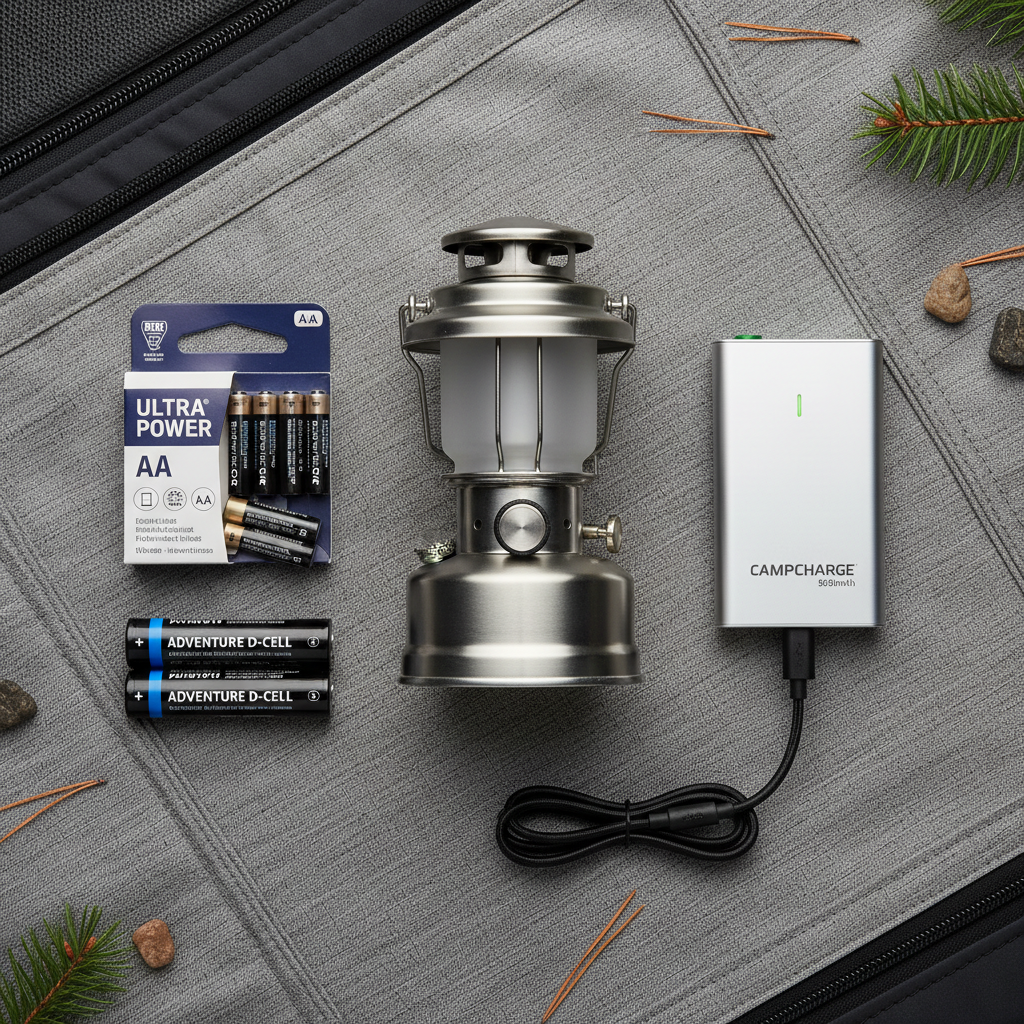
AA/AAA replaceable batteries
Still popular because they’re easy to find anywhere in the U.S. Many families like them for car camping and emergency kits, since you can toss in a fresh set without waiting.
- Best for: occasional trips, backup lanterns, “just in case” storage.
- Watch-outs: ongoing cost, more waste, voltage drop can make the light dim before it’s “dead.”
Rechargeable built-in lithium (USB)
This is the modern default. If you already carry a power bank, topping up a lantern feels easy. But built-in batteries age over time, and some models are hard to replace.
- Best for: frequent camping, minimalist packing, road trips with USB power.
- Watch-outs: if you forget to charge at home, you can’t “run to the store” for a fresh battery pack.
Replaceable rechargeable cells (like 18650-type)
Some lanterns use removable lithium cells. It can be a nice middle ground: recharge at home, swap in the field. Quality varies a lot by brand and battery source.
- Best for: longer trips, people who already manage rechargeable cells.
- Watch-outs: only use trusted cells and chargers, mismatched batteries can create safety risks.
Hybrid/solar input models
Solar can help, but it’s not magic, especially in shade, winter, or short days. Think of it as “extend runtime,” not “infinite power.” According to National Park Service, campers should plan for changing weather and limited daylight when preparing gear, which applies directly to solar charging expectations in many parks.
A quick decision table (pick your best match)
If you’re stuck, this is the simplest way to narrow your options without overthinking specs.
| Camping scenario | Recommended battery setup | Why it tends to work |
|---|---|---|
| Car camping weekends | Rechargeable USB lantern + power bank | Easy top-ups from car/brick, good brightness range |
| Backpacking, weight matters | Small rechargeable lantern, warm low mode | Lower weight, better tent comfort, less battery waste |
| Family campsite, lots of use | Larger lantern with long runtime or removable cells | More hours per charge, fewer “is it dying?” moments |
| Emergency prep / storm outages | AA/AAA lantern + stored batteries | Swap instantly, no charging required when grid is down |
| Road trip + occasional hikes | USB-C lantern + car charging | One cable ecosystem, convenient in transit |
How to judge brightness, beam, and comfort (without chasing lumens)
Lumens matter, but they’re not the whole story. A 1000-lumen lantern on high can be great for setting up camp fast, then feel obnoxious when you’re trying to wind down. Look for usable levels across the range.
- Low mode: should be comfortable for reading or moving around a tent without glare.
- Medium mode: your “default” for cooking or cleaning.
- High mode: occasional bursts for setup, searching, or group areas.
- Color temperature: warmer light often feels less harsh at night, especially inside fabric walls.
One practical test: if you can, shine it at a light-colored wall or tent panel. If you see a hot spot and a sharp edge, it will likely feel more like a flashlight than a lantern.
Practical checklist: is this lantern right for your pack?
Before you buy, or before you commit to bringing one lantern on a trip, run through this quick self-check. It catches the common “I didn’t think of that” problems.
- Charging: Do you already carry USB-C, or is it another cable?
- Runtime reality: Will you use low/medium most of the time, or do you tend to crank it?
- Placement: Do you need a hook for a tent loop, or a flat base for a picnic table?
- Weather: Any chance of rain or heavy dew, and is it rated for moisture?
- Controls: Can you change modes without blinding yourself?
- Battery plan: If it dies, do you have a backup option that night?

If you answered “I’m not sure” on charging or battery plan, that’s often the deciding factor. A great lantern is the one you can reliably keep powered.
Setup tips: making your battery lantern last longer at night
Even a strong travel lantern camping battery setup can feel short-lived if the lantern is used inefficiently. A few habits stretch runtime without making camp gloomy.
- Use two lights, not one on high: a lantern on medium plus a small headlamp often feels better than blasting high output.
- Hang it higher: higher placement spreads light, so you can run a lower mode.
- Pick task lighting: use a focused light for cooking, keep the lantern on low for ambiance.
- Pre-charge smarter: top up your lantern and power bank the day you leave, not “sometime this week.”
- Cold weather note: batteries can drain faster in cold conditions, keep spares or the lantern closer to your body heat when possible.
For longer trips, consider a simple power budget: estimate how many hours you’ll need on low/medium each night, then add a buffer. Overplanning a little is nicer than improvising in the dark.
Safety and common mistakes to avoid
Lanterns feel harmless, but batteries and charging gear can introduce risk if you treat them casually. According to U.S. Consumer Product Safety Commission, battery-related incidents can happen when batteries are damaged, improperly charged, or used with incompatible equipment, so it’s worth being picky about chargers and cables.
- Don’t charge unattended in a tent: especially with questionable cables, moisture, or heat buildup.
- Avoid mixing battery types: don’t combine old and new AAs, and don’t mix brands in the same device.
- Watch water resistance claims: “splash-resistant” is not the same as “left in rain overnight.”
- Skip ultra-cheap unknown cells: with removable lithium batteries, quality control matters more than specs.
If you notice swelling, unusual heat, or a burnt smell from a rechargeable lantern, stop using it and consider contacting the manufacturer or a qualified technician. If you’re unsure, it’s reasonable to ask a professional, especially for anything involving damaged lithium batteries.
Conclusion: the lantern that wins is the one you can keep powered
A good lantern makes nights calmer, whether you’re reading in a tent, cleaning up after dinner, or just trying to find the zipper without waking everyone. The best approach is simple: match your travel lantern camping battery choice to your actual routine, then prioritize a comfortable low mode and a power plan you can repeat every trip.
If you do one thing today, pick your “default” charging method, USB-C with a power bank, replaceable AAs for storage, or removable rechargeable cells for swaps, and buy your lantern around that decision. Everything else gets easier from there.