
how to greet in french for travelers starts with one simple idea: in many everyday situations in France, a greeting is not optional, it’s the “permission slip” that makes the rest of the conversation feel polite.
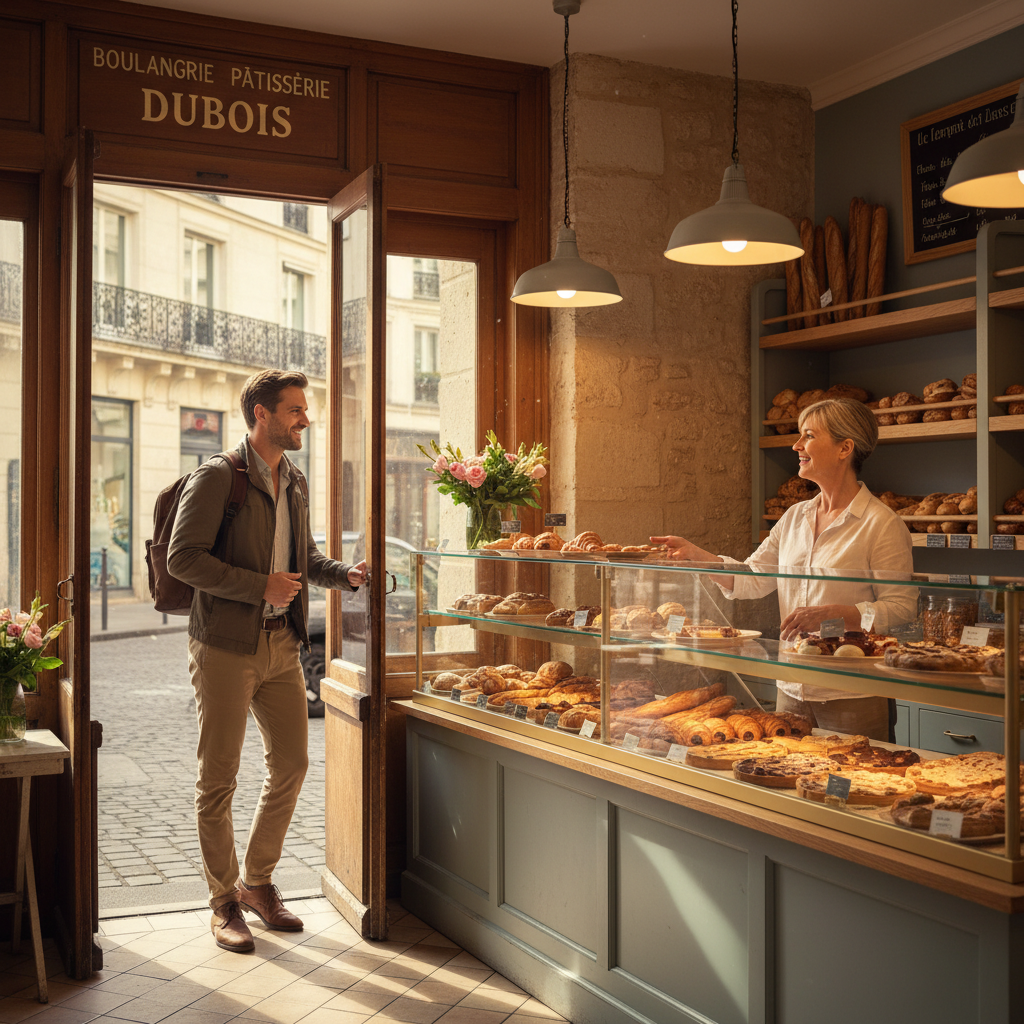
If you’ve ever walked into a bakery, asked for something in English, and felt the temperature drop, it’s often not your accent, it’s the missing “bonjour.” Small etiquette cues carry a lot of weight, especially in service interactions.
This guide gives you travel-ready phrases, when to use each one, what to do with your hands and voice, and how to recover if you blank. You don’t need perfect grammar, you need good timing and a friendly tone.
Why greetings matter in France (more than you expect)
In the U.S., you can often jump straight into the request, “Can I get a coffee?” In France, many people expect a short greeting first, then the request, then a closing. Skipping that first step can read as abrupt, even if you’re being nice.
According to the French Ministry for Europe and Foreign Affairs, French social interactions place real value on politeness formulas, especially greetings, thanks, and farewells. That doesn’t mean you need to act formal all day, it means you should show you see the other person.
Also, greetings help you in practical ways: staff tend to slow down a bit, listen more carefully, and become more willing to meet you halfway when you start correctly. It’s not magic, it’s social friction reduction.
The core greetings you’ll use 90% of the time
If you only memorize a small set, make it this. These cover shops, hotels, restaurants, and quick street interactions without making you sound overly stiff.
- Bonjour (bohn-ZHOOR): “Hello / Good day” for daytime, default choice.
- Bonsoir (bohn-SWAHR): “Good evening,” usually from late afternoon into night.
- Salut (sah-LOO): “Hi,” casual, better with people your age or informal settings.
- Enchanté(e) (ahn-shahn-TAY): “Nice to meet you,” use after introductions.
- Au revoir (oh ruh-VWAHR): “Goodbye,” safe everywhere.
- Bonne journée (bun zhoor-NAY): “Have a good day,” nice when leaving shops.
- Bonne soirée (bun swah-RAY): “Have a good evening,” when leaving at night.
One small detail travelers miss: “bonjour” is not only for first contact. If you enter a small store, you greet. If you approach a counter, you greet. If you start a question with a stranger, you greet.
Quick phrase table: situation → what to say → what it signals
Use this as your mental cheat sheet. The goal is not variety, it’s choosing the right “level” for the moment.
| Situation | What to say | What it communicates |
|---|---|---|
| Entering a shop/bakery | Bonjour | Basic respect, you’re not rushing the interaction |
| Approaching staff at night | Bonsoir | Good timing and awareness |
| Starting a question on the street | Bonjour, excusez-moi… | You’re asking politely, not demanding |
| Meeting friends of friends | Salut, enchanté(e) | Friendly, socially appropriate casual tone |
| Leaving a café | Merci, au revoir | Closure, appreciation |
| Checking into a hotel | Bonjour, j’ai une réservation | Polite and efficient |
If you’re unsure whether it’s “bonjour” or “bonsoir,” pick “bonjour” earlier in the day and switch to “bonsoir” when it feels like evening service has started. In many places, that’s around dinner time, but it can vary.
How to greet politely: tone, eye contact, and the “bonjour + request” formula
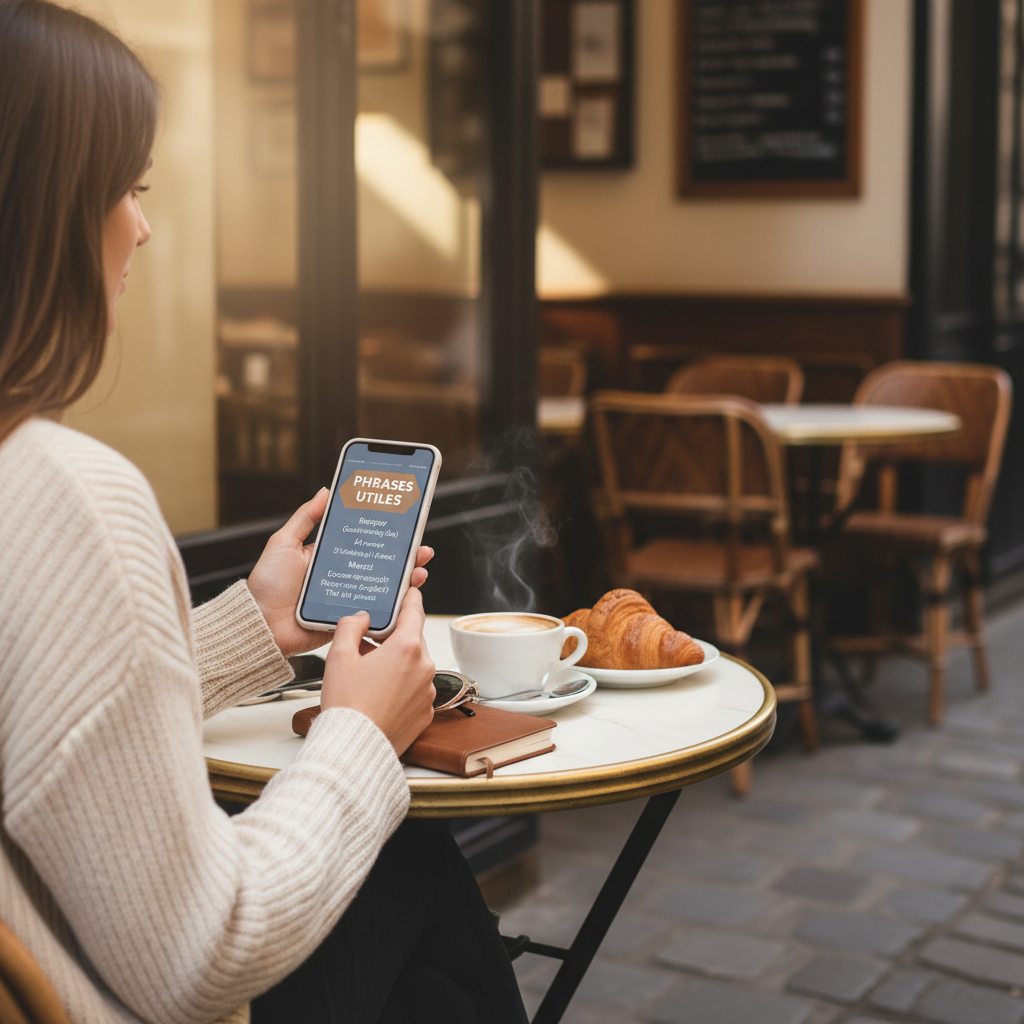
How you say it matters as much as what you say. A flat “bonjoouur” while staring at your phone can land poorly, even with correct pronunciation.
The most reliable travel formula
- Bonjour/Bonsoir
- + a softener: “s’il vous plaît” or “excusez-moi”
- + the request, simple and slow
- + merci at the end
Example in a bakery: “Bonjour, s’il vous plaît, une baguette.” Even if your accent is heavy, the structure signals respect.
What about handshakes, cheek kisses, and personal space?
With strangers and service staff, keep it simple: smile, quick eye contact, and a clear greeting. Handshakes can happen in more formal introductions, but travelers don’t need to initiate. Cheek kisses tend to be for acquaintances, and the exact pattern varies by region, so let locals lead if it comes up.
If you’re traveling in crowded transit areas, greetings can be shorter. Still, when you’re asking someone for help, the greeting is your best icebreaker.
Self-check: are you greeting in a “French-friendly” way?
This is the fast diagnostic I wish more travelers used. If you say “people were rude,” it’s often one of these mismatches.
- You start with “Do you speak English?” instead of bonjour first.
- You walk into a small store and don’t greet at all, then head straight to browsing.
- You use salut with staff in a formal setting, and it feels too casual.
- Your voice is very loud, or you talk quickly, and people miss your polite words.
- You forget the closing, “merci” and “au revoir,” and the exchange feels unfinished.
If two or more feel familiar, fix the greeting flow first before you blame your French level. This is the easiest win in how to greet in french for travelers because it doesn’t require vocabulary depth.
Practical scripts you can use today (shops, hotels, restaurants, directions)
Memorize a few “full lines” so you’re not building sentences under pressure. You’ll sound calmer, and people often respond better to calm.
Shops and markets
- “Bonjour, s’il vous plaît.” (Hello, please.)
- “Bonjour, je regarde.” (Hello, I’m just looking.)
- “Merci, au revoir, bonne journée.” (Thanks, goodbye, have a good day.)
Hotels
- “Bonjour, j’ai une réservation au nom de …” (Hello, I have a reservation under…)
- “Bonsoir, pouvez-vous m’aider, s’il vous plaît ?” (Good evening, can you help me, please?)
Restaurants and cafés
- “Bonjour, pour deux, s’il vous plaît.” (Hello, for two, please.)
- “Bonsoir, on peut s’asseoir ?” (Good evening, can we sit?)
- “Merci beaucoup.” (Thank you very much.)
Asking for directions
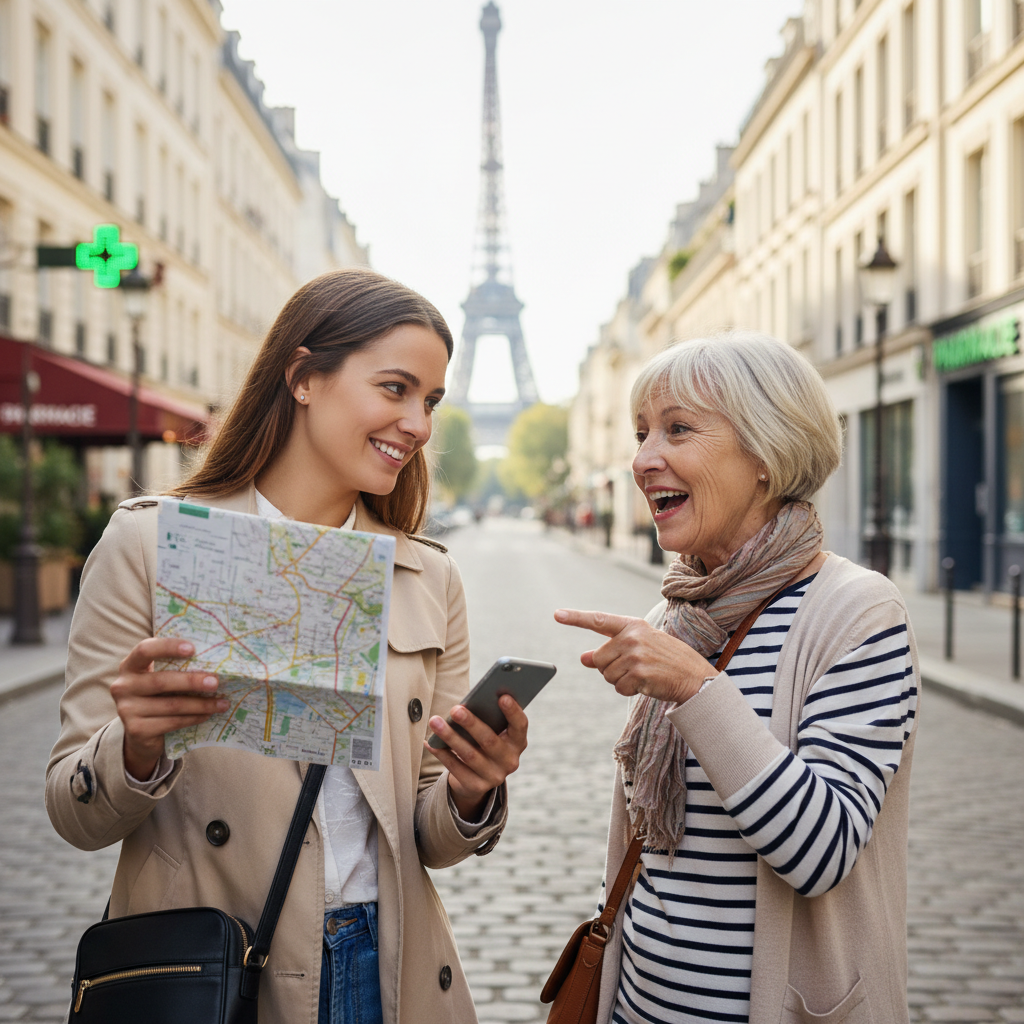
- “Bonjour, excusez-moi, où est … ?” (Hello, excuse me, where is…?)
- “Merci, bonne journée.”
Common mistakes Americans make (and easy fixes)
The point here isn’t to shame anyone, it’s to save you from awkward moments you can avoid in five seconds.
- Mistake: skipping the greeting to “be efficient.”
Fix: greet first, then ask. Efficiency comes after the social cue. - Mistake: overusing “pardon” for everything.
Fix: use “excusez-moi” to get attention, “pardon” when you bump into someone or pass through. - Mistake: translating U.S. small talk directly.
Fix: keep it light. A simple “bonjour” and smile often beats a long opener. - Mistake: stressing pronunciation so much you avoid speaking.
Fix: say it clearly, slower, and end with “merci.” Politeness covers minor errors. - Mistake: using “salut” everywhere.
Fix: reserve it for informal situations, start with “bonjour” if you’re unsure.
Many travelers notice a shift in response as soon as they adopt the greeting routine. It’s the most practical part of how to greet in french for travelers because it improves interactions even when the rest of your French stays basic.
When to get more help (apps, classes, or a local guide)
If you travel often, a little coaching goes a long way. A phrasebook is fine, but pronunciation and rhythm are what make greetings feel natural.
- If you feel anxious speaking aloud, consider a short audio-based course or pronunciation practice before your trip.
- If you’re heading into formal contexts, like business dinners or weddings, ask a bilingual friend or guide for etiquette specifics since expectations can differ.
- If you have hearing or speech concerns, it may help to use a translation app for backup and show the screen after you greet, people often respond kindly when they see you trying.
For safety or urgent situations, keep it simple and get help quickly. If you’re dealing with legal or medical needs, it’s usually better to contact local authorities or qualified professionals rather than relying on memorized phrases.
Conclusion: the smallest habit that changes your whole trip
If you take one thing from this, make it the habit loop: greet → ask → thank → say goodbye. It sounds basic, but in France it often sets the tone for the whole exchange.
Your action step: pick three lines from the scripts above and practice them out loud for two minutes a day before you leave. You’ll stop hesitating, and people will hear confidence even in simple French.
Key takeaways
- Bonjour is your default and works in most daytime travel situations.
- Use bonsoir in the evening, especially in restaurants and hotels.
- Start questions with a greeting, then “excusez-moi,” then your request.
- Close with merci and au revoir to end the interaction cleanly.
FAQ
- Should I always say “bonjour” when I enter a store in France?
In many small shops, yes, it’s the expected opener. In large, busy places you might not greet every staff member, but greeting when you approach a counter still helps. - Is “salut” rude for travelers?
Not usually rude, but it can feel too casual with service staff or older people. If you’re unsure, “bonjour” keeps you on safe ground. - What if I forget everything and panic?
Say “bonjour” and smile, then point politely or use a simple word plus “s’il vous plaît.” A calm greeting covers a lot of missing vocabulary. - How do I ask “Do you speak English?” politely in French?
Try: “Bonjour, excusez-moi, parlez-vous anglais ?” Starting with a greeting makes it sound like a request, not a demand. - When do I use “bon après-midi”?
It exists, but it’s less common as a greeting than travelers expect. Most of the time, “bonjour” works fine through the afternoon. - Do French people expect a handshake when meeting?
Sometimes in formal introductions, yes, but it depends on context. As a traveler, you can wait and follow the other person’s lead. - Does this advice apply in Québec or other French-speaking regions?
Some basics carry over, but etiquette and common phrases can differ. For example, vocabulary and formality norms in Québec may not match France exactly.
If you want a more low-stress trip, build a tiny “greeting kit” in your notes app, a few lines for shops, hotels, and directions, then practice them once or twice before you go. It’s a small effort that often pays off quickly in real conversations.