
Best Hotel Booking Tips for Cheaper Prices
Hotel booking tips cheap searches usually mean one thing, you’re tired of seeing the price jump right before checkout and you want a repeatable way to pay less without gambling on sketchy sites.
Here’s the honest part, there isn’t one magic day or one secret website that always wins, pricing changes based on demand, inventory, and cancellation patterns. But there are patterns you can use, and they work in most U.S. travel scenarios.

This guide focuses on practical moves: how to compare rates the right way, when flexibility actually saves money, which fees quietly inflate totals, and when it’s worth booking direct versus using an OTA.
Why hotel prices feel random (and what actually moves them)
Hotel rates look chaotic because they’re driven by revenue management systems that react to real-time demand. You don’t need to master the algorithm, but you do want to know what commonly pushes your quote up.
- Local demand spikes: conferences, concerts, sports weekends, school breaks, and even cruise embarkation days can reprice a whole city.
- Inventory shifts: when cheaper room types sell out, the “average price” you see jumps to the next tier.
- Cancellation cycles: many bookings get canceled close in, rates may drop or rise depending on how full the hotel expects to be.
- Channel differences: hotels may offer different inclusions on direct bookings, while OTAs might show a lower base rate that grows after fees.
According to the Federal Trade Commission (FTC), hidden or mandatory fees can mislead consumers about the true cost of a purchase, which is why you should always evaluate the all-in total before you commit.
A quick self-check: which “cheap booking” situation are you in?
Before you start clicking ten tabs, figure out your constraint. The best tactic depends on whether you’re optimizing for price, flexibility, or certainty.
- I’m flexible on neighborhood and dates: you can usually win with timing, alerts, and broader map searches.
- I need a specific hotel: your leverage shifts to member rates, perks, and direct price matching.
- I’m booking last-minute: same-day deals sometimes work, but only in markets with extra inventory.
- I’m traveling with family: breakfast, parking, and room layout matter, “cheap” can become expensive fast.
- I travel for work: loyalty benefits and refundable rates may be worth more than the lowest sticker price.
If you’re not sure, default to “I want a good total price with low hassle,” and focus on total cost, cancellation terms, and location value rather than the lowest nightly rate.
Core hotel booking tips to get cheap rates (without getting burned)
These are the moves that tend to hold up in real bookings, especially across major U.S. cities and highway markets.
Compare “all-in” totals, not just nightly rates
Resort fees, destination fees, parking, and taxes can swing the real cost. When you’re applying hotel booking tips cheap advice from blogs or friends, this is the step they often skip.
- Open the “price summary” or “taxes and fees” section before you decide.
- Check whether Wi‑Fi, parking, and breakfast are included or add-ons.
- If you arrive late, confirm if the front desk has limited hours (common at smaller properties).
Use date flexibility where it matters most
Moving a stay by one night can help, but it depends on what drives demand in that area. A Sunday-to-Monday shift in a business district might be cheaper, while a beach town often flips that pattern.
- Test a 1-day shift on both ends of your stay.
- Try a split stay only if the savings are meaningful and the hassle is worth it.
Book direct when perks beat the “lowest” price
OTAs can be great for discovery, but direct booking sometimes wins on value: easier changes, better room assignment priority, or member-only rates.
- Check the hotel’s own site for member rates (often free to join).
- Ask whether they can match an OTA rate and include a perk.
- Screenshot the competing offer if you plan to request a match.
Set price alerts, but don’t wait forever
Alerts help, but they’re not a license to procrastinate. If you see a rate you’d be happy with, locking a refundable option can be a smart hedge.
- Book refundable when the price is acceptable.
- Re-check weekly and rebook if the same room drops.
- Calendar your cancellation deadline so you don’t miss it.
Cheap vs. good value: a simple cost table to compare options
When you’re comparing properties, a quick table keeps you honest. Two hotels can be “$20 apart” on nightly rate and $80 apart after fees and parking.
| Cost item | Where it hides | What to do |
|---|---|---|
| Resort/destination fee | Small print, sometimes added at checkout | Compare all-in totals, ask the hotel directly if it applies |
| Parking | Property info page, not always in rate | Check self vs valet, look for nearby public garages |
| Breakfast | Room description or “includes” section | Price it per person, it changes the real “cheap” choice |
| Cancellation terms | Rate rules | Prefer flexible rates if plans might change |
| Extra guest fees | Occupancy rules | Enter the correct number of guests during search |
Step-by-step: a repeatable booking workflow that usually saves money
If you want something you can reuse every trip, this is a clean process. It’s not flashy, it’s effective.
- Define your non-negotiables: neighborhood safety, parking needs, walkability, pet policy, cancellation flexibility.
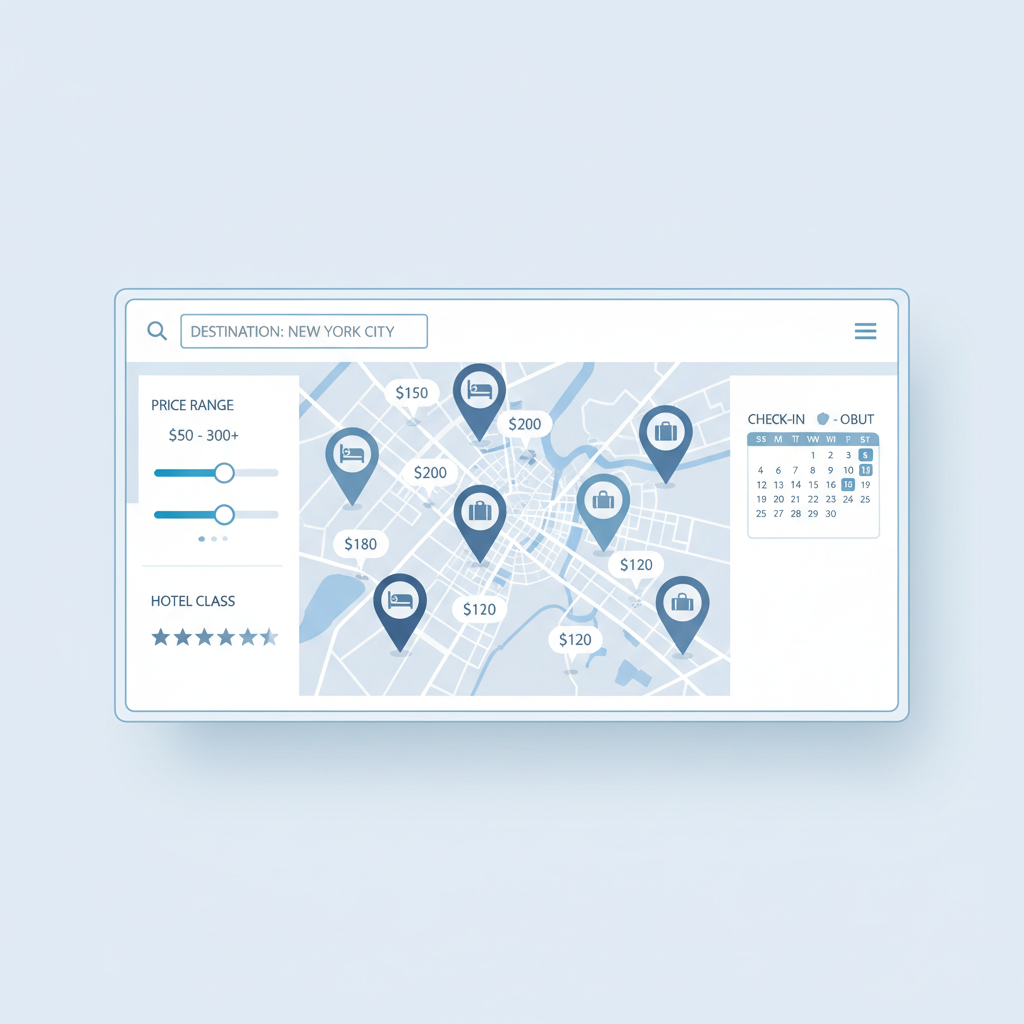
- Run a broad search: use map view, filter by guest rating bands you trust, and shortlist 5–8 properties.
- Check all-in totals: write down total price for your full stay, including fees and parking.
- Compare channels: OTA rate vs hotel direct, look for member pricing and inclusions.
- Lock a refundable rate if the price is good enough, then set one alert to monitor dips.
- Re-check once or twice: not daily, you’ll burn time for tiny gains.

People who consistently find better deals usually do two things: they compare totals, and they use refundable bookings as a safety net. That’s the real “strategy” behind most hotel booking tips cheap advice that works.
Common mistakes that make “cheap” bookings expensive
A low nightly rate can still be the wrong choice. These mistakes show up a lot, especially on quick weekend trips.
- Ignoring location tradeoffs: saving $25 per night can disappear after rideshares, parking, or wasted time.
- Booking nonrefundable too early: if prices drop later, you’re stuck, and changes can cost more than the savings.
- Not entering the right guest count: some properties add fees for extra guests at check-in.
- Over-trusting star ratings: a 3-star can be great or rough, read recent reviews for noise, cleanliness, and maintenance trends.
- Chasing coupon codes blindly: some promo rates remove perks or flexibility, always read rate rules.
According to Better Business Bureau (BBB), booking scams often involve lookalike websites and fake customer service numbers, so it’s safer to double-check the domain and use well-known platforms when you’re price hunting.
When to get extra help (or at least slow down)
Sometimes the cheapest path has real risk. In these situations, it’s usually worth paying a little more for clarity and support.
- International travel or complex itineraries: a travel advisor or a reputable agency can reduce disruption risk, especially when plans might change.
- Medical or accessibility needs: call the property and confirm room features, accessible rooms vary widely, and you may want to consult a qualified professional for specific needs.
- Large groups: negotiated group blocks can beat public rates once you factor in flexibility and room guarantees.
- Unfamiliar “too good to be true” sites: if the savings are extreme, verify via direct hotel contact before paying.
Key takeaways you can use on your next booking
If you only remember a few things, remember these: compare all-in totals, use refundable rates strategically, and treat location and fees as part of the price. That’s how hotel booking tips cheap becomes a practical routine instead of a one-time lucky win.
Your next step can be simple: pick one upcoming trip, book a refundable option you feel good about, then set a single alert and re-check once before the cancellation deadline.
FAQ
What are the most reliable hotel booking tips cheap travelers use?
Focusing on all-in totals, shifting dates by a day, and booking refundable rates early tend to be more reliable than hunting random promo codes.
Is it cheaper to book hotels last-minute?
Sometimes, especially in markets with lots of unsold rooms, but in high-demand cities or event weekends, last-minute rates can climb fast, so it’s risky as a default plan.
Should I book direct with the hotel or use an OTA?
If you value easy changes and better communication, direct booking often feels smoother. If you’re still deciding where to stay, OTAs are convenient for comparison, then confirm the best total price and terms.
Do hotel prices go down on certain days of the week?
There are patterns, but they vary by market and season, which is why testing a 1-day shift in your specific destination is usually more useful than relying on a universal “best day.”
How do I avoid resort fees and surprise charges?
Look for the fee line item before you pay, and when it’s unclear, call the hotel and ask for the full breakdown. Also check parking and “incidentals” deposit policies.
Is a nonrefundable rate worth it?
It can be if your plans are truly locked and the discount is meaningful, but many travelers underestimate how often plans change, and the inability to rebook if prices drop is the hidden cost.
How can I tell if a cheap hotel deal site is legit?
Check the domain carefully, search for the company’s official contact page, and confirm your reservation directly with the hotel after booking. If the payment method feels unusual, it’s a red flag.
Do loyalty programs actually save money?
They can, especially through member rates and late checkout or breakfast perks, but it depends on how often you stay with the brand and whether the “member deal” beats the best flexible rate elsewhere.
If you’re planning a trip soon and want a more streamlined way to apply these hotel booking tips cheap without spending an hour comparing fine print, build a simple template for your totals, fees, and cancellation deadlines, then reuse it every time you book.