
how to hand wash clothes while traveling is one of those skills you only appreciate after you’ve reworn a “still fine” T-shirt for the third day in a row.
The good news, you don’t need fancy gear or a hotel laundry to stay comfortable, pack lighter, and avoid emergency shopping. A simple routine plus realistic drying tactics usually gets you 80% of the way there.
This guide focuses on what actually works in real travel situations: tiny sinks, questionable soap options, humid rooms, and the awkward moment you realize your “quick-dry” shirt is still damp at bedtime.
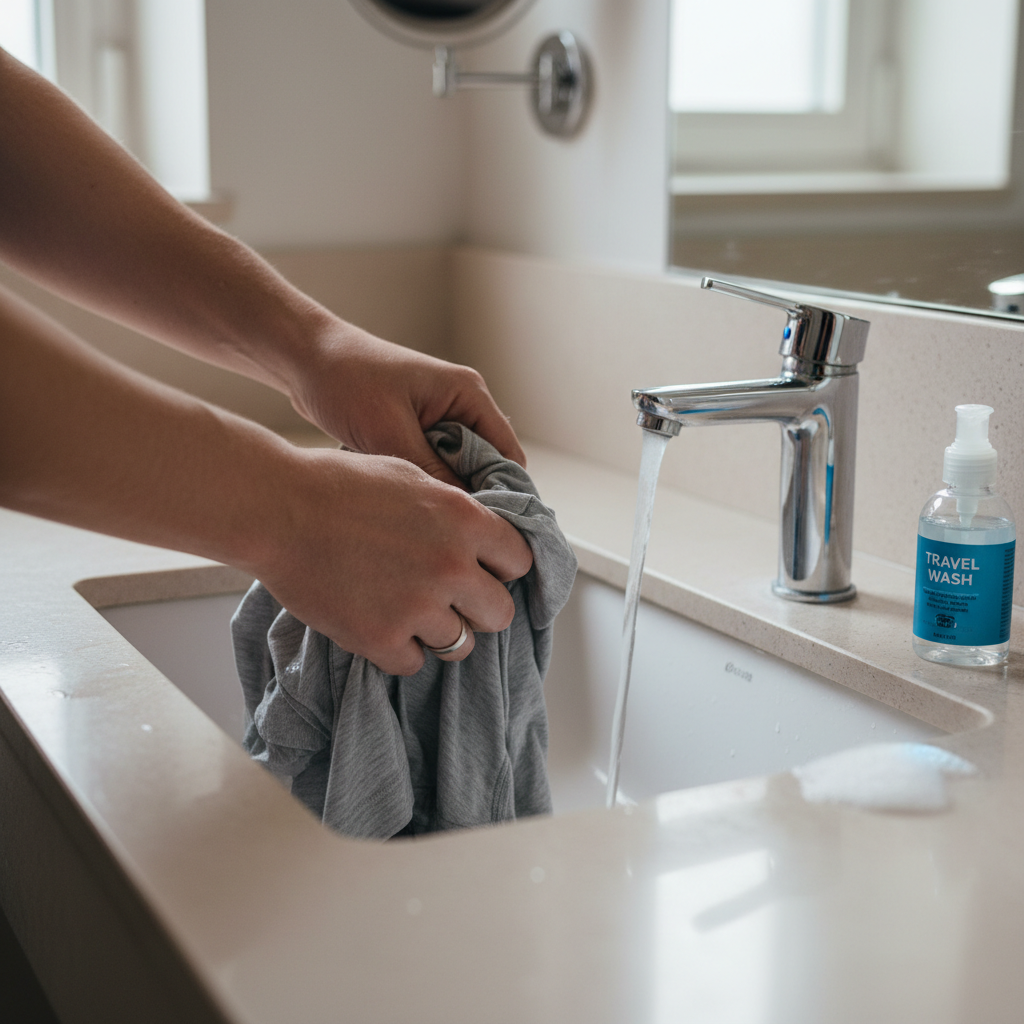
What makes travel laundry tricky (and how to plan around it)
Hand-washing on the road sounds simple until you hit one of the usual friction points: you can’t get things dry, odors hang on, or you’re worried about damaging fabric in a random sink.
- Drying time is the real enemy, especially in humid climates or rooms with weak airflow.
- Soap mismatch happens when the only option is harsh hand soap that can irritate skin or leave residue.
- Fabric choices matter, cotton holds water and odor longer than many synthetics or merino blends.
- Sink hygiene varies, which is why a quick rinse and a barrier approach can help.
If you plan for drying first, the washing part becomes much less stressful. That’s the mindset shift most travelers miss.
Quick self-check: do you actually need to hand wash, or can you rotate smarter?
Before you start scrubbing, it’s worth a 30-second assessment. Sometimes you can stretch a wardrobe by airing items out, spot-cleaning, or rotating base layers.
A simple decision checklist
- If it smells at the armpits/crotch area after airing for 30–60 minutes, wash it.
- If it’s visibly stained, spot-clean first, then decide on a full wash.
- If it’s a “next-to-skin” item (underwear, socks), most people prefer washing after each wear while traveling.
- If you have 12–18 hours before you need it again, hand-wash is realistic; if not, consider a backup outfit.
According to CDC, clean hands and basic hygiene reduce the spread of germs, which is a practical reminder to keep underwear and towels in a reasonable rotation, especially on long trips.
What to pack (minimal kit) vs. nice-to-have extras
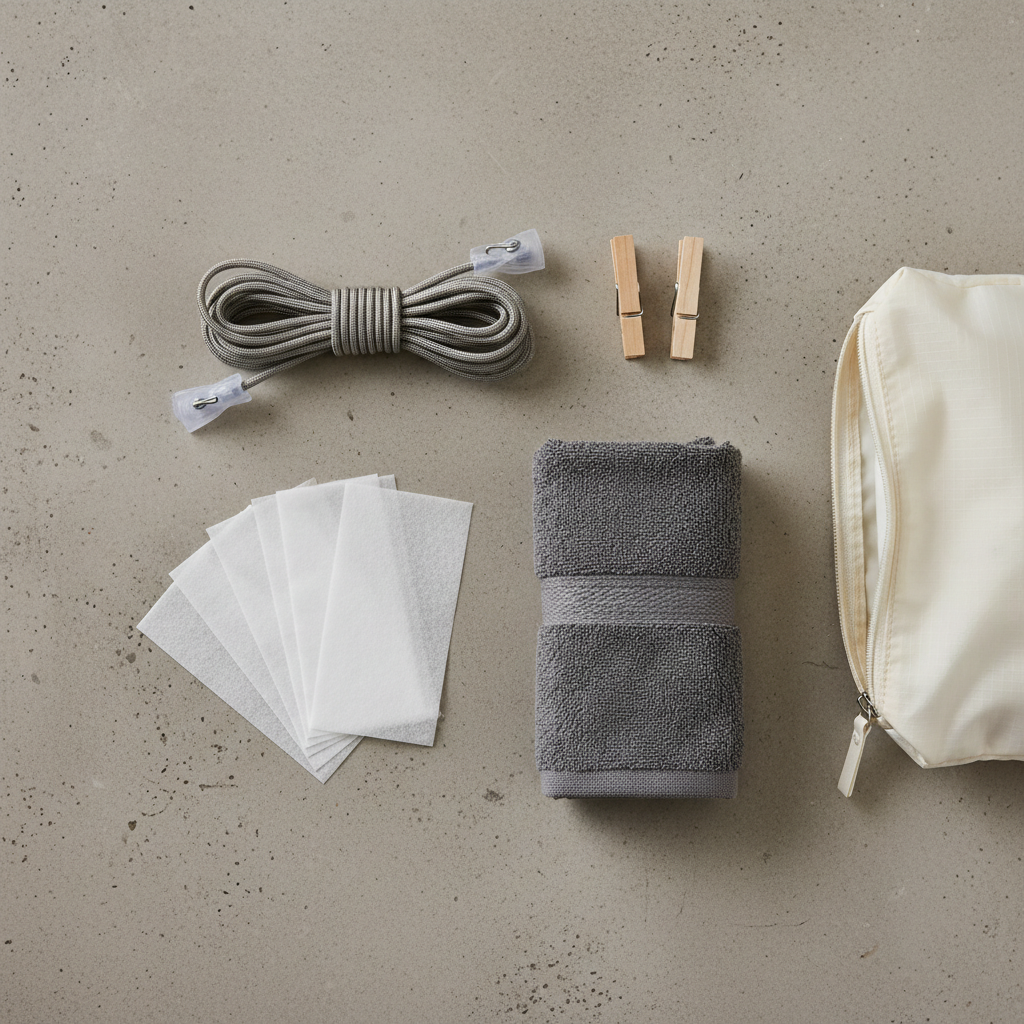
You can hand wash clothes with almost nothing, but a few small items make it faster and more consistent. Here’s the difference between “works in a pinch” and “works repeatedly.”
| Item | Why it helps | Optional or essential |
|---|---|---|
| Travel laundry detergent (small bottle or sheets) | Rinses cleaner than many hand soaps, less residue | Highly recommended |
| Sink stopper or flat drain cover | Some sinks don’t seal well, this saves your setup | Optional |
| Quick-dry microfiber towel | Speeds drying using the “towel roll” method | Recommended |
| Travel clothesline or a few clothespins | Creates airflow and better hanging angles | Optional |
| Small stain remover pen | Stops stains from setting until wash day | Optional |
If you pack one thing, make it detergent that’s meant for fabric. A tiny amount goes a long way, and your skin usually thanks you later.
Step-by-step: the sink wash method that works in most hotels
This is the repeatable routine I’d recommend when people ask how to hand wash clothes while traveling without turning it into a 45-minute project.
1) Prep the sink and pre-rinse
- Rinse the sink quickly with hot water if available.
- Run cool-to-lukewarm water for most fabrics; hot water can shrink or set some stains.
- Wet the garment fully, then lightly squeeze out water so detergent distributes evenly.
2) Add detergent and agitate gently
- Add a small amount of detergent (too much makes rinsing take forever).
- Swish the item, then rub fabric against itself at high-odor zones (underarms, collar, socks heel/toe).
- Let it soak 5–15 minutes if it’s sweaty or dusty.
3) Rinse until water runs clear
- Drain and refill, then squeeze and swish.
- If it still feels slippery or smells strongly of soap, keep rinsing.
- Don’t wring delicate knits hard; squeezing is safer for shape.
4) Remove water the right way (this is the make-or-break step)
- Press the garment against the sink to squeeze water out.
- Lay it flat on a towel, roll tightly, then step or press along the roll for 20–30 seconds.
- Unroll and reshape the garment before hanging.
Key point: If you skip water removal, you’ll “wash” successfully and still end up wearing damp clothes tomorrow.
Drying fast without ruining your clothes (or your room)
Drying is where travel laundry succeeds or fails, and the correct setup depends on airflow, humidity, and fabric type.
Best places to hang (ranked by how often they work)
- Near moving air: by a fan, AC vent, or slightly open window (secure valuables, follow hotel rules).
- Bathroom with ventilation: only if the fan actually pulls moisture out, otherwise it stays humid.
- Over a chair with spacing: better than a flat towel pile, but rotate to avoid damp spots.
Small tweaks that reduce drying time
- Hang items with space between layers, no fabric-on-fabric contact where possible.
- Turn thicker items inside out for the first few hours, then flip.
- Use hangers to create a tent shape so air reaches both sides.
If you’re in a humid destination, hand-washing is still doable, you just need a longer cycle and a backup outfit. Planning beats frustration.
Odor and stain control when you can’t do a perfect wash
Sometimes you can’t fully launder, you can only manage the problem. That’s normal on work trips, camping-style travel, or one-night stays.
For odor
- Wash the high-odor zones only, then rinse well.
- Airing items in sunlight can help with smell for some fabrics, but it may fade colors over time.
- If your skin is sensitive, avoid experimenting with strong cleaners; irritation can become the bigger issue.
For stains
- Blot, don’t rub aggressively, especially on synthetics where friction can “set” marks.
- Use a small amount of detergent directly on the stain, wait a few minutes, then rinse.
- For oily stains, warm water plus detergent often works better than cold alone, but fabric care labels still apply.
According to The American Cleaning Institute, following care labels and using the correct amount of detergent supports better cleaning and reduces residue, which matters when you’re rinsing in a sink, not a washing machine.

Common mistakes that waste time (and how to avoid them)
Most travel laundry “fails” come from a few predictable moves. Fix these and your routine becomes boring in a good way.
- Using too much soap: it traps in fibers, attracts grime, and takes forever to rinse.
- Wringing everything hard: it can stretch collars, warp knits, and stress elastic waistbands.
- Hanging in a humid bathroom: it feels logical, but moisture often just lingers.
- Washing heavy cotton items nightly: they dry slowly; rotate them or pick faster fabrics for travel.
- Ignoring fabric care tags: “hand wash” and “do not wring” exist for a reason, even on the road.
If you’re traveling for weeks, it’s worth mixing in a real laundromat session occasionally. Hand-washing shines for small loads and quick resets, not necessarily for jeans every night.
Practical routines for different trip styles
The most useful system depends on your pace. Here are a few setups that tend to hold up in real life.
Fast-moving itinerary (new hotel every 1–2 nights)
- Wash underwear and socks nightly, spot-clean tops.
- Pick 1–2 items that dry fast as your “always ready” pieces.
- Use the towel-roll method every time, no exceptions.
One base city (3+ nights)
- Do a small sink wash every other day, then one bigger wash mid-stay.
- Use hangers and create airflow, this is where drying becomes easy.
Outdoor travel or hostels
- Carry a small dry bag or collapsible basin if sinks are unreliable.
- Prioritize hygiene-critical items, let non-essentials ride longer.
When you should stop DIY and use a laundry service
Hand washing is practical, but not always the right call. If a garment is expensive, structured, or delicate, a mistake can cost more than a wash service.
- Dry-clean-only items, suits, or structured jackets often do better with professional care.
- If you notice a rash or skin reaction after wearing rinsed items, consider switching detergents, rinsing longer, or asking a medical professional for advice.
- If you’re in a place with poor ventilation and everything stays damp, it can raise mold and odor issues; using a laundromat dryer may be the safer option.
According to OSHA, damp environments can contribute to mold growth, so if your room or bag keeps staying wet, shifting tactics is usually smarter than powering through.
Conclusion: a simple system beats perfect technique
Learning how to hand wash clothes while traveling comes down to three habits: use a small amount of proper detergent, rinse longer than you think, and remove water aggressively before you hang anything.
If you want a quick next step, pack detergent sheets and a microfiber towel on your next trip, then test the routine on one shirt and one pair of socks the first night. Once you see how fast they dry, the whole “packing lighter” idea starts to feel realistic.