
night safari travel guide searches usually come from the same frustration, you booked an evening drive, sat in the dark for hours, and still “saw nothing” except a pair of eyes in the bushes.
The good news, night safaris can be wildly rewarding, but they punish casual planning, timing, weather, moonlight, and even where you sit in the vehicle change what you’ll see. This guide focuses on practical choices that raise your odds without pushing animals or breaking park rules.
I’ll walk you through what actually affects nocturnal sightings, a quick self-check, gear that matters, how to behave around wildlife, and what to ask your operator so you don’t end up on a “night drive” that’s basically a slow loop near camp.
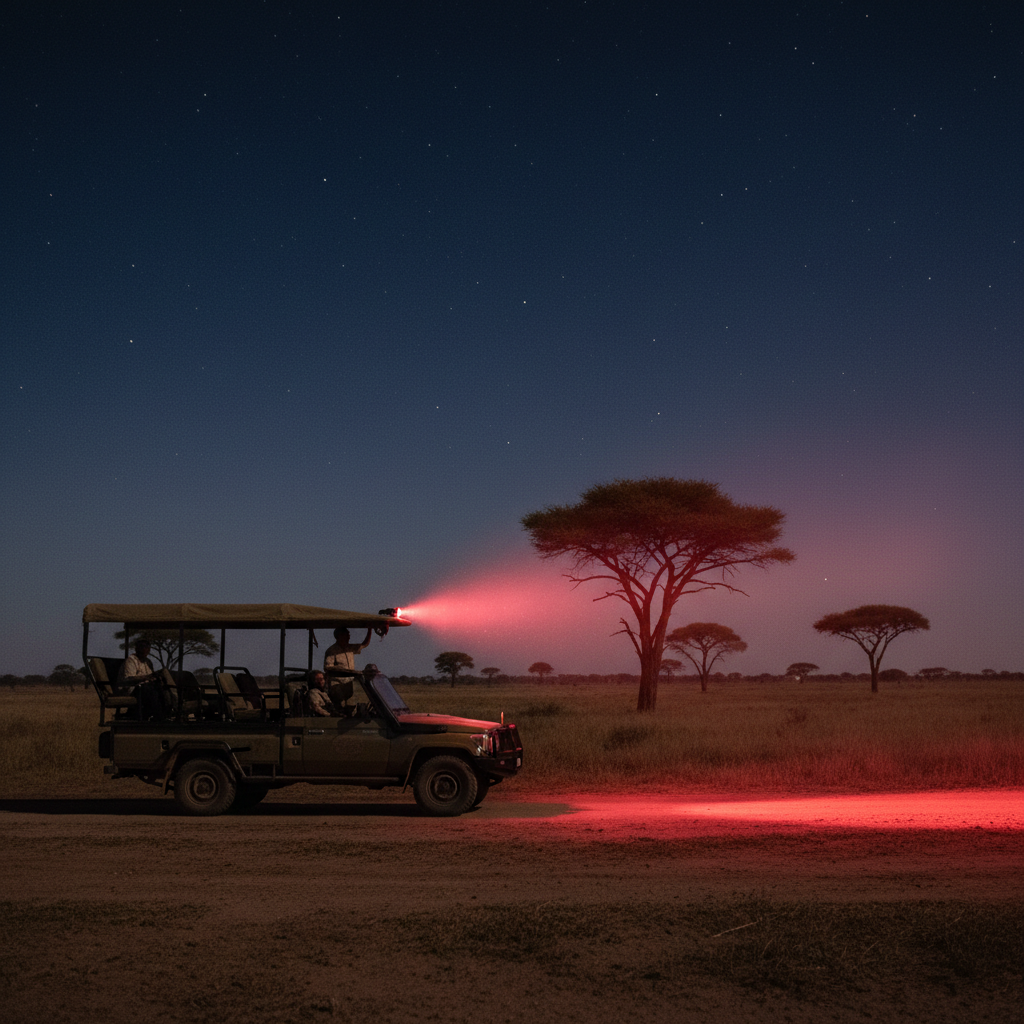
What changes your chances of seeing nocturnal animals
Most “bad” night drives aren’t bad luck, they’re predictable mismatches between conditions and expectations. A leopard might be present, but if the route avoids its territory, or the vehicle uses harsh white light, you may never get a usable view.
- Moon phase and cloud cover can shift activity patterns, some predators hunt differently on bright nights, many smaller animals stay tighter to cover.
- Temperature and wind matter more than people expect, cold wind often reduces movement and makes listening harder.
- Habitat edges tend to be productive, where open ground meets brush, water, or riverine forest.
- Guide skill and local rules can limit off-road driving and spotlight use, in some parks you’ll be on tracks only, which is fine if routes are chosen well.
- Human noise and behavior in the vehicle affects sightings, loud voices and phone screens ruin night vision and spook shy species.
According to U.S. National Park Service (NPS)... many wildlife-viewing incidents start with people getting too close or behaving unpredictably, which is a useful mindset for any night wildlife experience, even outside the U.S.
Quick self-check: are you set up for a “good” night safari?
If you answer “no” to several items below, your experience may still be fun, but you’re more likely to feel underwhelmed. This checklist also helps you ask better questions before you pay for upgrades.
- Operator clarity: Do they specify duration, route style, and whether spotlighting is permitted?
- Group size: Is it capped, and do you have a window/aisle plan for camera access?
- Lighting policy: Do they use red filters or low-intensity beams instead of blasting white light?
- Guide-to-guest ratio: Is there a dedicated spotter, or only one person driving and scanning?
- Your expectations: Are you excited about owls, civets, bush babies, aardvarks, and genets, not only “big cats”?
- Your comfort plan: Warm layers, motion-sickness strategy, and realistic sleep schedule?
One honest thought, many first-timers “fail” night safaris because they expect daytime Big Five energy in the dark. Night is about small dramas, tracks, sounds, and brief sightings.
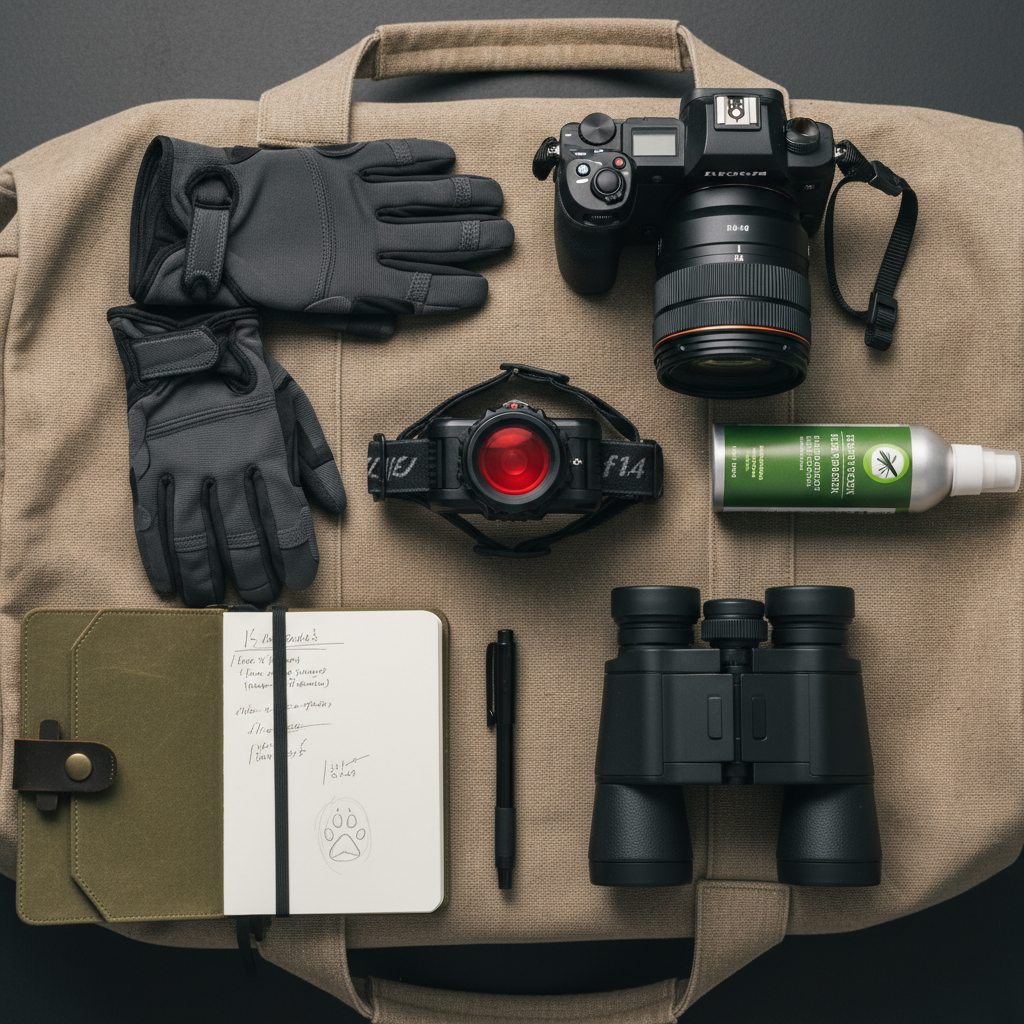
Gear that actually helps at night (and what’s usually wasted)
You don’t need to overpack, but a few items change the whole experience. The aim is simple, stay warm, stay quiet, see better, and avoid turning your vehicle into a glowing phone billboard.
Bring this
- Red-light headlamp for personal use, it protects your night vision and bothers animals less than white light.
- Warm layers, including a windproof shell, nights feel colder on a moving vehicle.
- Compact binoculars, even 8x can help when the guide points out eye-shine at a distance.
- Fast camera lens if you shoot, think wider aperture, and accept you may not get tack-sharp action.
- Bug protection, repellent and long sleeves, depending on region and season.
Think twice about this
- Powerful flashlights, many camps ban them, and they can disrupt animals and annoy other guests.
- Camera flash, it’s often prohibited, and even when allowed it can stress wildlife.
- Huge tripods, they clutter vehicles and rarely stabilize well on bumpy tracks.
If you’re prone to motion sickness, plan ahead, it’s common on slow, stop-start drives. If you need medication, consider asking a clinician before travel, especially if you’ll combine it with alcohol or sleep aids.
How to pick a night safari that matches your goals
Not every destination even offers true night safaris, some national parks restrict driving after dark, and many lodges run private concessions with different rules. A night safari travel guide is only useful if it helps you evaluate what you’re buying.
| Type | What it’s like | Best for | Trade-offs |
|---|---|---|---|
| Private concession night drive | Often off-road allowed, spotlighting permitted with rules | Higher odds for predators and rare species | Usually pricier, depends heavily on guide ethics |
| Park road night drive | Stays on tracks, limited spotlighting in some areas | Owls, hares, general nighttime atmosphere | Less flexibility, sightings can be brief |
| Night walk (guided) | Slow pace, focused on insects, frogs, small mammals | People who love details and learning | Not ideal if you only want big mammals |
| Boat night safari | Quiet approach near water, reflections help scanning | Hippos, crocs, nocturnal birds (where applicable) | Limited to waterways, weather can cancel |
Before you book, ask two direct questions, “What species are realistic this month?” and “How do you handle spotlighting and distance?” Operators who answer calmly and specifically tend to run better trips than those promising dramatic sightings.
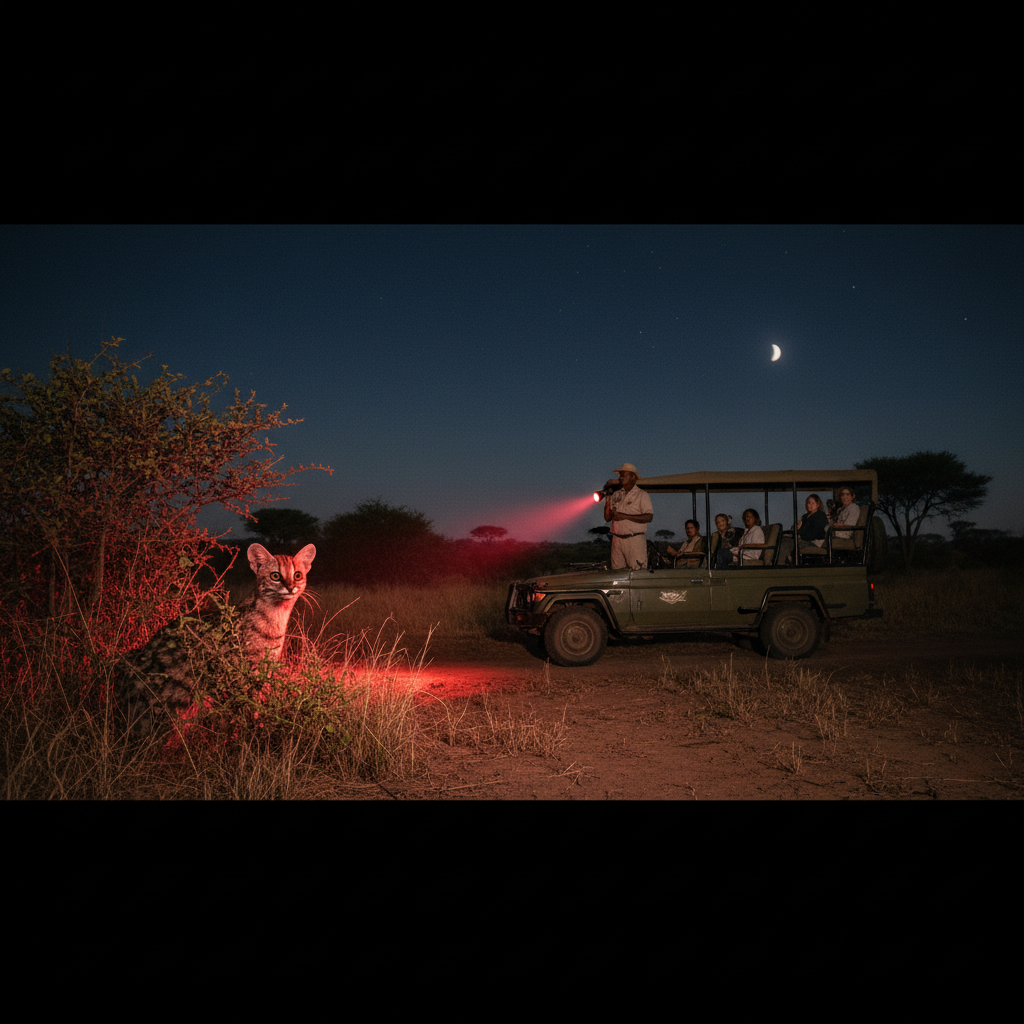
On-drive tactics: what to do in the vehicle for better sightings
This is where small habits pay off. Your guide does the heavy lifting, but guests can either help the process or quietly sabotage it.
- Protect your night vision: keep phone brightness at minimum, avoid checking screens every minute, use red light when you must.
- Scan smart: don’t whip your head around, move slowly, look for eye-shine, silhouettes, and movement at habitat edges.
- Listen: alarm calls, owl hoots, and rustling often lead to sightings faster than random spotlighting.
- Keep your voice low: excited whispering is fine, loud play-by-play is not.
- Be ready for brief views: many nocturnal animals appear for seconds, keep camera settings prepped.
According to World Health Organization (WHO)... insect-borne disease risk varies by destination and season, so your prevention plan should match local guidance. If you’re unsure what’s appropriate, a travel clinic can help tailor repellent, clothing, and meds.
Safety and ethics: the line between “close” and “too close”
Night viewing adds a layer of risk, animals feel less predictable, and people get tempted to push for a better photo. A reputable operator acts conservative, even if guests beg.
Good practices you should expect
- No chasing: if an animal moves away repeatedly, the vehicle backs off or leaves.
- Limited light time: short spotlight intervals, not constant beams in the face.
- Respect for dens and kills: extra distance, minimal disturbance, no crowding.
- Clear stay-in-vehicle rules: getting out at night is typically restricted for good reasons.
Common red flags
- Guide encourages guests to use flash or high-power torches.
- Vehicles surround an animal to block movement.
- “Guaranteed leopard tonight” style promises.
If you’re traveling with kids, it helps to set expectations early, night safaris can involve long quiet stretches. Bring a warm layer and a snack, and decide ahead of time whether an early exit is allowed without drama.
Practical itinerary: a simple way to plan your night safari
Here’s a realistic flow that works in many destinations, adjust for local rules and sunset times. The point is to reduce friction so you’re not scrambling in the dark.
Before the drive (30–90 minutes)
- Eat early and hydrate, then limit alcohol if you want sharper scanning.
- Set camera to a low-light baseline, and turn off focus assist lights if they bother others.
- Pack one small pouch, headlamp, layer, repellent, lens cloth.
During the drive
- Start with edges near water or mixed cover if the guide agrees.
- When you stop, commit to stillness for a minute, often movement appears after the vehicle quiets.
- If you spot something, describe direction like a clock face, “two o’clock, low in the grass.”
After the drive
- Warm up fast, then jot down what you saw, you’ll forget details by morning.
- Ask the guide what conditions affected the night, it helps you choose better timing for the next drive.
Key takeaways: choose an operator with clear rules, plan for cold and darkness, keep your light and noise under control, and treat “small” species as part of the main event, not consolation prizes.
Conclusion: make the night feel alive, not just dark
A good night safari isn’t about forcing a highlight-reel moment, it’s about stacking small advantages so nature has room to show up. Use this night safari travel guide to vet the operator, pack smart, and ride in a way that helps your guide do their job.
If you take only two actions, book with a team that can explain their ethics and spotlight rules in plain language, then commit to protecting your night vision the whole drive, it sounds minor, but it changes everything.
FAQ
What animals are most common on a night safari?
It depends on region, but many night drives regularly turn up owls, genets or civets in some areas, hares, bush babies, and occasional predators. If an operator only talks about lions and leopards, ask what else they typically see.
Is a full moon bad for a night safari?
Not automatically, bright nights can help you see landscapes and track movement, but some prey species stay closer to cover. Many situations come down to cloud cover and where you drive, not moon phase alone.
Can I use my phone flashlight or camera flash?
Usually you shouldn’t, and in many concessions it’s prohibited. Even when rules allow it, flash can stress animals and ruin other guests’ experience, ask your guide what’s acceptable before you turn on any light.
How do I choose a reputable night safari operator?
Look for clear safety rules, capped group sizes, and straightforward explanations of how they handle distance and spotlighting. If they promise guaranteed big-cat sightings, treat that as marketing, not planning.
What should I wear on a night drive?
Dress for wind and long still periods, not the daytime high. A warm layer, closed-toe shoes, and a windproof outer shell cover most cases, add a hat and light gloves if you run cold.
Are night safaris safe?
They can be safe with a trained guide and sensible behavior, but wildlife is unpredictable. Follow stay-in-vehicle rules, keep hands inside, and avoid sudden movements, if you have health concerns, it’s reasonable to ask the operator about ride conditions and emergency plans.
How can I take better night safari photos without breaking rules?
Skip flash, use a fast lens if you have one, stabilize against the vehicle, and prioritize a few well-timed shots over constant shooting. Sometimes the best choice is to watch, then shoot only when the guide says the animal is comfortable.
Is a night walk better than a night drive?
For small wildlife and learning, a guided walk can be more rewarding, you notice tracks, insects, and sounds. If your goal is spotting larger mammals across distance, drives often fit better, rules and habitat decide a lot.