
Northern lights travel guide planning usually comes down to one frustrating truth: you can do everything “right” and still see nothing if weather and solar activity don’t cooperate.
That’s also why this trip is worth doing well, a small change in timing, location, or expectations often separates a quick disappointment from a week of real chances, plus the Arctic is a great winter destination even on quiet aurora nights.
Below is the practical, not-overhyped approach: where to base yourself, how long to stay, what to book in advance, and how to read the basics of forecasts without turning your vacation into a science project.
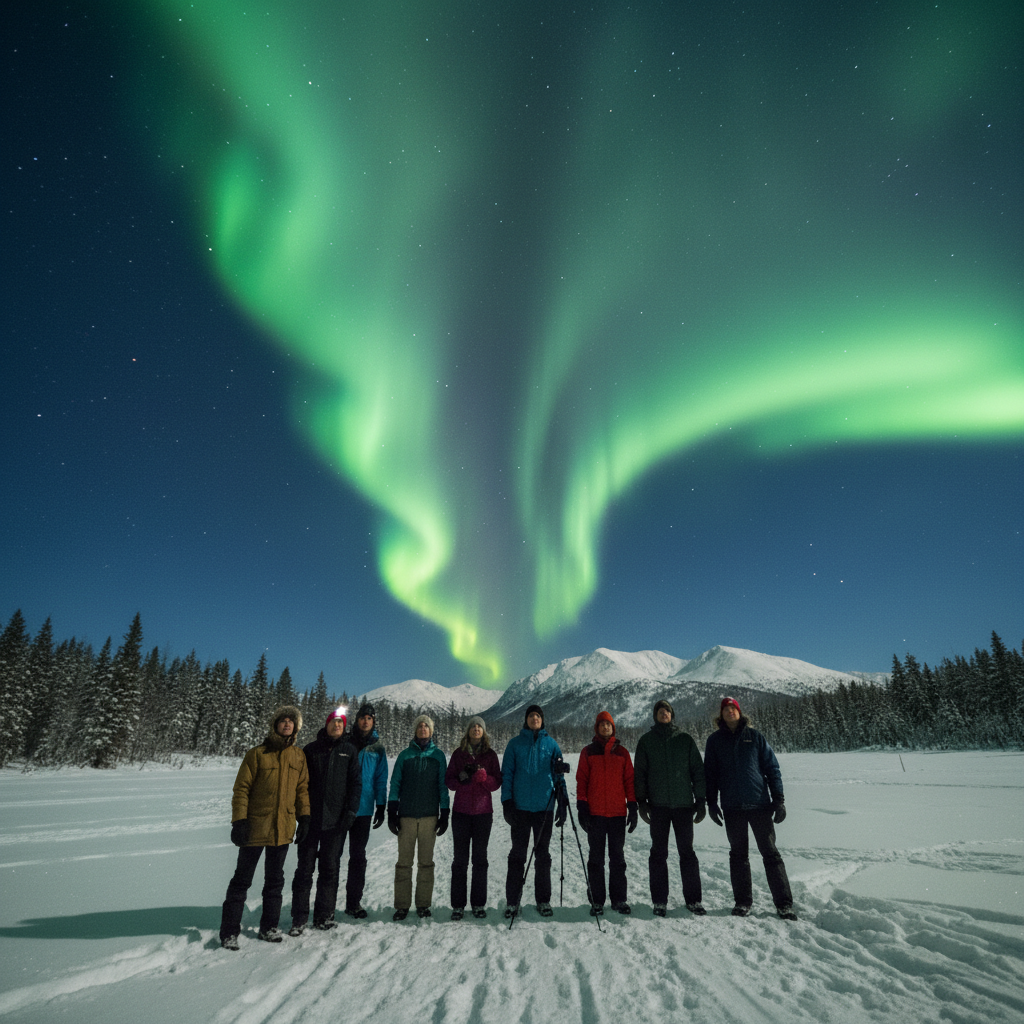
What drives your odds of seeing the aurora (and what doesn’t)
If you remember one thing, remember this: aurora viewing is a three-part equation, solar activity + darkness + clear skies. You control only part of it.
- Solar activity: the sun’s activity creates geomagnetic storms that push aurora farther south and make it brighter. Stronger activity helps, but it doesn’t cancel clouds.
- Darkness: you need a dark sky, which usually means winter and minimal light pollution, plus managing moonlight when possible.
- Weather and clouds: this is the most common trip-killer, especially in coastal areas and wet climates.
Things people often overrate: expensive cameras, “secret” apps, and one-night tours. A good camera helps you capture it, but it can’t create clear skies, and a single night is just one roll of the dice.
According to NOAA Space Weather Prediction Center, auroras are tied to geomagnetic activity and are commonly tracked with the Kp index, which is useful as a general signal, not a guarantee for your exact spot.
Best destinations for U.S. travelers (and how to choose)
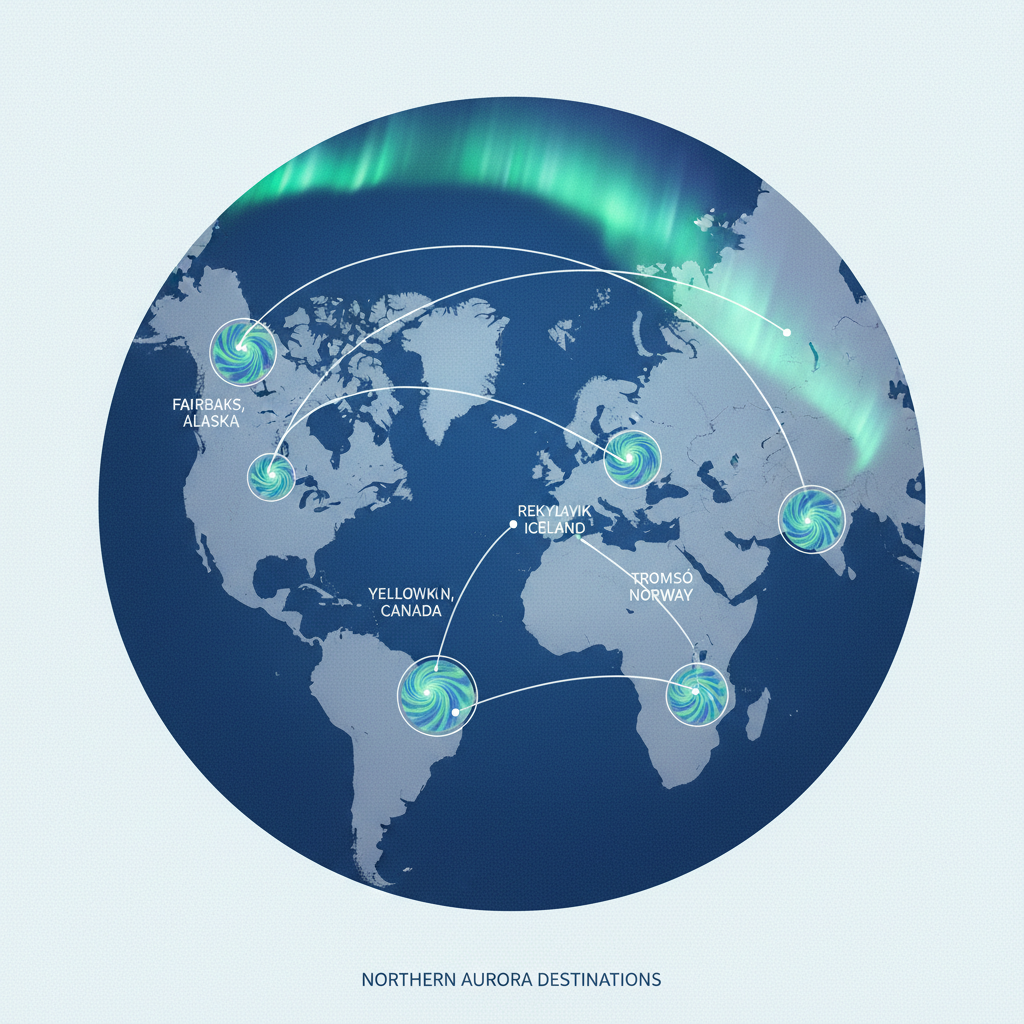
Most U.S. travelers pick one of three regions: Alaska, Northern Canada, or Iceland/Nordics. The best choice depends on flight time, your tolerance for cold, and how much “trip” you want beyond aurora hunting.
Quick comparison table
| Region | Why people pick it | Common trade-offs | Who it fits |
|---|---|---|---|
| Fairbanks, Alaska | Strong aurora reputation, easy U.S. logistics | Very cold; long nights can feel intense | First-timers who want simple planning |
| Yellowknife / Whitehorse (Canada) | Dark skies, aurora-focused travel culture | Fewer direct flights; limited lodging in peak weeks | Travelers who can commit 4–7 nights |
| Iceland | Great scenery, easy self-drive itinerary | Clouds and storms can be frequent | People who want a full road trip even without aurora |
| Northern Norway / Swedish Lapland / Finland | Well-developed winter experiences, cozy stays | More travel time from the U.S.; higher costs in some areas | Couples, families, “bucket list” planners |
My editorial bias: if your main goal is seeing the lights at least once, pick a base with a track record for clearer inland skies and stay longer, rather than hopping between cities every night.
When to go: season, moon, and trip length
A solid northern lights travel guide needs to say it plainly: the best “month” is often the one where you can stay long enough and you’re comfortable being outside at night.
- Season: many aurora destinations run best from roughly September through March, when nights are long and dark.
- Moon: a brighter moon can wash out faint aurora, though strong displays still cut through. If photography matters, aim for darker moon phases when it’s practical.
- Trip length: if you can, plan at least 4 nights. A week gives you much better flexibility for clouds and forecast swings.
One more reality check: shoulder season can be great for temperatures and crowds, but roads, tours, and lodging availability vary by destination.
A simple self-check: are you planning for “viewing” or for “vacation”?
This sounds philosophical, but it’s the most practical planning step. Use this checklist to decide how you book.
- I’ll be disappointed if I don’t see it: you need more nights, fewer hotel changes, and an area with historically clearer skies.
- I’m happy if I see it once, but the trip matters too: choose a destination with strong daytime activities, then chase aurora on the best nights.
- I want photos: prioritize darker skies, a tripod-friendly setup, and time to learn basic settings before you go.
- I hate standing in the cold: book heated viewing cabins/vehicles where available, or pick months that are less extreme in your destination.
If you land in the first bucket, avoid the “two nights in three cities” itinerary, it looks efficient on paper but it usually cuts your real viewing windows.
Practical planning: lodging, transport, and tours
Here’s the part people tend to under-plan: the logistics that make it easy to actually go outside at 11:30 p.m. when the sky clears.
Lodging decisions that matter
- Stay outside city cores when possible, light pollution is the quiet enemy of faint aurora.
- Ask about wake-up calls or aurora alerts, many hotels in aurora hubs offer them, and it genuinely helps.
- Choose comfort over novelty if you’re staying multiple nights, sleeping well makes late nights doable.
Self-drive vs. tour
- Self-drive works well if you’re comfortable with winter roads, have local daylight time to scout, and can pivot fast based on clouds.
- Tours can be worth it if you don’t want to interpret weather models, or you need a guide who can relocate quickly.
According to U.S. National Park Service, winter travel safety basics include checking road conditions, carrying emergency supplies, and avoiding risky driving in poor visibility, which matters even more on late-night aurora hunts.
How to read forecasts without overthinking it
Most people bounce between apps and end up more confused. You only need a few signals, then you make a simple go/no-go call.
- Cloud cover: if it’s overcast at your location, your plan is “drive to clearer skies” or “sleep and try tomorrow.”
- Kp index: helpful for “how active is the aurora regionally,” but local visibility still depends on darkness and clouds.
- Aurora oval maps: good for understanding whether your latitude has a reasonable chance that night.
A practical rule: if clouds are low but breaking, go out anyway for 30–60 minutes, many good displays are short and come in bursts.
According to NOAA Space Weather Prediction Center, space weather forecasts are probabilistic and can change quickly, so treat them as guidance, then prioritize real-time sky conditions.
On-the-ground viewing tips: comfort, safety, and photos
This is where the “guide” becomes real. When the show starts, you want to be warm, safe, and ready.
Comfort and safety essentials
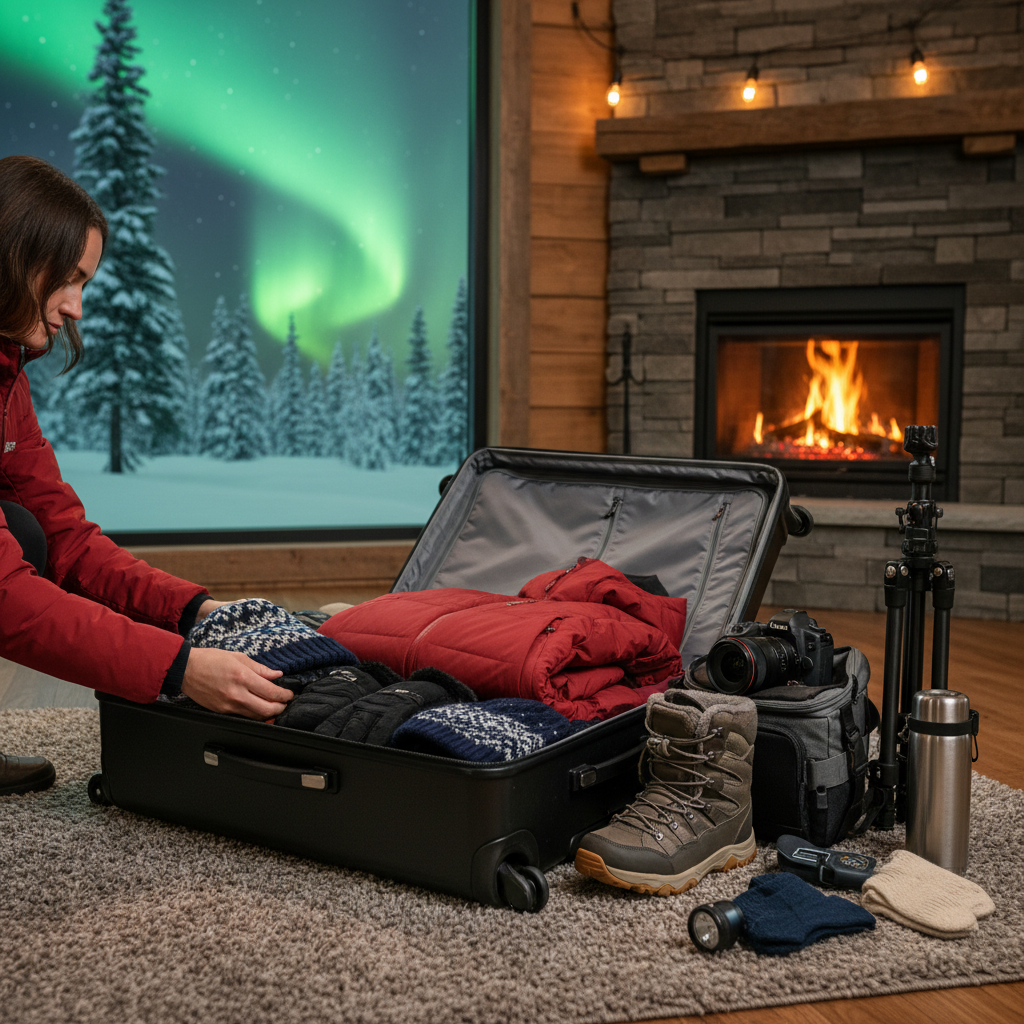
- Layering: base layer, insulation, wind shell, plus warm socks and boots, cold feet end nights early.
- Bring light: a headlamp with a red-light mode helps preserve night vision.
- Battery reality: phones and camera batteries drain faster in cold, keep spares warm in an inner pocket.
- Roadside caution: if you pull off to watch, choose safe turnouts, wear reflective gear when appropriate, and don’t stop on narrow shoulders.
Quick photo settings (starting point)
- Tripod, 1–5 second shutter to start, adjust based on brightness and motion.
- Wide aperture if available on your lens, then raise ISO gradually.
- Manual focus on a bright star or distant light, autofocus often struggles in the dark.
If you’re unsure about any safety call, especially driving in storms or extreme cold, it’s sensible to follow local advisories and consider a guided option.
Key takeaways (keep this list handy)
- Stay longer rather than trying to “optimize” with constant moving.
- Clouds decide most nights, pick a base that lets you pivot to clearer areas.
- Kp is helpful, not magic, treat it as one input.
- Plan for comfort, you’re more likely to go out when the timing is right.
- Build a good trip even without aurora, that’s the best way to avoid feeling unlucky.
Conclusion: plan for chances, not certainty
A good northern lights trip feels calm even with unpredictable skies, because you’ve built in time, picked a smart base, and kept expectations realistic without being pessimistic.
If you want one action step, choose your destination and lock in 4–7 nights before you obsess over apps. Then make a simple nightly routine: check clouds, check activity, go out when it’s viable, sleep when it’s not.
FAQ
What is the best month for a northern lights trip?
Many travelers aim for fall through early spring because nights are long. The “best” month often depends on your schedule and how many nights you can stay, more nights usually beats chasing a perfect date.
How many nights do I need for a reasonable chance to see the aurora?
One night can work, but it’s a gamble. In many destinations, 4–7 nights gives you room for clouds and shifting forecasts, which is what most trips run into.
Is Alaska better than Iceland for viewing?
It depends on what you value. Alaska can be simpler for U.S. logistics and often has strong aurora hubs inland, while Iceland offers a bigger sightseeing payoff but can be cloudier, so your plan should include daytime wins.
Do I need a tour, or can I see the lights on my own?
You can do either. Tours help when you don’t want to drive in winter conditions or interpret weather patterns, while self-driving works when you’re confident on roads and can move quickly to clearer skies.
What does the Kp index actually tell me?
Kp is a general measure of geomagnetic activity, useful for “how active tonight might be” at a broad level. It doesn’t tell you whether your exact location has clear skies, and that’s usually the deciding factor.
Can I see northern lights near a city?
Sometimes, especially with strong displays, but light pollution makes faint aurora harder to notice. If you’re city-based, plan short drives to darker areas and keep expectations grounded.
Is it safe to take kids to see the aurora?
Often yes, but it depends on temperature, wind, and how long you’ll be outside. Short sessions, warm gear, and a backup plan like a heated vehicle can make the night more manageable, and if conditions feel risky, it’s better to skip.
If you want a more streamlined plan
If you’re building your first northern lights itinerary and would rather not juggle forecasts, driving, and lodging trade-offs, it can help to start from a simple base-city plan with flexible nights, then add tours only on the evenings with the best conditions.