
How to pick all inclusive resort for vacation comes down to one thing: matching the resort’s “included” promises to how you actually travel, not how the brochure wants you to travel.
All-inclusives can feel effortless, until you realize the beach is windy, the “included” restaurants are booked out, or the resort is aimed at honeymooners when you brought kids. Small mismatches add up fast because once you check in, switching resorts is usually expensive.
This guide breaks the decision into practical checks: what “all-inclusive” really covers, which resort type fits your trip, how to compare options quickly, and what to verify before you pay.

Start with your trip “non-negotiables” (before you look at deals)
People usually start with price, but the smarter move is to start with your constraints. You can find a resort at almost any price point, yet you can’t buy back sleep, quiet, or a swimmable beach once you arrive.
Pick 3 priorities and keep them visible
- Vibe: adults-only, family-friendly, party, quiet wellness, luxury.
- Beach + water: calm water vs waves, snorkeling off-shore vs boat trips, seaweed patterns depending on region and season.
- Food expectations: “good enough and easy” vs “we care a lot about dining.”
- Room needs: connecting rooms, swim-up, suite space, elevator access.
- Activities: kids club, fitness classes, diving, golf, nightly shows, tennis.
- Distance from airport: long transfers can wreck a short trip.
If you want a quick gut-check, write one sentence: “This vacation is successful if we can ____.” That sentence usually reveals whether you should choose a mega-resort, a smaller boutique property, or a mid-size option with strong dining.
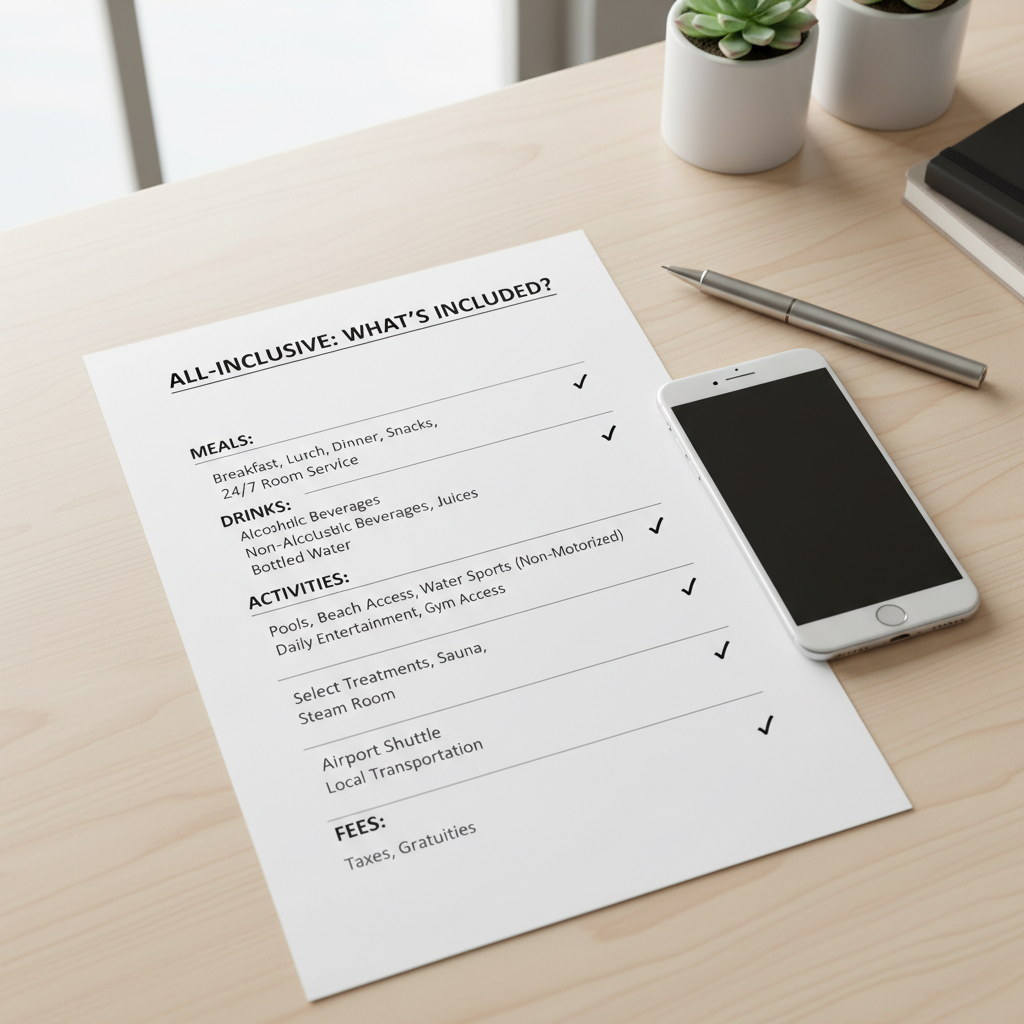
Know what “all-inclusive” usually includes (and what often costs extra)
Not all plans cover the same items, and many disappointments come from assumptions. According to U.S. Department of State, travelers should review what purchases are covered and understand local conditions that affect travel plans, which applies directly to prepaid vacation packages too.
Commonly included
- Buffet and a set of on-site restaurants
- House spirits, beer, wine, nonalcoholic drinks
- Basic non-motorized water sports in calm conditions
- Entertainment and some daytime activities
- Taxes/service charges on included items (varies by property)
Common “extras” to confirm upfront
- Premium liquor, specialty wine lists, bottle service
- À la carte restaurants with surcharges, chef’s table experiences
- Spa services, salon, hydrotherapy circuits
- Off-site excursions, scuba certification dives, fishing
- Airport transfers (sometimes included only for certain room categories)
- Gratuities (some resorts include, many do not or only partially)
- Wi‑Fi tiers or “premium” bandwidth for streaming
When you’re deciding how to pick all inclusive resort for vacation, this is the moment to ask for the resort’s inclusion list in writing or find it on the official site, not just a reseller’s summary.
Match the resort type to your traveler profile
Resort marketing is loud, but the property’s “operating reality” matters more. The same resort can be perfect for one group and miserable for another.
If you’re traveling as a couple
- Adults-only can reduce noise and improve pool space, but it can also skew toward nightlife, so scan recent reviews for “quiet” or “party.”
- Look for multiple dining venues, a beach that fits your vibe, and a room category that supports downtime.
If you’re traveling with kids
- Prioritize kids club hours, shade, shallow pool areas, and easy food options.
- Confirm what counts as “family suite” and whether it’s truly separated sleeping space.
- Ask about restaurant access for families, some properties restrict certain venues.
If you’re going with friends
- Room proximity, pool scene, late-night options, and group dining capacity matter more than spa menus.
- Check if reservations are required nightly, groups often get stuck eating late.
If you care about food and drinks
- Look for a stronger culinary program: fewer “copies” of the same menu, better coffee, and clear premium options.
- Don’t ignore basics like water quality and ice practices, if you have sensitivities you may want to ask your clinician for travel guidance.
Use a simple comparison table (so the choice stays rational)
When choices blur together, a table keeps you honest. Rate each resort 1–5 and add notes. You’ll spot tradeoffs quickly.
| Category | What to verify | Why it matters |
|---|---|---|
| Inclusions | Restaurants, top-shelf, gratuities, transfers | Avoid “all-inclusive but not really” surprises |
| Beach & pools | Swimmability, shade, chair availability, noise | Most of your day happens here |
| Rooms | Size, balcony, location, renovation date | Bad rooms ruin sleep and recovery |
| Dining logistics | Reservation system, wait times, dress codes | Controls stress level every evening |
| Activities | Schedule, included gear, cancellation rules | Helps you avoid paying extra daily |
| Getting there | Transfer time, arrival experience, check-in flow | Short trips need fast logistics |
If two resorts tie, I usually nudge people toward the one with clearer inclusion terms and easier dining access, because those are the most common friction points.
Read reviews like an editor, not like a tourist
Reviews are useful, but only if you filter for patterns. One angry comment about “bad food” tells you nothing, five comments about reservation bottlenecks tells you a lot.
What to look for in recent reviews (last 6–12 months)
- Repeated operational issues: check-in lines, towels, chair saving, elevator outages
- Who the reviewer is: families review differently than couples
- Specifics over vibes: “steakhouse booked solid by 9am” beats “worst trip ever”
- Renovation context: some buildings are updated, others feel dated
Two red flags that often predict disappointment
- “Only the buffet was available” or “restaurants always closed,” which can mean limited capacity or staffing constraints
- “Constant upselling,” which may be fine if you expect it, but tiring if you want a truly prepaid trip

Practical booking steps that prevent “gotchas”
You don’t need to overcomplicate this, but a few checks save real money and mood.
- Confirm the exact room category name and building location if possible, “ocean view” can mean many things.
- Screenshot or save the inclusion page for your travel dates, policies change seasonally.
- Check reservation rules for restaurants and whether you can book before arrival.
- Compare package vs room-only pricing if you already have points or a flight deal.
- Understand cancellation terms, including date-based penalties and what counts as a “change.”
- Plan arrival time, if you land early, ask about bracelet access before your room is ready.
According to Federal Trade Commission, consumers should review cancellation and refund policies before purchase, which is especially relevant for prepaid vacation packages and third-party bookings.
Key takeaways + a quick decision checklist
When you’re still unsure how to pick all inclusive resort for vacation, use this final checklist to force clarity. If you can’t answer a question, it’s a sign you need one more email or call before booking.
- My top 3 priorities are clear, and the resort obviously supports them
- Inclusions are written, and the main “extras” don’t break my budget
- Dining logistics make sense, especially reservations and hours
- The beach/pool setup fits my day, shade, swimmability, noise level
- Transfer time is acceptable for my trip length
- Recent reviews show patterns I can live with, not just random complaints
If you want one action step, pick two resorts, fill out the comparison table, then choose the one with fewer unknowns. “Predictable and easy” beats “maybe amazing” for most all-inclusive trips.
FAQ
How far in advance should I book an all-inclusive resort?
For popular dates like spring break and winter holidays, booking earlier often gives you better room category choice. For quieter weeks, you may see deals closer in, but the best rooms can still sell out.
Are adults-only all-inclusive resorts always quieter?
Not always. Some adults-only properties are built around nightlife, so they feel louder than a calm family resort. Recent reviews usually reveal whether the vibe is “romantic quiet” or “social and late.”
What’s the biggest mistake people make with “all-inclusive”?
Assuming everything on property is included. Premium dining, upgraded alcohol, spa circuits, and excursions are common add-ons, and they can change the real trip cost quickly.
How do I know if the food will be good?
Look for specifics in reviews: repeat mentions of standout restaurants, good coffee, and consistent service. Also check how many venues exist and whether reservations limit access, because great restaurants don’t help if you can’t get a table.
Is it better to book direct or through a travel site?
It depends on price and flexibility. Direct bookings can make changes simpler, while travel sites sometimes bundle flights and transfers well. Whichever you choose, read the cancellation terms carefully and keep documentation.
Do all-inclusive resorts include airport transfers?
Some do, often tied to higher room categories or package rates. Many do not, and you’ll need to arrange a shuttle or private ride, so verify this before you assume it’s covered.
What if someone in my group has dietary restrictions?
Many resorts can accommodate, but the experience varies. Email the resort ahead of time, ask what they can reliably do day-to-day, and if you have a medical concern, it’s wise to consult a medical professional before travel.
Light next step (if you want a smoother booking)
If you’re trying to pick between a few properties and you’d rather not spend hours decoding inclusions and review patterns, a travel advisor or a resort specialist can help you pressure-test the fine print and match the resort vibe to your trip style, without turning it into a complicated project.