
Choosing a travel hair dryer compact enough for a carry-on but strong enough for real styling usually comes down to a few make-or-break details: airflow, heat control, and how the nozzle and cord are designed.
If you’ve ever packed a “mini” dryer that took 20 minutes to dry your hair, or worse, overheated and left you with frizz, you already know why this matters. Travel days are hard on hair: different humidity, different water, rushed mornings, and outlets that never seem to be where you need them.
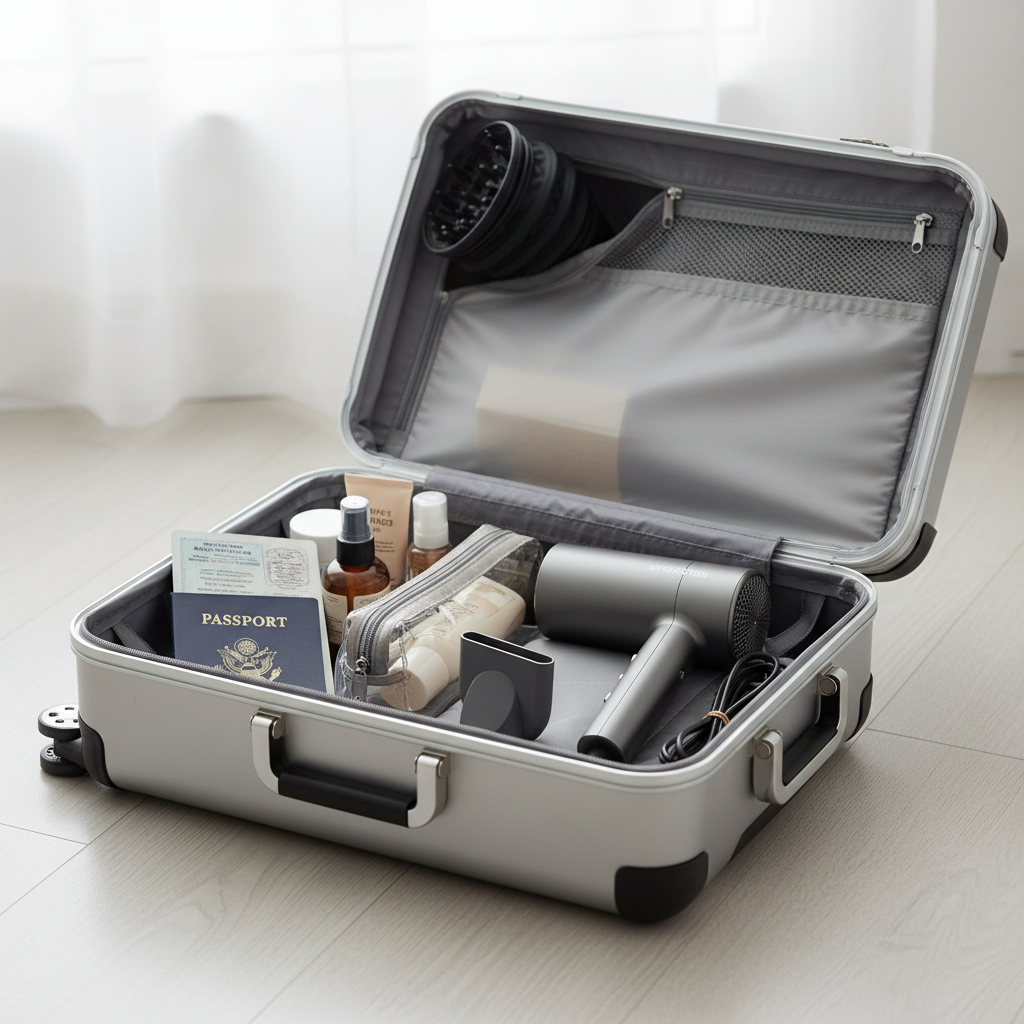
This guide breaks down what actually affects results, a quick self-check to find your “dryer profile,” and practical styling routines that work in hotel bathrooms. You’ll also get a comparison table so you can shop without guessing.
What “compact” should mean for a travel dryer (beyond size)
A smaller body helps, sure, but compact should also mean easy to pack, easy to use, and predictable performance. Some dryers shrink the shell but sacrifice motor power or make the handle awkward, which shows up fast when you’re styling.
- Foldable handle (optional): Helpful for tight bags, but hinges can add wobble. If you travel often, sturdiness matters as much as folding.
- Weight and balance: A slightly heavier dryer can feel “lighter” if it’s balanced and not top-heavy.
- Nozzle compatibility: A concentrator nozzle is what turns drying into styling. Without it, you’re mostly blasting hair around.
- Heat and speed control: You want at least two heat settings and two speeds so you can adjust to humidity and hair condition.
One more thing people overlook: noise and vibration. In a small hotel room, an overly loud unit feels twice as harsh, and vibration tends to correlate with cheaper build quality.
Why compact travel dryers sometimes disappoint (and how to spot it early)
Most disappointment comes from expecting a tiny dryer to behave like a full-size salon tool. It can still style well, but you need to pick the right features and use the right technique.
- High heat, low airflow: Some minis run hot but don’t move much air, which can dry the surface fast while leaving the inside damp, then frizz shows up later.
- One setting only: If your dryer has a single “on” mode, you’ll struggle in humid climates or on fine hair.
- Weak concentrator fit: A nozzle that pops off mid-style is a dealbreaker, especially when you’re rushing.
- Cord frustration: Short cords force awkward angles, and that translates into uneven drying and more heat exposure on a few sections.
According to the U.S. Consumer Product Safety Commission (CPSC)... hair dryers are common household electrical products, and safe use around water matters. For travel, that means you want a dryer that feels solid, with an intact cord and plug, and you still avoid using it near sinks or wet surfaces.
Quick self-check: which travel dryer profile fits your hair and routine?
If you buy based on “watts” alone, you’ll often miss the point. Use this quick checklist to narrow the right setup for you.
- If your hair is fine or easily frizzy: Prioritize multiple heat settings, a cool shot, and a good concentrator nozzle.
- If your hair is thick, long, or curly: Prioritize airflow, a diffuser option, and a dryer that can run longer without feeling scorching-hot.
- If you style with a round brush: Prioritize a slim concentrator, comfortable grip, and a cord long enough for awkward bathroom layouts.
- If you’re mostly air-drying and just polishing: A smaller unit can work great, but you still want controllable heat for finishing.
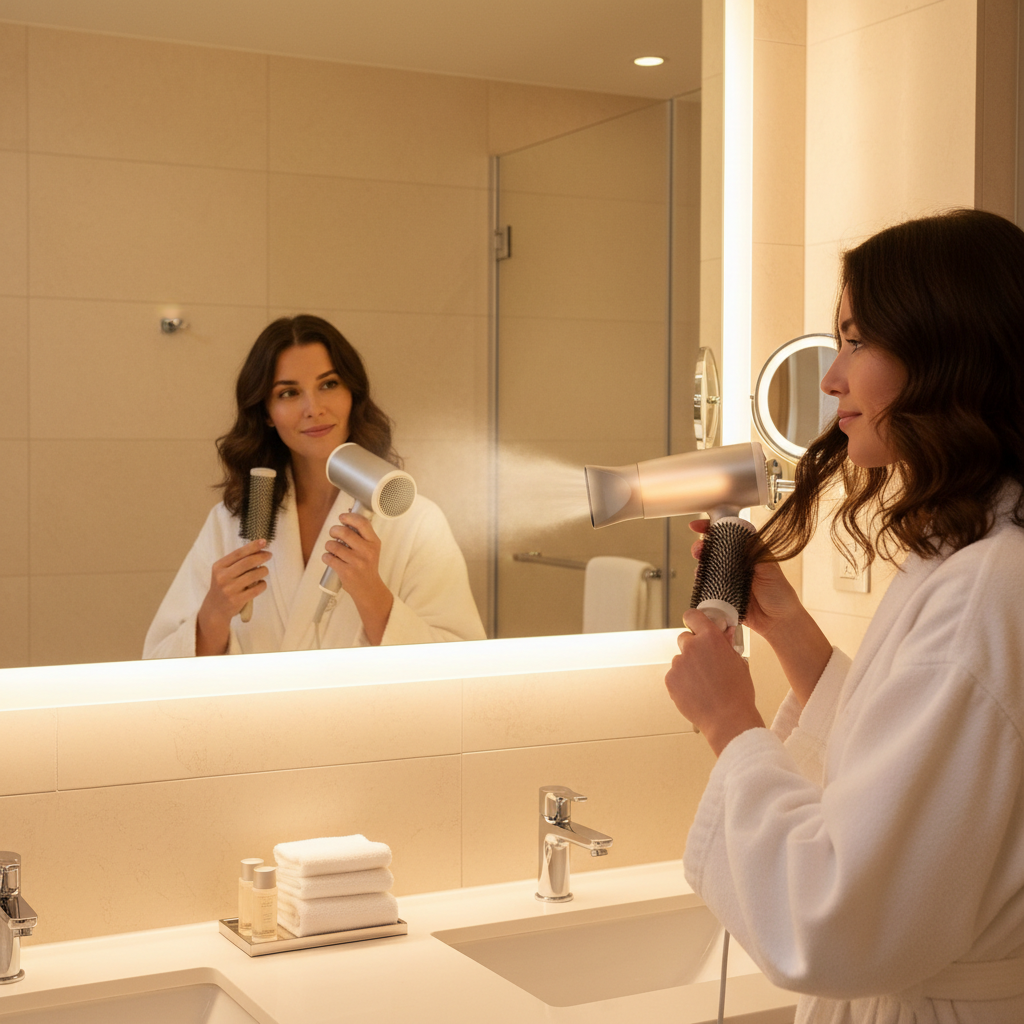
Where you travel also matters. If you frequently travel internationally, you’ll want to pay attention to voltage. If you’re staying mostly in the U.S., you can focus more on styling features.
Feature comparison table: what to look for (and what it changes)
This table is meant to keep you honest while shopping. A travel hair dryer compact model can be “small” but still miss the features that actually affect styling.
| Feature | Why it matters for styling | Good sign | Red flag |
|---|---|---|---|
| Concentrator nozzle | Directs airflow to smooth cuticles and shape with a brush | Nozzle locks on firmly, slim profile | Loose fit or no nozzle included |
| Diffuser option | Helps curls/waves keep shape with less frizz | Diffuser fits securely, decent bowl depth | Shallow “token” diffuser, falls off |
| Heat + speed settings | Lets you adapt to hair type and humidity | At least 2 heat and 2 speed | One mode only |
| Cool shot | Sets style and reduces flyaways at the end | Dedicated cool button | “Cool” is still warm |
| Voltage approach | Affects whether it works reliably abroad | Clear labeling, dual-voltage if needed | Vague listings, no voltage info |
| Cord length | Prevents awkward angles that cause uneven drying | Long enough for hotel outlets | Very short cord |
How to style faster with a compact dryer (step-by-step routines)
The trick is to stop treating travel drying like home drying. You’re usually working with less counter space, worse lighting, and time pressure, so your routine needs to be simpler and more forgiving.
Routine A: Smooth blowout (straight or softly bent ends)
- Prep: Towel-blot thoroughly, then apply a small amount of heat protectant. If you have a leave-in conditioner, keep it light so it doesn’t weigh hair down.
- Rough-dry to 70–80%: Medium heat, higher airflow, no brush yet. Focus on roots first.
- Section and shape: Add concentrator nozzle, then use a round brush or paddle brush. Aim airflow down the hair shaft, not sideways.
- Finish: Use cool shot briefly on the top layer and around the face, then a tiny drop of hair oil on ends if needed.
Routine B: Waves and curls with a diffuser
- Keep hands off: Over-touching causes frizz, especially in humid cities.
- Low-to-medium heat: Compact units can run hot, so start lower than you think.
- Diffuse in sections: Lift curls into the diffuser bowl, hold for short intervals, then move. Avoid blasting the same spot too long.
- Set the shape: Cool shot or a brief cool-air finish helps curls hold longer.
Routine C: “Polish only” for busy mornings
- Air-dry most of the way: Do makeup or coffee first, then finish.
- Target roots and front pieces: This gives the biggest visual payoff quickly.
- Use a nozzle for the last 2 minutes: Even if you don’t section, directing airflow reduces flyaways.
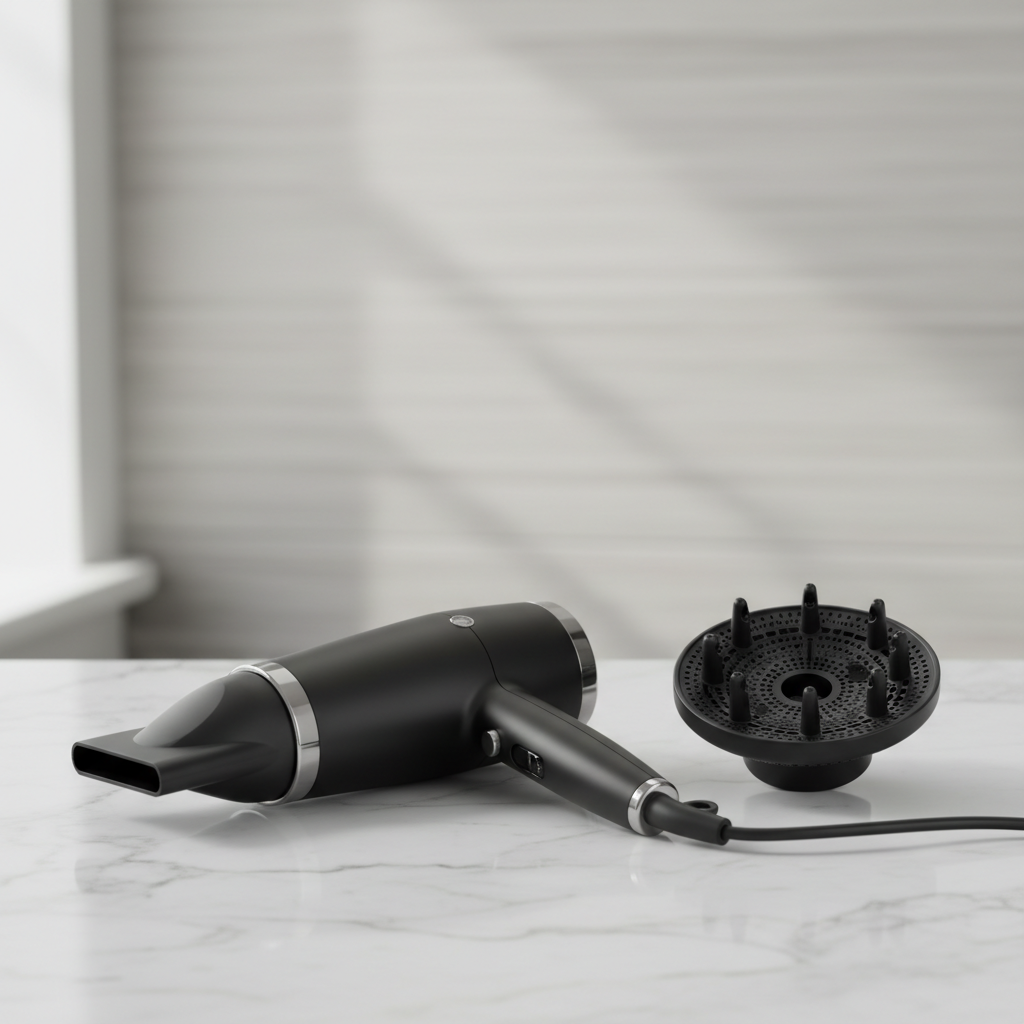
Key point: if your compact dryer feels weak, don’t crank heat to compensate. In many cases you get better results by improving airflow control with a nozzle and working in smaller sections.
Mistakes that waste time (and can make hair look worse)
- Skipping the nozzle because it’s “bulky”: This is the common reason a blow-dry looks fluffy instead of smooth.
- Drying soaking-wet hair with high heat: It feels faster, but it often creates frizz and makes ends look rough.
- Holding the dryer too close: Compact models can concentrate heat; keep a comfortable distance and keep moving.
- Using the highest setting the whole time: Save higher heat for the early rough-dry, then back off for shaping and finishing.
- Ignoring the filter: Lint buildup reduces airflow. If it’s removable, clean it periodically, especially after beach trips.
If you notice scalp irritation, unusual shedding, or heat sensitivity, it may be worth checking in with a healthcare professional or dermatologist. Heat styling can aggravate some conditions, and it’s not always obvious until travel stress piles on.
When it makes sense to get a more specialized option
A travel hair dryer compact model is perfect for many travelers, but there are times you’ll be happier upgrading or choosing a different travel strategy.
- You frequently travel to multiple countries: Consider a clearly labeled dual-voltage dryer, or plan to use hotel dryers and bring styling tools that are easier to voltage-manage.
- You have very thick hair and need speed: A slightly larger “travel-friendly” dryer can still pack well and save real time.
- You rely on a specific finish (sleek blowout, defined curls): Prioritize attachment quality and controllable settings over the smallest footprint.
According to the American Academy of Dermatology (AAD)... people can reduce hair damage by limiting heat and using the lowest effective setting. That advice applies even more on the road, where you’re tempted to rush.
Conclusion: a compact dryer can still deliver styling results
The best compact dryer for travel is rarely the tiniest one, it’s the one that gives you control: a solid concentrator, usable heat and speed settings, and a shape that’s comfortable in your hand. If you shop with that filter, you can pack light and still like your hair in the mirror.
If you want an easy next step, pick two priorities based on your hair type, then use the comparison table to eliminate the “cute but weak” options. After that, practice one travel routine at home once, it saves time when you actually need it.
FAQ
What should I prioritize in a travel hair dryer compact model for styling?
Start with a concentrator nozzle and multiple heat/speed settings. Those two features usually matter more for styling than a super-small body.
Is higher wattage always better for a compact travel dryer?
Not always. Wattage doesn’t guarantee good airflow design, and a high-watt unit that runs too hot can still leave you with frizz. Look for control and attachment quality.
Do I really need a cool shot button when traveling?
If you care about shape and flyaways, yes, it helps. Cool air at the end can make styles look more finished, especially in humidity, without adding more product.
Can I use a compact dryer every day without damaging hair?
Many people do, but damage risk depends on heat level, technique, and your hair’s condition. Using a heat protectant and the lowest effective heat is a safer baseline, and if hair feels brittle, consider reducing heat styling.
What’s the fastest way to blow-dry in a hotel bathroom?
Towel-blot well, rough-dry roots first to about 70–80%, then add the concentrator nozzle and shape only the sections you care about most: top layer and front pieces.
Do diffusers work well on travel dryers?
They can, as long as the diffuser fits securely and the dryer has a low/medium heat option. A shallow diffuser or a loose fit tends to be frustrating and less consistent.
What safety checks should I do before using a hair dryer while traveling?
Check the cord and plug for damage, keep the dryer away from water, and avoid using it near a wet sink area. If outlets look loose or the dryer sparks, stop using it and switch options.
If you’re trying to pack lighter but still want consistent hair on trips, it can help to choose one compact dryer that matches your routine, then build a tiny “travel styling kit” around it: the right nozzle, a small brush, and one product that behaves well in humidity.